
Gear & Home is reader-supported. As an Amazon Associate I earn from qualifying purchases. When you buy through links on our site, we may earn an affiliate commission, at no extra cost to you. Learn more.
The best sleeping bag liner for backpacking is not simply the warmest one. For most hikers, the useful trade is a few ounces for a cleaner sleeping bag, better next-to-skin comfort, and a small climate-control benefit without turning the liner into another bulky sleep layer.
Quick Answer
Our best overall pick is the Sea to Summit Silk Blend Standard Mummy. At a manufacturer-listed 4.9 oz, it is light enough to justify on backpacking trips, softer and more compact than heavier thermal liners, and built around a washable 72% polyester and 28% silk main fabric. If you camp in hot, humid conditions, the Sea to Summit Breeze Short Mummy is the more breathable choice. If extra warmth matters more than ounces, the Reactor Insulated Midweight Short is the better fit.
Quick Picks
Sea to Summit Silk Blend Standard
Best balance of low weight, compact packing, soft feel and practical backpacking use.
Sea to Summit Breeze Short Mummy
Moisture-wicking COOLMAX and Tencel blend with ventilation-friendly mummy features.
Sea to Summit Reactor Insulated Midweight Short
More thermal-focused construction for hikers willing to carry more weight and bulk.
ALPS Mountaineering Poly Cotton Mummy
Simple, roomy, washable and inexpensive, but heavier than the premium backpacking options.
Sleeping Bag Liner Comparison
| Pick | Best for | Exact variant | Listed weight | Main trade-off |
|---|---|---|---|---|
| Sea to Summit Silk Blend | Most backpackers | Standard mummy | 4.9 oz | Costs more than basic synthetic or polycotton liners |
| Sea to Summit Breeze | Warm and humid trips | Short mummy | 9.3 oz | Nearly twice the weight of the Silk Blend Standard |
| Sea to Summit Reactor Insulated | Extra warmth | Midweight Short | 11.6 oz | Heavier and bulkier; not a substitute for a correctly rated bag |
| ALPS Mountaineering | Budget and easy washing | Poly Cotton Mummy | 11 oz | Less weight-efficient for backpacking |
Choose the Liner by What You Need Most
The biggest mistake is buying a liner by the largest temperature-boost claim. A liner can trap some extra air, but its real backpacking value is often simpler: it keeps body oils and trail grime out of a harder-to-wash sleeping bag, changes the fabric against your skin, and can make a sleep system more versatile on warm nights.
pack weight and packed volume matter most, you mainly want hygiene and comfort, and you already have a sleeping bag or quilt that matches expected temperatures.
you sleep warm, expect humid nights, want easy washing and faster drying, or dislike the slippery feel of very light silk.
you knowingly accept roughly 11 to 12 oz of extra weight for a more noticeable warmth-focused layer and still have an adequately rated primary bag.
you are counting every ounce, already use dedicated sleep clothes, and do not need the hygiene, comfort or hostel/travel benefits. A liner is useful, not mandatory backpacking equipment.
For the rest of the sleep system, our complete backpacking sleep system guide explains how the bag or quilt, sleeping pad, clothing and shelter work together. If insulation underneath you is the weak link, start with sleeping pad R-value rather than trying to solve the problem with a liner.
Sea to Summit Silk Blend Sleeping Bag Liner, Standard Mummy
The strongest backpacking balance here if you want a real liner benefit without paying an 11-ounce weight penalty.
At 4.9 oz, the Standard Mummy is in the range where a liner can make sense even for hikers who watch pack weight. Sea to Summit lists an 81 x 31 inch shape and shoulder snaps instead of a full side zipper, which saves hardware weight but still makes entry less restrictive than narrow top-entry designs.
This is not the pick to buy because you expect a dramatic temperature-rating upgrade. Its better case is versatility: a compact sleep sheet for huts or hostels, a cleaner interface inside a sleeping bag, and a modest extra layer when conditions are a little cooler than expected.
Sea to Summit Breeze Sleeping Bag Liner, Short Mummy
A better summer choice when moisture management and freedom of movement matter more than shaving every ounce.
The Breeze is purpose-built for warm-weather comfort. Sea to Summit combines moisture-wicking COOLMAX with Tencel Lyocell, then adds stretch-knit construction, arm openings and a drawcord footbox on the mummy version. Those details matter if you dislike feeling trapped inside a liner.
The trade-off is straightforward: 9.3 oz for the Short version is not ultralight next to the Silk Blend Standard. You are carrying extra material for breathability, movement and easier hot-weather comfort, not because the Breeze is trying to be the lightest possible sheet.
Sea to Summit Reactor Insulated Sleeping Bag Liner, Midweight Short
The warmth-focused choice when you knowingly accept more weight and bulk, not a shortcut around choosing a properly rated bag.
The current Midweight Short uses Thermolite construction and is listed at 11.6 oz. Sea to Summit and the Amazon listing advertise an added-warmth figure of up to 11°F, but treat that as a product claim rather than a guaranteed extension of your sleeping bag’s tested temperature rating.
If you are routinely pushing a bag beyond its comfort range, a warmer bag, quilt, pad or clothing layer is the more dependable system fix. The Reactor makes more sense when you already have a solid system and want a removable warmth-focused layer that is easier to wash than the sleeping bag itself.
ALPS Mountaineering Sleeping Bag Liner, Poly Cotton Mummy
A simple, washable value pick for hikers who care more about price and comfort than premium weight efficiency.
The ALPS liner is roomy at 86 x 32 inches and comes with a stuff sack. It is easy to understand and easy to wash, which is exactly why it works as the budget pick. It is also the product here most likely to make a weight-conscious backpacker ask whether dedicated sleep clothes would do enough of the same job.
Polycotton can feel familiar against the skin, but it is not as weight-efficient as the lighter premium choices and is less attractive for trips where fast drying after washing or moisture exposure is important.
Sleeping Bag Liner Buying Guide for Backpackers
Weight matters more than marketing language
A 4 to 5 oz liner is an easier backpacking decision than an 11 to 12 oz liner because those extra ounces compete directly with warmer clothing, a better pad or a warmer sleeping bag. If your reason for carrying a liner is mostly cleanliness, start with the lightest material that you actually enjoy sleeping in.
Match material to conditions
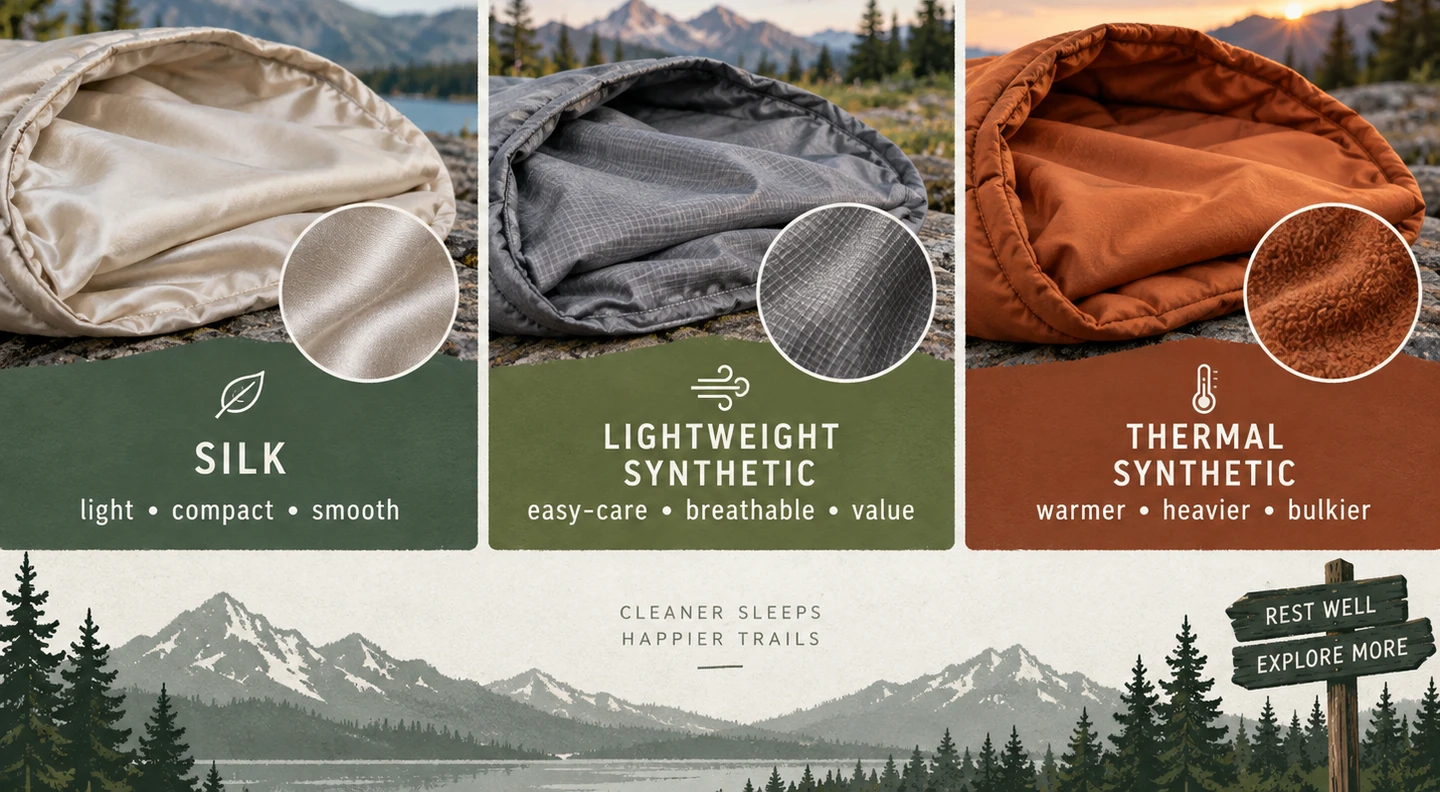
Silk and silk blends are attractive when packability and smooth feel matter. Breathable synthetic blends make more sense for sweat, humidity and repeated washing. Thermal synthetics trade weight and packed size for more insulation. Polycotton is familiar and affordable, but generally less compelling when every ounce matters.
Do not treat a liner temperature claim as an ISO bag rating
Sleeping bag ratings are system-level measurements under controlled conditions. A liner manufacturer’s advertised boost is not automatically additive to your bag’s comfort or lower-limit rating. Your pad, clothing, humidity, metabolism and fit all affect the result.
Shape affects sleep quality
A narrow mummy liner can save fabric and weight, but restless sleepers may prefer stretch panels, shoulder openings, a foot vent or a roomier rectangular shape. The lightest liner is a poor buy if it makes you feel tangled enough that you stop using it.
Think about washing on long trips
One of a liner’s best jobs is protecting expensive insulation from body oils and dirt. Check whether the exact material is machine washable and how it should be dried. On thru-hikes or long travel, easy laundering can be more valuable than a theoretical few degrees of extra warmth.
How We Chose These Sleeping Bag Liners
We first checked the current US search results to confirm that this query has commercial roundup intent. We then separated it from Gear & Home’s existing DIY liner how-to page so the two URLs answer different jobs rather than competing for the same query.
Current manufacturer pages and exact Amazon.com US variant pages were used for materials, dimensions, weights and features.
Amazon and retailer feedback, backpacking discussions and forum use cases were checked for recurring comments on comfort, cleanliness, entry, durability and weight.
Current and established independent liner roundups were used as additional evidence for category trade-offs, not copied as Gear & Home rankings.
Awards favor weight-to-function balance, climate fit and practical use rather than the largest advertised warmth number.
FAQ
Are sleeping bag liners worth it for backpacking?
They can be, especially if you want to keep a down or synthetic sleeping bag cleaner, prefer a softer fabric against your skin, use huts or hostels, or want a removable light layer. They are easier to skip in an ultralight kit when dedicated sleep clothes already cover those needs.
What is the best sleeping bag liner material for backpacking?
There is no single best material. Silk and silk blends are strong for low weight and packability, breathable synthetics suit warm and humid conditions, and thermal synthetics suit hikers willing to carry more weight for extra insulation.
How much warmth does a sleeping bag liner add?
It depends on the liner, sleeping bag, pad, clothing and conditions. Thermal liners can feel meaningfully warmer, but manufacturer boost claims should not be treated as guaranteed additions to a sleeping bag’s standardized temperature rating.
Is silk or synthetic better for a sleeping bag liner?
Silk is usually lighter and packs smaller. Synthetic liners are often easier to wash, faster to dry and available in stretch or moisture-wicking fabrics. Choose based on climate and how much weight you are willing to carry.
Can I use a sleeping bag liner by itself?
Yes, in sufficiently warm conditions or indoors in huts and hostels. A liner is not a substitute for a sleeping bag when overnight temperatures require real insulation.
Should a backpacking liner be mummy shaped or rectangular?
A mummy liner usually saves fabric and fits a mummy sleeping bag more efficiently. A rectangular liner gives more room to move and is often nicer for travel. Restless sleepers should prioritize entry design and freedom of movement, not shape alone.