
Gear & Home is reader-supported. As an Amazon Associate I earn from qualifying purchases. When you buy through links on our site, we may earn an affiliate commission, at no extra cost to you. Learn more.
Foam and inflatable sleeping pads solve the same backpacking problem in very different ways. Closed-cell foam gives you instant setup and no air-loss failure. Inflatable pads trade that simplicity for much thicker cushioning, a smaller packed size and access to higher-insulation designs.
Inflatable is the better all-around choice for most backpackers
Choose an insulated inflatable sleeping pad if sleep comfort, packed volume and cold-weather flexibility matter most. The extra thickness is especially useful for many side sleepers and anyone whose hips or shoulders bottom out on thin foam.
Choose closed-cell foam if reliability, low cost and zero-fuss setup matter more than cushioning. It is the stronger choice for thorny or abrasive terrain, minimalist trips where a pad must double as a sit mat, and hikers who would rather accept bulk than carry an air chamber that can leak.
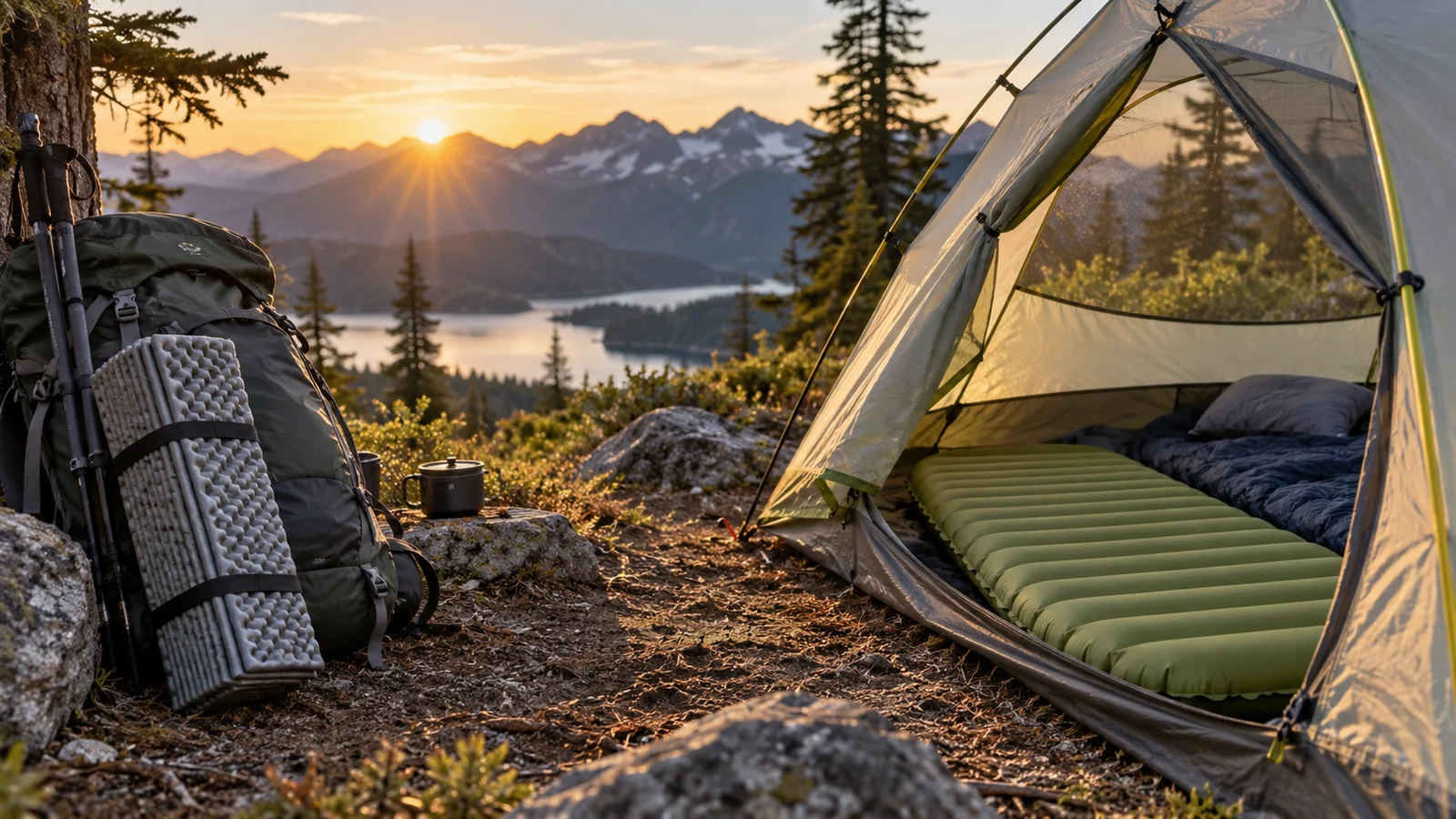
There is also a third answer: in cold or rough conditions, a thin foam pad under an inflatable can add insulation, protect the air pad from the ground and leave you with a basic backup if the inflatable loses air.
Foam vs Inflatable Sleeping Pad: The Decision Table
| Decision factor | Closed-cell foam | Inflatable | Edge |
|---|---|---|---|
| Sleep comfort | Firm, thin cushioning. Ground contour matters more. | Much thicker support and adjustable pressure, but feel varies by baffle design. | Inflatable for most sleepers |
| Packed volume | Bulky. Often carried outside the pack. | Deflates and rolls into a compact package. | Inflatable |
| Failure risk | No valve or air chamber to puncture or leak. | Can develop punctures, valve problems or leaks. Repair kits reduce, but do not remove, the risk. | Foam |
| Setup | Unfold and use. | Requires inflation and deflation. Many current pads include pump sacks. | Foam |
| Warmth options | Useful low-to-moderate insulation, but mainstream backpacking models are often lower R-value. | Available across a much wider range, including high-R cold-weather models. | Inflatable |
| Price | Usually less expensive. | Usually costs more, especially for light high-R models. | Foam |
| Camp versatility | Works as a sit pad, kneeling mat or protective layer. | Primarily a sleep surface and should be protected from sharp ground. | Foam |
| Best fit | Simplicity, rough terrain, budget, back or stomach sleepers who tolerate firm surfaces. | Side sleepers, compact packing, colder trips and comfort-first backpackers. | Depends on the trip |
Simple, dependable, bulky
Firm and thin
Bulky
No air-loss failure
Instant
Comfortable, compact, repairable but vulnerable
Thick and adjustable
Compact
Puncture or leak possible
Inflate and deflate
Do not choose by category name alone. The warmth that matters is the pad’s tested R-value, and the comfort that matters is whether your body can stay supported in your normal sleeping position. Our sleeping-pad R-value guide explains how to compare insulation ratings.
When a Foam Sleeping Pad Is the Better Choice
You want a sleep system with almost nothing to fail
A closed-cell foam pad does not depend on trapped air, a valve or a welded seam. Rocks can gouge it and long use can flatten the foam, but a pinhole cannot turn it into a flat sheet during the night. That distinction matters on cactus-heavy desert routes, rough campsites and long trips where repair anxiety matters more to you than plushness.
Backpacker discussions show why this remains a real decision rather than a theoretical durability advantage. Some hikers report years of inflatable use without a serious problem, while others switch to foam after repeated pinholes or one trip-ending night on a deflated pad. The practical takeaway is not that every inflatable will fail. It is that foam removes air-loss failure from the equation.
You value instant setup and multi-use gear
Foam wins at camp speed. Unfold it, put down your quilt or sleeping bag and you are done. During the day, the same pad can become a sit mat, a clean surface for sorting gear or a protective layer under another pad.
You are willing to carry bulk outside the pack
The trade-off is volume. A foam pad does not compress into a bottle-sized bundle. Accordion pads are usually strapped to the outside of the pack, where they can snag vegetation and get wet or dirty. That external bulk is often the real reason otherwise weight-conscious backpackers choose air pads.
When an Inflatable Sleeping Pad Is the Better Choice
You need real cushioning, especially on your side
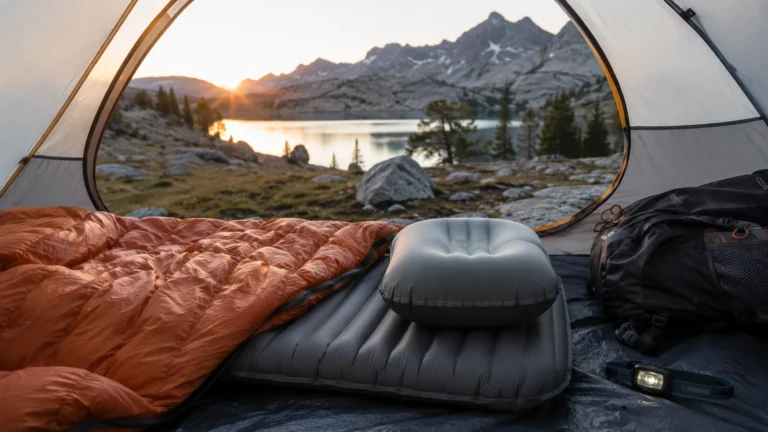
Inflatable backpacking pads create several inches of space between your body and the ground. That gives your hips and shoulders room to sink without immediately contacting hard soil. For many side sleepers, that is the biggest difference between tolerating camp sleep and actually recovering overnight.
Comfort still is not automatic. Current owner feedback on popular inflatables includes both strong praise from side sleepers and complaints that some pads feel too stiff, bouncy or flat through the center. Air pressure matters: slightly reducing pressure can make an air pad conform better, although going too soft can bring heavier pressure points closer to the ground.
You need insulation without carrying a huge pad
Inflatable pads can place reflective films or other insulation inside the air chamber, which lets manufacturers offer much higher R-values without the same packed bulk as thick foam. That makes the category much easier to use for shoulder-season and cold-weather backpacking. Compare the actual R-value rather than assuming every air pad is warm.
You care about internal pack space and trail clearance
Once deflated, a backpacking air pad can fit inside the pack with the rest of the sleep system. That keeps the outside profile cleaner for bushwhacking, scrambling and narrow trails. For hikers with small-volume packs, the difference can be more important than a few ounces on a spreadsheet.
Sleep Position Changes the Answer
Side sleepers usually have the strongest case for an inflatable. A thin foam pad gives the shoulder and hip very little room to sink, so pressure builds quickly on hard ground. A thicker air pad can distribute that load better.
Back and stomach sleepers may have more freedom to choose foam. Their body weight is spread across a larger contact area, so a firm, thin surface can be acceptable when the campsite itself is soft and level. That is not a universal rule. Body shape, age, previous injuries, pad pressure and site selection all change comfort.
If sleep quality is uncertain, try both categories before a long trail. A one-night backyard test cannot reproduce an entire thru-hike, but it can reveal an obvious mismatch such as hip bottoming, excessive bounce or discomfort with a very firm surface.
Terrain and Repair Strategy Matter More Than Marketing
On maintained forest campsites, an inflatable’s puncture risk can be managed with careful site selection and a small repair kit. In cactus country, on sharp volcanic ground or anywhere the tent floor regularly picks up spines and burrs, the risk calculation changes.
If you choose an inflatable, inspect the ground, clear sharp debris, avoid dragging the inflated pad outside the shelter and carry the repair materials intended for your pad. A repair kit is not a guarantee: a tiny hole can be hard to locate in the dark, and some failures involve valves or seams rather than a simple puncture.
If you choose foam, remember that “cannot deflate” does not mean “cannot wear out.” Repeated compression can reduce loft over time, and external carry exposes the pad to branches, dirt and weather. The failure mode is gradual rather than a sudden loss of air.
For Cold Weather, You Do Not Have to Pick Only One
A foam pad under an inflatable is a practical two-layer system. The foam adds ground insulation, gives the inflatable a protective layer and still provides a basic surface if the air pad loses pressure. Backpacking guidance from trail organizations and outdoor reviewers commonly recommends this combination for cold conditions.
The downside is obvious: you carry the bulk of foam and the setup cost of an inflatable at the same time. For ordinary three-season trips, one correctly rated pad is usually simpler. For winter camping or rough cold ground, redundancy can be worth the extra volume.
Before building a winter stack, use the temperature and insulation logic in our R-value explainer rather than relying on seasonal labels alone.
Two Current Examples That Show the Trade-Off
These are not a hidden two-product roundup. They are representative current models with exact Amazon US variants that make the category differences concrete.
NEMO Switchback Regular
A classic closed-cell choice when reliability and instant setup matter more than cushioning or packed volume.
The Regular Switchback is a useful reference point because its trade-offs are easy to understand. Its R-value of 2 and 0.9-inch thickness are far below what a high-insulation air pad can deliver, but there is no inflation step and no air chamber to leak.
The comfort complaints are equally important. Retailer feedback includes backpackers who find it adequate and others, especially frequent side sleepers or hikers with sore hips, who need an additional inflatable or a different category entirely. That is exactly why foam is a preference-driven choice rather than the automatic ultralight answer.
NEMO Tensor All-Season Regular Wide
A compact, insulated air pad that shows why backpackers accept more cost and failure risk for cushioning and warmth.
The exact Regular Wide listing gives you 3.5 inches of thickness and an R-value of 5.4 while still rolling into a compact package. The current listing also includes a pump sack and repair kit, which addresses two common inconveniences of the category without eliminating puncture or leak risk.
Do not read the thickness as a guarantee that every sleeper will prefer it. Current owner reports range from excellent side-sleeper comfort to complaints that the pad feels too firm. That disagreement is useful: air pads are adjustable, but baffle shape and surface feel still matter.
A Simple Decision Framework
If reliability is non-negotiable
You hike around thorns or sharp rock, dislike repair risk and already sleep well on firm surfaces.
If sleep comfort is the priority
You are a side sleeper, want thicker support, need a small packed size or camp in colder conditions.
If the trip is cold and rough
A foam layer can add insulation and ground protection while the inflatable supplies the cushioning.
If you are comfortable on neither
Some backpackers dislike both thin foam and bouncy air pads. A self-inflating foam-core pad may be the better third category, though it is usually bulkier and heavier.
How We Compared Foam and Inflatable Pads
We treated this as a category decision, not a product ranking. The current US search results consistently frame the query around comfort, packed size, reliability, warmth, setup and price, so the article stays focused on those trade-offs rather than duplicating a sleeping-pad roundup.
Current product and retailer data were used for the two example variants, including dimensions, R-value and weight.
Retailer feedback and backpacker discussions were used to identify repeated themes such as hip pressure on foam, puncture anxiety, air-pad firmness and outside-pack bulk.
Current category reviews and trail guidance were checked to confirm the recurring differences between closed-cell foam and inflatable systems.
Amazon links are limited to exact verified US variants that illustrate each category. This page does not turn a decision guide into an artificial product roundup.
FAQ
Is a foam or inflatable sleeping pad better for backpacking?
An insulated inflatable is the better all-around choice for most backpackers because it offers thicker cushioning, smaller packed volume and higher-R options. Foam is better when simplicity, low cost and freedom from puncture-related deflation matter more than comfort or bulk.
Are foam sleeping pads warm enough for three-season backpacking?
Some are, but the category name is not enough to decide. Check the exact R-value against your expected conditions. Many popular backpacking foam pads have lower R-values than insulated inflatables, so cold sleepers and shoulder-season hikers may need a warmer pad or a stacked system.
Is foam or inflatable better for side sleepers?
Inflatable pads are usually the stronger starting point for side sleepers because several inches of adjustable cushioning give the hip and shoulder more room to sink. Comfort remains personal, and baffle design plus air pressure can make one inflatable feel much better than another.
Can I put a foam pad under an inflatable sleeping pad?
Yes. A foam layer under an inflatable can add insulation, protect the air pad from rough ground and provide a basic backup surface if the inflatable loses pressure. The trade-off is carrying both the foam pad’s bulk and the inflatable’s setup.
Do inflatable sleeping pads always leak eventually?
No. Many backpackers use inflatables for years without a trip-ending leak, while others experience punctures or valve and seam problems. The risk is real but variable. Careful site selection and a compatible repair kit reduce the consequences without making the system failure-proof.
Which type is lighter, foam or inflatable?
Neither category always wins on weight. Minimal foam pads can be extremely light, while modern ultralight inflatables can also be competitive. Compare the exact size, R-value and usable comfort rather than choosing by category label alone.