
Gear & Home is reader-supported. As an Amazon Associate I earn from qualifying purchases. When you buy through links on our site, we may earn an affiliate commission, at no extra cost to you. Learn more.
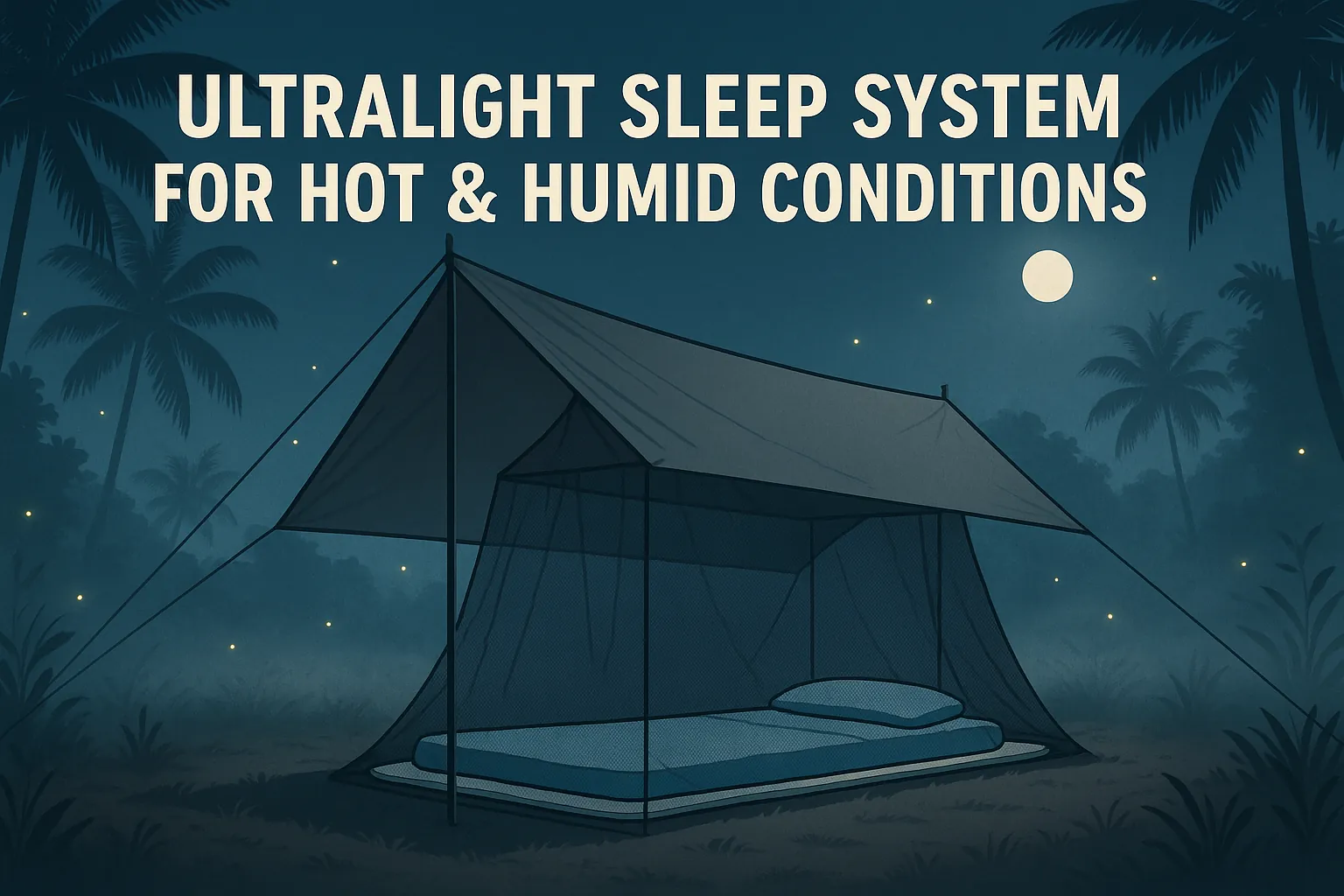
Beat sweaty, still nights with a sleep kit that breathes, dries fast, and stays under two pounds—without blowing your budget.
Who it’s for: warm-weather backpackers in muggy climates (Southeast, Gulf Coast, tropics), summer thru-hikers, tarp campers.
Who it’s not for: shoulder-season trips below ~60°F/16°C; exposed ridgelines with strong wind; anyone needing plush insulation.
Quick Picks (3 proven builds under budget)
| Build | Components | Total weight | Typical cost | Why it works |
|---|---|---|---|---|
| All-synthetic, sweat-friendly | Sea to Summit Breeze Liner (Compact Mummy) + Sea to Summit Nano Mosquito Pyramid Net (Single) + Klymit Static V2 air pad | ≈ 29.0 oz (1 lb 13 oz) | ≈ $$ | Wicking liner + cushy pad for comfort; full-body bug barrier; quick-dry materials. |
| Max airflow (foam) | Sea to Summit Breeze Liner + Sea to Summit Nano Net + NEMO Switchback (Regular) | ≈ 26.9 oz (1 lb 11 oz) | ≈ $$ | Closed-cell foam can feel less clammy in heat and never punctures; liner handles sweat; net stops no-see-ums. |
| Featherweight quilt option | AEGISMAX AIR-E (Regular) + Gossamer Gear Thinlight 1/8″ + Sea to Summit Nano Net | ≈ 21.1 oz (1 lb 5 oz) | ≈ $$ | Light down quilt for steamy nights; thin foam adds grip/comfort; full bug protection with minimal airflow penalty. |
Weights and prices are based on current product specs as of August 2025. Prices vary by retailer, size, and sales.
Why hot & humid needs a different approach
- Ventilation beats insulation. Prioritize breathable, moisture-managing fabrics (e.g., COOLMAX®/TENCEL blends) that wick sweat so you don’t feel sticky.
- Low pad R-value is fine. In warm conditions, R-values around 1–2 are adequate and often more comfortable. (R-value compares pad warmth under the ASTM F3340 standard.)
- Bug control is non-negotiable. A full-body pyramid net gives real protection at ~2.9 oz with excellent airflow.
The builds, in detail
1) All-synthetic, sweat-friendly (easiest recommendation)
What’s inside
- Sea to Summit Breeze Liner (Compact Mummy) — 9.5 oz; COOLMAX® fibers for wicking; typical $.
- Sea to Summit Nano Mosquito Pyramid Net (Single) — 2.9 oz; typical $.
- Klymit Static V2 air pad — around 16.6 oz; typical $.
Total: ≈ 29.0 oz (1 lb 13 oz), ≈ $$.
Why it works: The liner manages sweat, the pad provides cushion without over-insulating for August nights, and the pyramid net blocks bugs while staying ultrabreathable. On still nights, sleep directly on the pad with the liner as a sheet.
Good for: muggy tent or tarp camps; sweaty sleepers who still want plush comfort.
Watch-outs: wipe the pad before bed to reduce slickness; open every vent you’ve got.
2) Max airflow (foam) — cool running, bombproof
What’s inside
- NEMO Switchback (Regular) — 14.5 oz, R-Value 2; typical $.
- Sea to Summit Breeze Liner — 9.5 oz.
- Sea to Summit Nano Mosquito Pyramid Net (Single) — 2.9 oz.
Total: ≈ 26.9 oz (1 lb 11 oz), ≈ $$.
Why it works: Closed-cell foam never punctures and can feel less clammy in tropical humidity; the wicking liner keeps skin drier; the pyramid net guarantees bite-free sleep.
Good for: minimalists, tarp users, buggy camps with scarce breeze.
Watch-outs: bulky carry; comfort depends on ground softness.
3) Featherweight quilt option — lightest total weight
What’s inside
- AEGISMAX AIR-E (Regular) — listed sleeping bag weight ~440 g / ~15.5 oz; EN Limit 43°F / Comfort 52°F; typical $$.
- Gossamer Gear Thinlight 1/8″ — ~2.7 oz; typical $.
- Sea to Summit Nano Mosquito Pyramid Net (Single) — 2.9 oz.
Total: ≈ 21.1 oz (1 lb 5 oz), ≈ $$.
Why it works: A light down quilt is plenty for steamy nights; the Thinlight adds grip and a whisper of cushion; the pyramid net handles bugs with minimal airflow penalty. If you expect hard platforms, add a Switchback Short (+~10.5 oz), accepting you’ll nudge above 2 lb.
Good for: gram-counters, hammock sleepers (use quilt + net; pad optional).
Watch-outs: coverage drops if wind picks up or temps dip toward 60°F—pack a base layer insurance.
Buying & setup tips for swampy nights
- Pitch for breeze: face openings to prevailing wind; run a tarp high if rain isn’t imminent.
- Fabrics matter: liners using COOLMAX®/TENCEL blends wick and dry faster than plain nylon.
- Pad warmth: in true summer, R~1–2 is appropriate; higher R-values can feel warmer than you want.
- Bug protocol: full-body pyramid nets (~2.9 oz) beat head nets for real sleep.
- Moisture hygiene: quick rinse or body-wipe before bed; air the liner at sunrise.
How we chose (methods & assumptions)
- Each build is constrained to ≤ 32 oz and ≤ $250 using current manufacturer specs and widely available US pricing.
- For pad warmth, we rely on standardized ASTM F3340 R-values to compare apples-to-apples.
- Availability and pricing vary; always confirm current weight/price/size options before buying.
FAQ
What temperatures are these for?
Think sticky summer nights—lows roughly 65–80°F (18–27°C) with high humidity. If you expect cooler lows or wind exposure, add a light base layer and consider a slightly warmer pad or quilt.
Will I miss a real sleeping bag?
In muggy weather, most people sleep cooler with a liner or light quilt + bug net. Bags that can’t vent well often feel swampy.
Air pad or foam in humidity?
Foam generally runs cooler and never pops; air pads pack smaller and feel plusher. In true sauna conditions, foam + liner is hard to beat.
Do I need a pillow?
A scant-ounce inflatable or a stuff-sack with your puffy works. Prioritize neck angle more than loft—too high traps heat.