
Gear & Home is reader-supported. As an Amazon Associate I earn from qualifying purchases. When you buy through links on our site, we may earn an affiliate commission, at no extra cost to you. Learn more.
Ultralight sleeping bags are where weight savings get expensive fast. The useful question is not simply “which bag is under 2 pounds?” but which bag gives you the right temperature margin, fit and ventilation for the ounces you are paying to save.
For this guide we kept the category narrow: hooded or enclosed sleeping bags only, not backpacking quilts. Most of the picks still land below 2 pounds, but the old 2-pound cutoff is no longer treated as an SEO rule. A 29-ounce bag with a true collar and useful cold-weather margin can be a better ultralight choice than a lighter bag that fits badly or is rated on a different temperature standard.
The best ultralight sleeping bag for most backpackers
The Sea to Summit Spark 15 is our Best Overall pick. At 25.7 ounces in Regular, it combines 850+ fill down with published ISO ratings—16°F lower limit and 28°F comfort—plus a roomier cut than the most aggressive gram-saving mummy bags. The trade-off is a delicate 10D shell and a zipper that independent reviewers repeatedly flag as easier to snag than we would like.
If every ounce matters more than room, the Therm-a-Rest Hyperion 20 drops to about 20 ounces but uses a noticeably narrower cut. If you are a side sleeper or move around at night, the Western Mountaineering MegaLite 30 gives you far more shoulder and hip space while staying around 24 ounces.
Quick Picks
Therm-a-Rest Hyperion 20
Fast-and-light hikers who tolerate a narrow cut · 1 lb 4 oz
Western Mountaineering MegaLite 30
Active sleepers who need extra room · 1 lb 8 oz
Zpacks 20F Mummy Sleeping Bag
Low weight plus full-zip warm-weather venting · 23.2 oz (Medium Standard)
Best Ultralight Sleeping Bags Compared
| Pick | Temperature rating | Regular / reference weight | Down | Reference girth | Best for | Where to check |
|---|---|---|---|---|---|---|
| Sea to Summit Spark 15 Best Overall |
ISO lower 16°F / comfort 28°F | 25.7 oz | 850+ FP goose down | 61 in shoulder / 53 in hip | Balanced warmth, weight and usable room | Check availability on Amazon |
| Therm-a-Rest Hyperion 20 Best 20°F Weight Saver |
EN/ISO limit 20°F / comfort 32°F | 1 lb 4 oz | 900 FP hydrophobic down | 57 in shoulder / 49.5 in hip | Fast-and-light hikers who tolerate a narrow cut | Check availability on Amazon |
| Western Mountaineering MegaLite 30 Best for Side Sleepers |
Manufacturer rating 30°F | 1 lb 8 oz | 850+ FP goose down | 64 in shoulder / 56 in hip | Active sleepers who need extra room | Check at Western Mountaineering |
| Sea to Summit Spark 45 Best Summer Ultralight |
ISO lower 45°F / comfort 51°F | 12.8 oz | 850+ FP goose down | 61 in shoulder; warm-weather mummy | Summer fastpacking and minimum carried weight | Check availability on Amazon |
| Zpacks 20F Mummy Sleeping Bag Best Thru-Hiking Versatility |
Manufacturer 20°F; not ISO tested | 23.2 oz (Medium Standard) | 950 FP Muscovy duck down | 60 in shoulder / 60 in hip | Low weight plus full-zip warm-weather venting | Check at Zpacks |
Sea to Summit Spark 15
ISO lower 16°F / comfort 28°F
25.7 oz
850+ FP goose down
61 in shoulder / 53 in hip
Therm-a-Rest Hyperion 20
EN/ISO limit 20°F / comfort 32°F
1 lb 4 oz
900 FP hydrophobic down
57 in shoulder / 49.5 in hip
Western Mountaineering MegaLite 30
Manufacturer rating 30°F
1 lb 8 oz
850+ FP goose down
64 in shoulder / 56 in hip
Sea to Summit Spark 45
ISO lower 45°F / comfort 51°F
12.8 oz
850+ FP goose down
61 in shoulder; warm-weather mummy
Zpacks 20F Mummy Sleeping Bag
Manufacturer 20°F; not ISO tested
23.2 oz (Medium Standard)
950 FP Muscovy duck down
60 in shoulder / 60 in hip
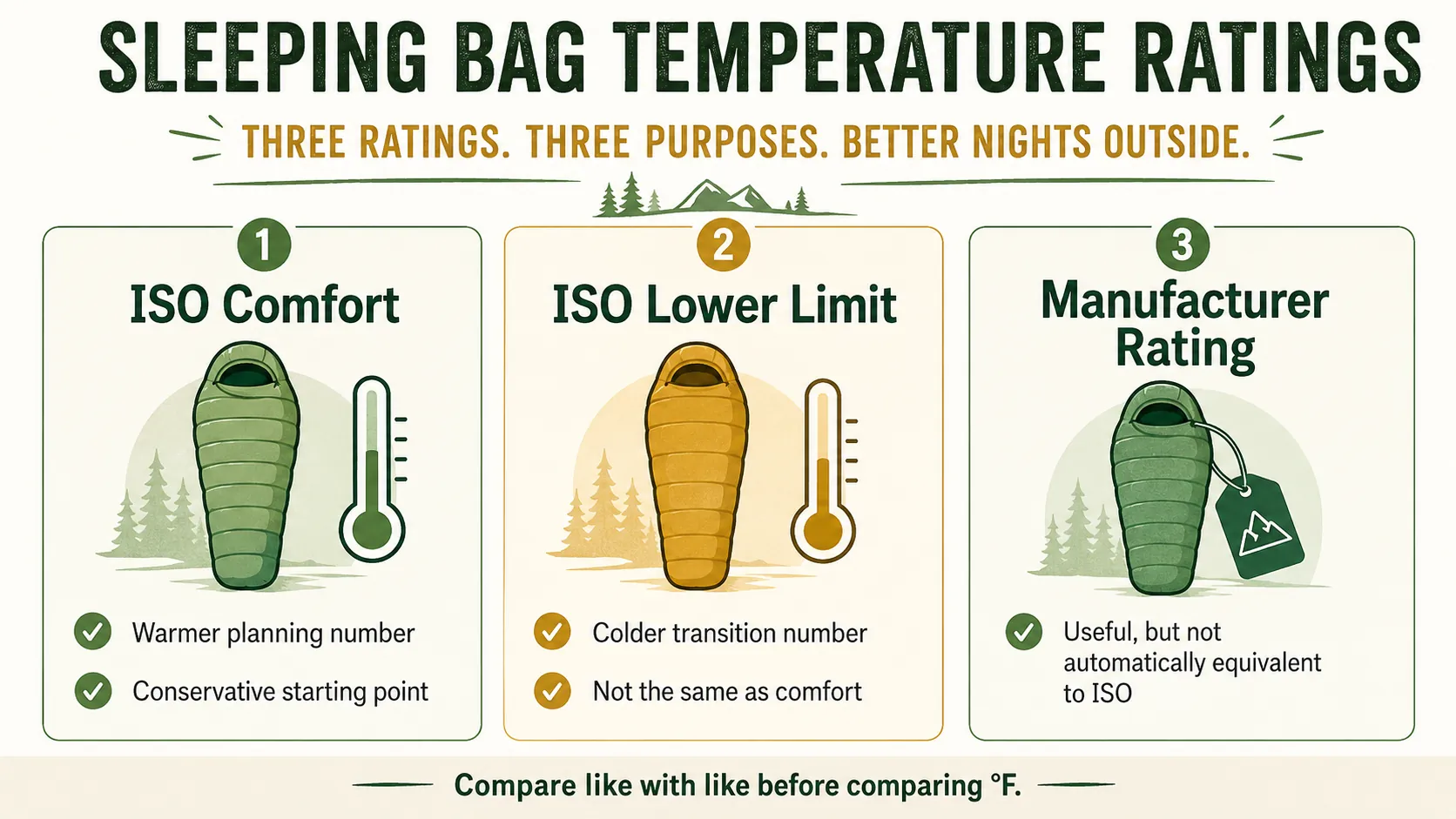
Temperature ratings are not directly interchangeable. Sea to Summit and Therm-a-Rest publish standardized ISO/EN lower-limit and comfort figures. Western Mountaineering publishes its own model temperature rating, and Zpacks explicitly says its bags have not been ISO tested. Compare the rating method before comparing the number.
On a standardized bag, the lower-limit figure and comfort figure can differ by roughly 10–15°F. A manufacturer-rated 20°F bag may use a different internal benchmark entirely. If you sleep cold, are unsure of your physiology, or expect nights near the edge of a bag’s range, use the comfort rating where one exists and build margin into the whole sleep system—not just the bag.
The 5 Best Ultralight Sleeping Bags for Backpacking
Sea to Summit Spark 15
A rare balance of sub-2-pound weight, standardized temperature data and enough room for backpackers who dislike ultra-tight mummy bags.
#1
The Spark 15 wins because it does not maximize one ultralight metric at the expense of all the others. At 25.7 ounces it is light enough for long-mile backpacking, yet the 61-inch shoulder and roughly 53-inch hip/waist area give more movement than a bag like the Hyperion. That matters because a narrow bag only saves weight if you can actually sleep in it.
Its biggest advantage for comparison shopping is the temperature data. Sea to Summit publishes both ISO lower and comfort ratings rather than relying only on the large “15°F” model label. The comfort number is 28°F, which is the more useful starting point for many cold sleepers and anyone who does not already know how they respond to standardized sleeping-bag ratings.
The price of the low weight is fabric margin. The 10D shell and lining feel soft and pack small, but this is not the bag to drag over abrasive ground, let a dog claw through, or treat casually around sharp tent hardware.
Pros
- 25.7 oz Regular with 16°F ISO lower rating
- Published 28°F ISO comfort rating
- Roomier than many aggressive UL mummy cuts
- 850+ fill RDS goose down and small packed volume
Limitations
- Thin 10D fabric needs care
- Zipper snagging appears repeatedly in independent testing
- Premium-category purchase
- No exact current Amazon US child was verified, so we do not invent one
Therm-a-Rest Hyperion 20
The pick when a fully hooded 20°F-limit bag has to get as close as possible to quilt territory in carried weight.
#2
Twenty ounces for a hooded, standardized 20°F-limit sleeping bag is why the Hyperion remains relevant. Therm-a-Rest saves weight not only with 900-fill down and 10D fabrics, but with a narrow shape and insulation distribution that puts 70% of the fill on the top and sides and 30% under the sleeper.
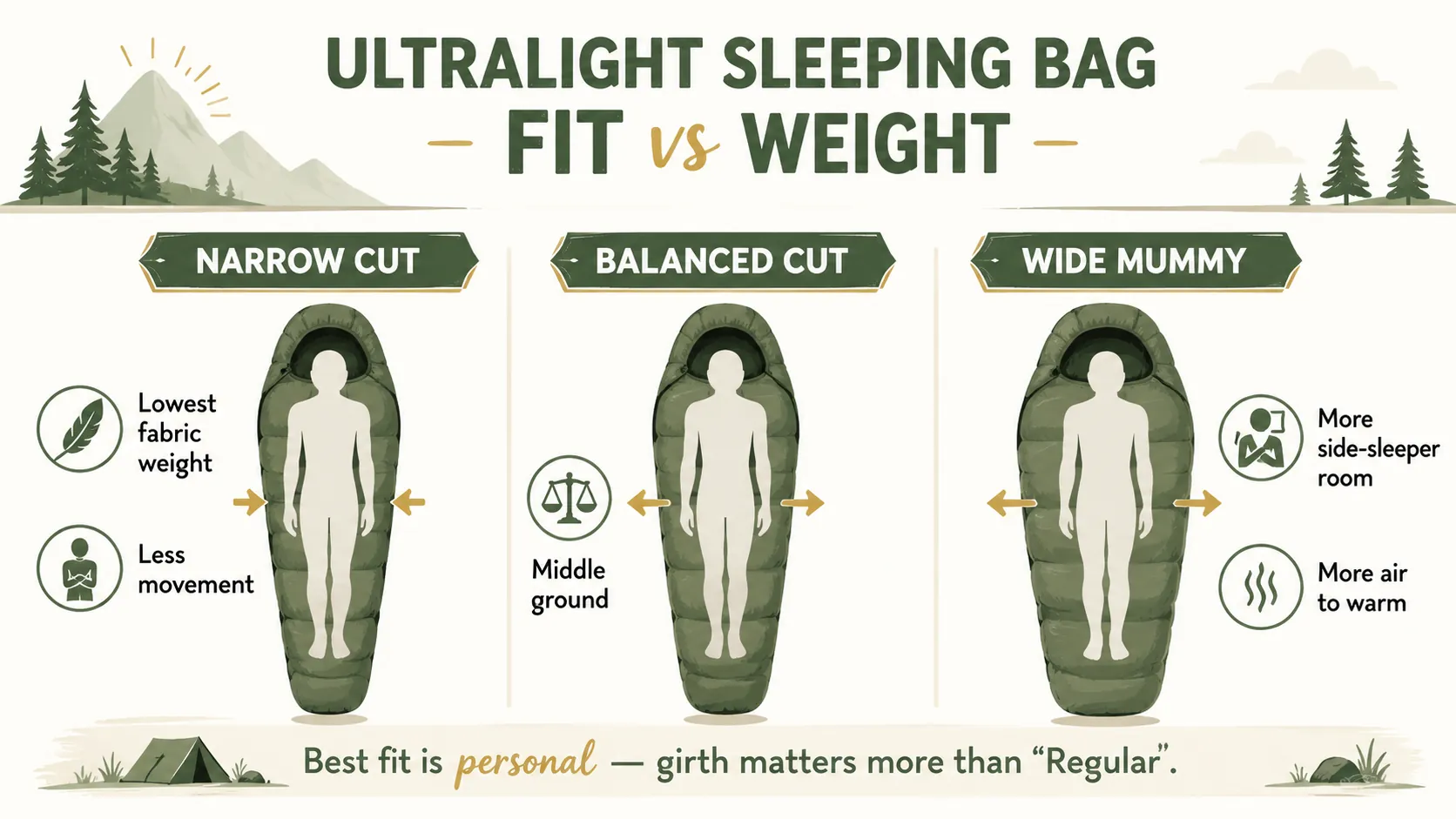
That design is efficient only if it suits you. The Hyperion’s narrow chest and hip dimensions reduce dead air and shell material, but they also reduce freedom to bend a knee or rotate inside the bag. Side sleepers should take that warning seriously rather than assuming every mummy shape feels the same.
Also note the current official page describes a longer zipper than earlier versions, while long-running independent reviews discuss a partial/half-length zipper. The safe buyer takeaway is simple: verify the exact current retail revision if full-length warm-weather venting is a must-have.
Pros
- About 20 oz in Regular
- Standardized 20°F lower / 32°F comfort ratings
- 900-fill hydrophobic down
- Very small packed size
Limitations
- One of the narrowest fits in this group
- Not our first choice for restless side sleepers
- Zipper design/revision should be checked if full ventilation matters
- Weight savings come with less interior flexibility
Western Mountaineering MegaLite 30
An unusually roomy 24-ounce mummy bag for sleepers who would rather carry a few extra inches of girth than fight the bag all night.
#3
The MegaLite is a reminder that fit is part of warmth. A Regular gives you 64 inches around the shoulders and 56 inches through the hips—dramatically more room than the Hyperion—yet the bag still weighs only 1 pound 8 ounces. For someone who turns, draws up a knee or simply hates feeling pinned inside a mummy bag, that extra fabric can be worth more than chasing the absolute minimum ounce count.
The same room is a disadvantage if you are small-framed and sleep still. More internal air takes more body heat to warm, and owner feedback shows that some slim sleepers end up tucking excess fabric around themselves to control drafts. This is not a universally warmer bag; it is a better-shaped bag for a specific sleeper.
Western Mountaineering lists the MegaLite at 30°F but does not present that figure on the product page as an ISO lower/comfort pair. Keep that distinction in mind when comparing it with the Spark or Hyperion.
Pros
- Very roomy for a 24-ounce sleeping bag
- Full-length #5 YKK zipper
- 850+ fill goose down
- Excellent choice for active/side sleepers who fit the volume
Limitations
- Extra room can create dead space for smaller sleepers
- Manufacturer 30°F figure is not presented as an ISO comfort rating
- Premium-category pricing
- No exact current Amazon US child was verified for the 6-foot Regular, so we use the manufacturer page
Sea to Summit Spark 45
A 12.8-ounce warm-weather mummy bag for summer fastpacking when the main goal is to carry dramatically less insulation without switching to a quilt.
#4
The Spark 45 exists for a very different trip than the 15°F and 20°F-class bags above. At less than 13 ounces, it can save close to a pound compared with many three-season mummy bags, but the savings come from carrying far less insulation. That makes it a summer specialist, not a clever way to make a 45°F bag behave like a 20°F bag.
The half-length zipper and thin 10D shell are also deliberate weight-saving choices. You still get a hood and an enclosed mummy shape, which can appeal to hikers who do not want quilt drafts, but ventilation and fabric durability are less forgiving than on heavier bags.
Use the 51°F ISO comfort figure as the conservative planning number, especially if you sleep cold. Alpine summer nights can fall below that even when daytime temperatures are hot, so this pick only makes sense when your actual forecast and sleep system match its narrow temperature window.
Pros
- Only 12.8 oz in Regular
- Published 45°F ISO lower / 51°F comfort ratings
- 850+ fill down and tiny packed volume
- Enclosed hooded bag at near-quilt weight
- Exact Amazon product identity verified
Limitations
- Summer-only temperature range for many backpackers
- Thin 10D fabric needs careful handling
- Half-length zipper limits warm-night venting options
- Not a substitute for a true three-season 15–20°F bag
Zpacks 20F Mummy Sleeping Bag
A 23.2-ounce hooded bag whose full zipper wraps around the footbox so the same insulation can vent or open flat on warm trail nights.
#5
Zpacks earns the thru-hiking role because the bag changes character with the weather. On cold nights you get a hood, neck closure, draft tube and enclosed footbox. On warmer nights the zipper can open at the feet or continue around the footbox until the bag lies flat like a blanket. That is useful across a long trail where a fixed cold-night setup can feel excessive weeks later.
The Medium Standard version is only 23.2 ounces and carries 15.6 ounces of 950-fill down. It is also unusually roomy through the torso at 60 inches shoulder and hip. Zpacks offers a Broad version for even more room, but that adds weight and should be chosen for fit rather than because “wide is better.”
The caution is the temperature label. Zpacks does not claim an ISO test, so do not read its “20°F” as equivalent to the Hyperion’s standardized 20°F lower limit or Spark’s standardized numbers. The high down weight and loft targets are useful evidence, but your trip margin still needs to be conservative.
Pros
- 23.2 oz Medium Standard
- 950-fill RDS-certified Muscovy duck down
- Full zipper wraps around footbox and opens flat
- Roomier torso than many UL mummy bags
Limitations
- Not ISO tested
- Manufacturer temperature estimate needs more buyer margin
- Ultralight shell still requires careful handling
- No Amazon US listing needed or assumed; direct manufacturer only
How to Choose an Ultralight Sleeping Bag
Use 2 pounds as a useful filter, not a law
The original version of this page treated “under 2 pounds” as the entire category. That is too rigid. A 20-ounce bag can be excellent if its fit and temperature range match you; a 29-ounce bag can be the smarter ultralight purchase if the extra ounces buy enough down, draft control or room to prevent a miserable night. Weight is one variable in the sleep system, not the final answer.
Compare comfort to comfort—and lower limit to lower limit
Standardized ISO/EN testing gives two especially useful numbers: a comfort rating and a lower-limit/transition rating. They answer different questions. When a manufacturer publishes only its own temperature number, treat that figure separately instead of building a fake apples-to-apples table. A useful backpacking margin also depends on your clothing, metabolism, food, fatigue, shelter and sleeping pad R-value.
Fit changes both sleep quality and thermal efficiency
Narrow mummy bags reduce shell material and dead air, which helps weight and thermal efficiency. They can also make side sleeping miserable. Wide bags solve movement problems but may create excess space for small sleepers. Compare shoulder and hip girth to a bag you already tolerate well rather than shopping by “Regular” alone.
Fill power is not the same as warmth
Higher fill power means a given mass of down can loft to a greater volume. It helps a designer achieve warmth with less weight and bulk, but fill weight, baffle design, fit and draft control still matter. A 950-fill bag is not automatically warmer than an 850-fill bag if it contains less down or uses a different shape.
Zipper length is a real three-season decision
Short zippers save ounces. Full zippers let you dump heat, open the bag on warm nights and often make entry easier. On a long trail with changing temperatures, ventilation can be more valuable than saving another ounce or two.
Your sleeping pad is part of the temperature rating
A sleeping bag cannot compensate indefinitely for heat lost into cold ground. Standardized bag tests assume an insulated pad system. If your pad is marginal for the conditions, buying a warmer bag alone may not solve the cold-night problem. Our backpacking sleep system guide explains how bag, pad, shelter and clothing work together.
What about quilts?
Backpacking quilts can save weight by removing the hood, zipper and much of the insulation that would be compressed beneath you. They also create a different fit and draft-management decision. We intentionally excluded quilts from this roundup so this page remains a clean sleeping-bag comparison rather than turning into two product categories at once.
How We Chose These Ultralight Sleeping Bags
We first checked the current search intent and found that the old “under 2 pounds” page overlapped the broader ultralight sleeping-bag SERP instead of earning a distinct category. The rebuild therefore targets the broader buyer decision while preserving low weight as a core criterion.
We verified current manufacturer pages, size variants, fill type, listed weight and current temperature-rating method.
Standardized ISO/EN ratings are labeled separately from manufacturer-only ratings instead of being presented as equivalent.
We compared girth, zipper design, draft control and recurring reviewer/owner fit issues—not just ounces.
Amazon buttons appear only where an exact product variant could be verified. We use direct manufacturer links rather than guessing an ASIN.
FAQ
What weight counts as an ultralight sleeping bag?
There is no official cutoff. For three-season down mummy bags, sub-2-pound models are a useful ultralight shopping range, but the temperature rating, fit and features determine whether that low weight is actually useful for your trip.
Is a 20°F sleeping bag enough for backpacking?
It can be a versatile three-season class, but “20°F” may refer to an ISO lower limit, a manufacturer estimate or another benchmark. Check the rating method and comfort figure where available, then leave margin for your physiology, clothing, pad and expected nighttime lows.
What is the difference between sleeping bag comfort and lower-limit ratings?
The standardized comfort rating represents a warmer reference condition, while the lower-limit/transition figure is colder and should not be treated as the same comfort expectation. For conservative trip planning, the comfort number is often the more useful starting point.
Does higher fill power make a sleeping bag warmer?
Not by itself. Higher fill power improves loft per unit of down weight, but total down quantity, baffle construction, bag shape, draft control and fit also determine warmth.
Are quilts lighter than ultralight sleeping bags?
They often can be because they remove the hood, full zipper and much of the underside insulation. That creates a separate draft-management and sleep-style trade-off, which is why quilts are intentionally excluded from this sleeping-bag roundup.
Which ultralight sleeping bag is best for side sleepers?
Room matters more than the award label. In this shortlist the Western Mountaineering MegaLite has the most obviously side-sleeper-friendly wide mummy geometry at 64 inches around the shoulders and 56 inches around the hips in the 6-foot size. Smaller sleepers should be aware that too much space can also reduce thermal efficiency.