
Gear & Home is reader-supported. As an Amazon Associate I earn from qualifying purchases. When you buy through links on our site, we may earn an affiliate commission, at no extra cost to you. Learn more.
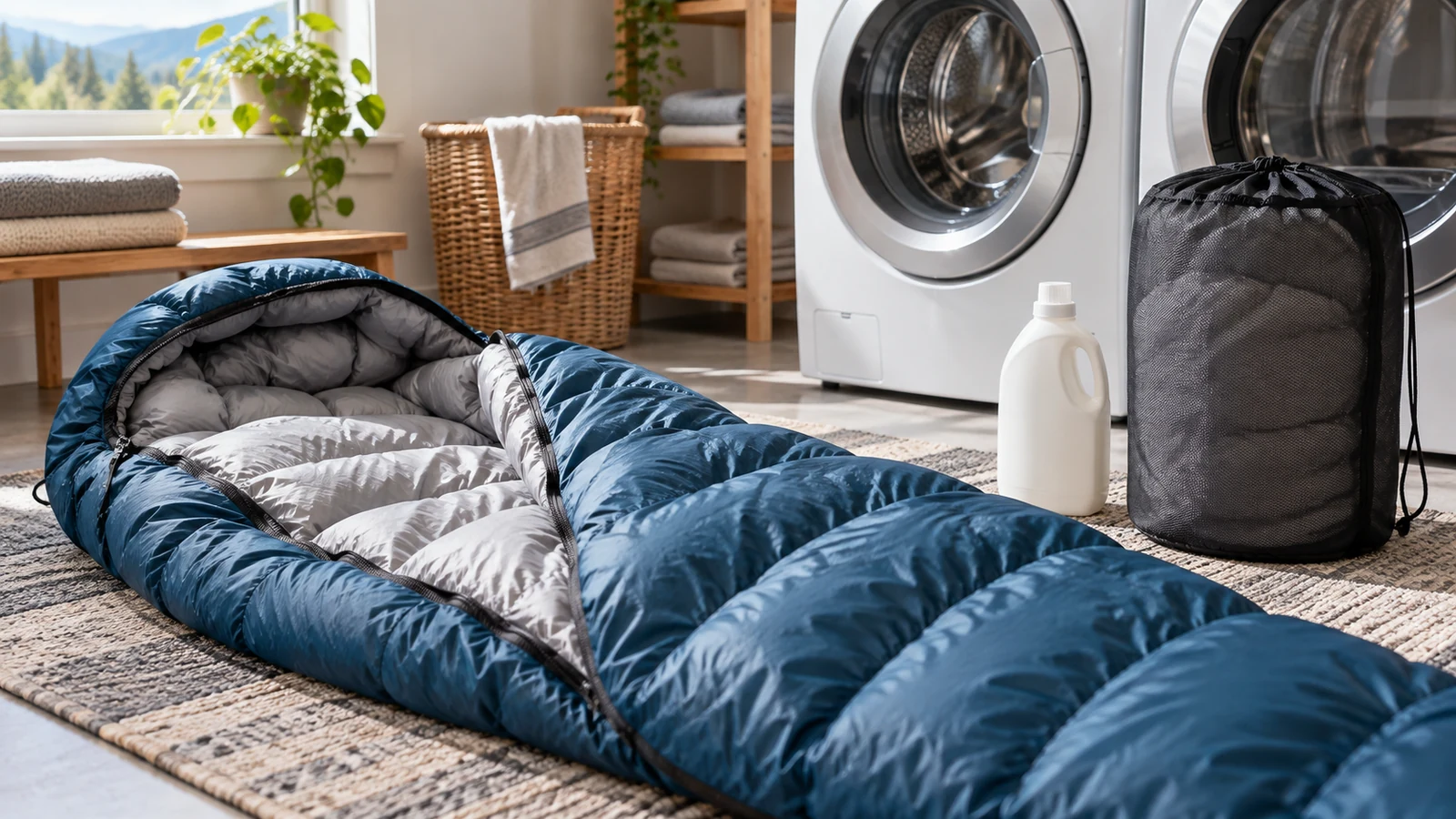
A down sleeping bag does not need a full wash after every trip, but dirt, body oils, and trapped moisture can eventually reduce loft. The safe routine is simple: check the care label, use a down-specific cleaner, support the bag carefully while it is wet, dry it completely on the lowest allowed heat, then store it loose in a breathable sack.
How do you wash a down sleeping bag without ruining it?
Start with the instructions for your exact bag. If machine washing is allowed, a large front-loading washer is the safest default. Use a cleaner made for down, choose the gentle cycle and water temperature specified by the manufacturer, rinse thoroughly, and never wring or lift the saturated bag by one end. Dry on low or no heat if the label allows it, stopping periodically to break up clumps until every baffle is dry and evenly lofted.
A waterlogged sleeping bag becomes heavy enough to stress baffles and stitching. The other common failure is stopping the drying process when the shell feels dry but the insulation still contains damp clumps.
Spot clean or do a full wash?
Do not wash by the calendar alone. Airing out the bag after trips and spot cleaning the hood, collar, and footbox can delay a full wash and reduce unnecessary wear. A full wash makes sense when the shell feels oily or grimy, persistent odor remains after airing, or the down no longer lofts as freely as it once did.
If the bag has a tear, failed seam, broken baffle, damaged zipper, or a patch that you do not trust in a wash cycle, repair it first. Wet insulation is much heavier than dry insulation, so small structural problems can become bigger during washing.
What you need
- Your sleeping bag care label or current manufacturer care instructions.
- A down-specific cleaner. Do not substitute fabric softener, bleach, dryer sheets, or ordinary fragranced detergent unless your manufacturer explicitly permits it.
- A large-capacity washer if machine washing is allowed, preferably a front-loader with enough room for the bag to move freely.
- A large dryer with accurate low-heat control if tumble drying is allowed.
- Clean dryer balls or clean tennis balls if your bag maker allows them.
- A clean basket, tub, or similar support for moving the bag while it is saturated.
For a straightforward Amazon option, the 10 fl oz GEAR AID Revivex Down Cleaner is specifically sold for down-filled items including sleeping bags. The article does not depend on this exact brand, but it is a practical choice when your bag instructions call for a dedicated down cleaner.
How to wash a down sleeping bag in a machine
Use these as the common steps, not as a replacement for the label. Down bags are not all built the same, and manufacturers sometimes give different directions for cycle selection, zipper position, and drying.
1. Read the label before you touch the washer
Confirm whether machine washing is allowed, the maximum water temperature, the recommended cycle, whether tumble drying is permitted, and any special instructions for the shell fabric or zipper. This matters because even reputable brands do not all specify the same zipper position during washing.
2. Inspect and prep the bag
Empty every pocket, remove loose dirt, and check the shell, seams, zipper, drawcords, and baffles for damage. Treat small surface stains according to the bag maker and cleaner instructions rather than scrubbing aggressively through the insulation.
3. Use a washer with enough room
A large front-loading machine is the safest default because it lets the bag move without wrapping around a center agitator. If your home washer crowds the bag tightly, use a larger commercial machine or hand wash instead. Do not use a traditional top-loader with a center agitator.
4. Add only the cleaner your bag calls for
Use the amount specified by the cleaner and the sleeping bag manufacturer. More soap is not better. Excess cleaner is harder to rinse out, and residue can interfere with loft. If you use a public machine, check that the detergent tray is clean before adding your down wash.
5. Wash gently and rinse thoroughly
Select the cycle and water temperature on the care label. An extra rinse is often useful for removing cleaner from the insulation. If the bag still feels unusually slick or soapy after the cycle, rinse again rather than moving straight to the dryer.
6. Support the whole bag when it is wet
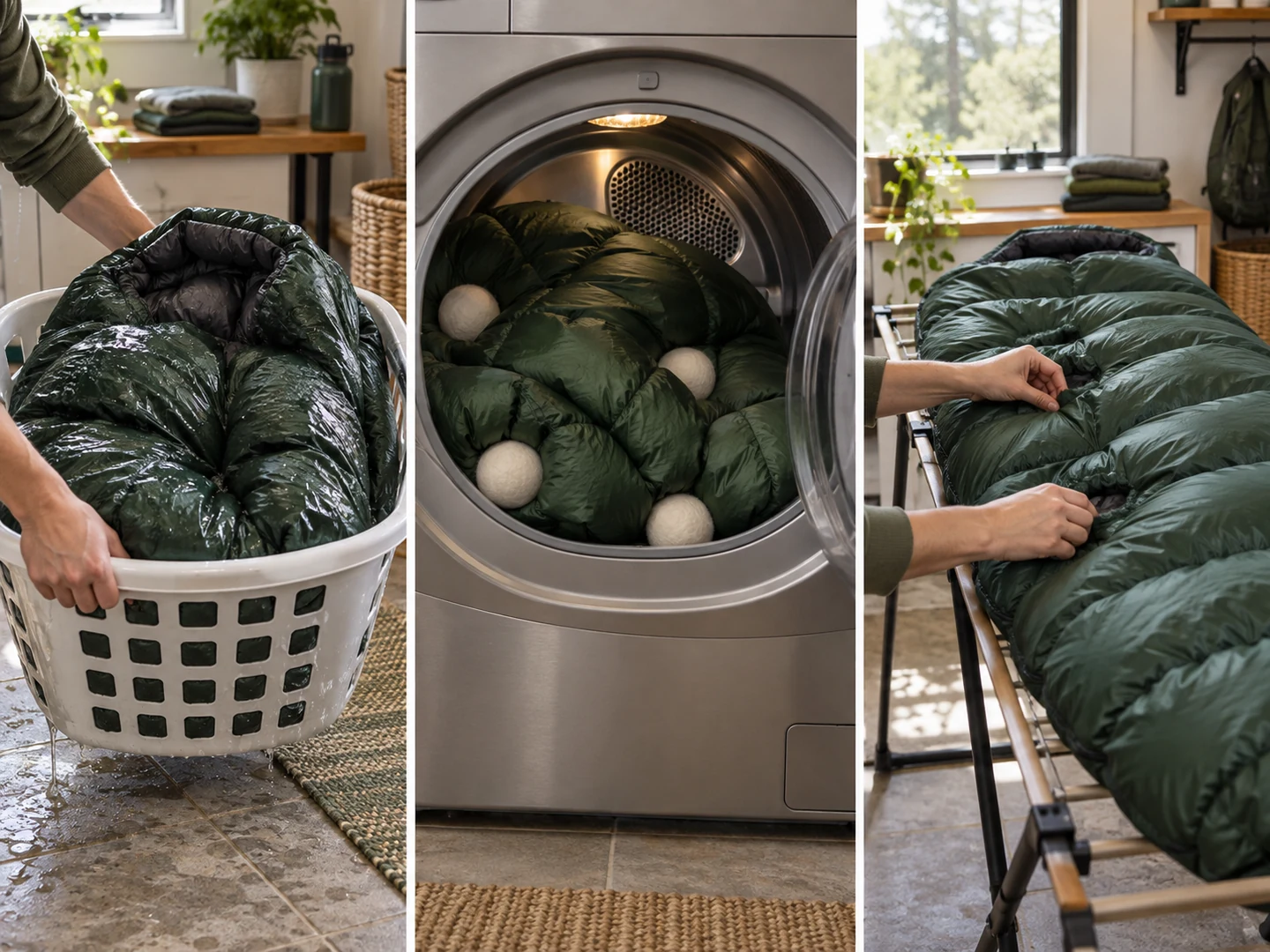
Do not grab one end and let the rest hang. Do not wring it. A saturated down bag can become surprisingly heavy, and that weight can strain internal baffles. Keep it supported in the drum, a tub, or a laundry basket while transferring it to the dryer.
How to hand wash a down sleeping bag
Hand washing is useful when the bag is too large for your washer or the manufacturer recommends a tub. Fill a clean bathtub with the temperature of water specified by the care label, add the measured down cleaner, and gently work the bag through the water until it is fully saturated. Avoid twisting or pulling the baffles.
Drain the tub with the bag still supported. Press water out gently without wringing, refill with clean water, and repeat the rinse until no cleaner remains. The hardest part is moving a waterlogged bag, so keep as much of its weight supported as possible.
Drying is the step you cannot rush
If the label permits tumble drying, use a large dryer on low or no heat and check the bag often. Down will clump when wet. Dryer balls can help separate those clumps, but they are not a substitute for stopping the cycle, feeling through every baffle, and gently breaking apart stubborn lumps by hand.
Expect multiple cycles. The shell can feel dry long before the center of the insulation is dry. Keep going until the bag feels evenly lofty and you cannot find any cool, dense, or lumpy pockets. Then let it air in a dry room before long-term storage.
If the care label does not allow tumble drying, dry the bag flat in a warm, well-ventilated area and redistribute the down repeatedly as it dries. Avoid direct high heat. The goal is complete drying, not speed at any cost.
What if the down is still clumped?
Clumping usually means the insulation is still damp or has not been redistributed. Continue with the lowest allowed dryer setting, pause to massage clumps apart, and recheck every chamber. If the bag remains lumpy after it is fully dry, review the manufacturer’s care guidance before adding more heat or another wash cycle.
How to store a down sleeping bag
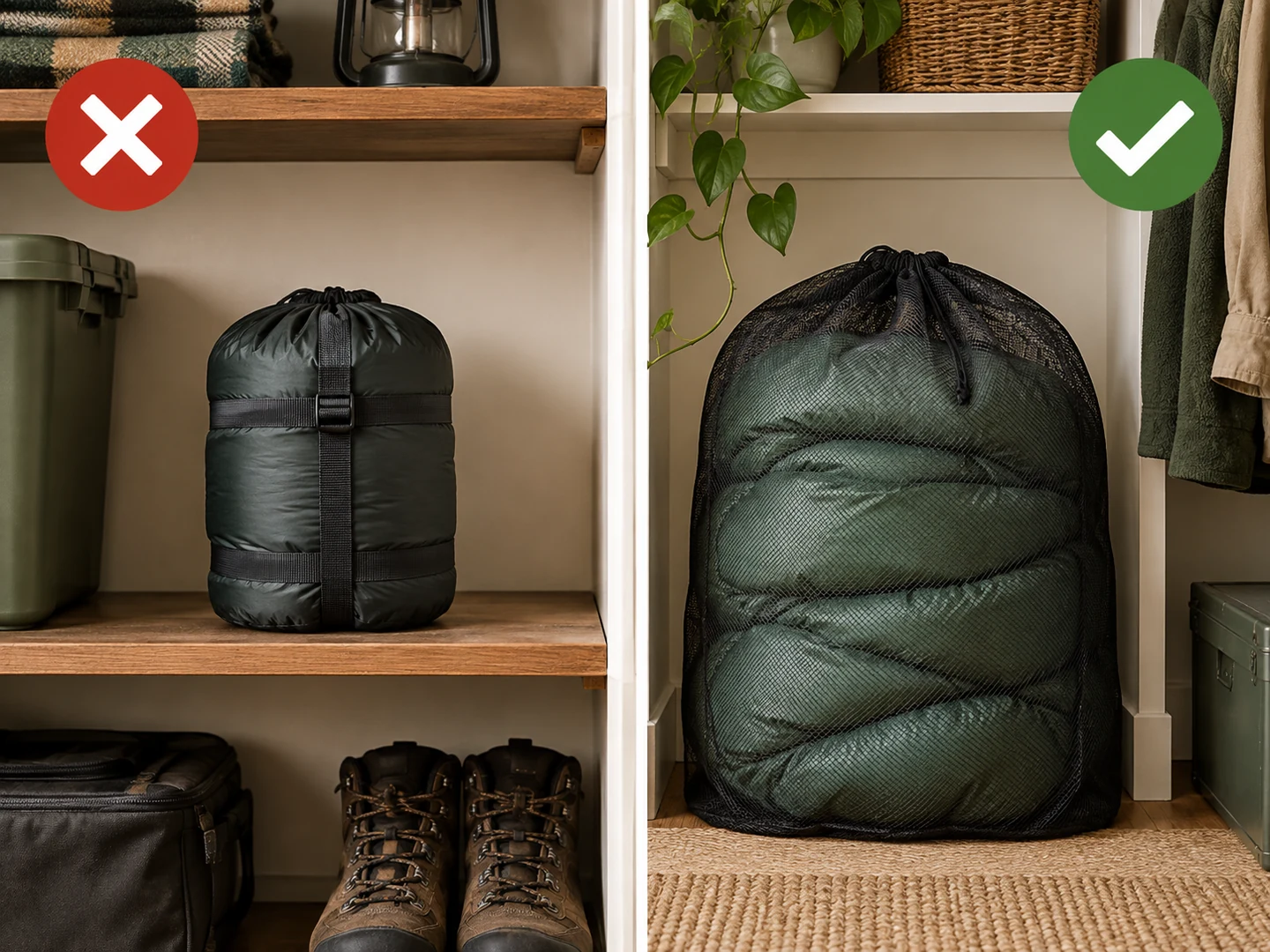
Compression is for travel, not for months in a closet. Once the bag is completely dry, put it in the large storage sack supplied by the manufacturer or another roomy cotton or mesh sack. Hanging can also work if the bag maker allows it and the weight is well supported.
Choose a cool, dry, temperature-controlled space. A bedroom closet is usually better than a damp basement, hot attic, garage, or car trunk. Avoid airtight plastic or waterproof storage bags because trapped moisture can create odor and mildew problems.
Seven mistakes that shorten a down bag’s life
- Washing after every trip: air out and spot clean when a full wash is not needed.
- Ignoring the care label: generic advice cannot account for every shell, zipper, coating, or construction method.
- Using a center-agitator washer: twisting and wrapping can stress fabric and baffles.
- Using too much cleaner: residue is difficult to rinse from thick insulation.
- Lifting a saturated bag by one end: the wet weight can strain internal construction.
- Turning up the dryer heat to save time: lightweight shell fabrics and coatings may be heat sensitive.
- Storing it compressed or slightly damp: both can reduce performance, and moisture can create odor or mildew.
When professional cleaning or repair makes more sense
Consider a specialist outdoor-gear cleaner or the manufacturer if the bag is very expensive, has a waterproof or unusual shell, contains complex construction you are unsure about, has torn baffles or shell damage, or has persistent contamination that ordinary gear care has not solved. Do not use a conventional dry cleaner unless the sleeping bag manufacturer explicitly says that process is safe.
How to wash it less often
Air the bag thoroughly after damp trips, sleep in reasonably clean base layers, and use a liner if it fits your sleep system. A liner can take much of the body oil and dirt that would otherwise reach the bag, and it is far easier to wash. If you want a lightweight option, our DIY no-sew sleeping bag liner guide shows the basic concept.
If you are deciding whether your current bag still fits your backpacking setup, see our ultralight sleeping bag guide. For the rest of the overnight setup, the complete backpacking sleep system guide explains how the bag, pad, and other layers work together.
FAQ
Can you wash a down sleeping bag in a washing machine?
Yes, if the care label for your exact bag allows it. A large front-loading washer is the safest default because it gives the bag room to move without a center agitator. If the bag is crowded or the manufacturer recommends hand washing, use a bathtub or a larger commercial machine instead.
What detergent should you use for a down sleeping bag?
Use a cleaner formulated for down when the manufacturer calls for one. Avoid fabric softener, bleach, dryer sheets, and ordinary detergent unless your bag maker explicitly approves them. Measure the cleaner rather than pouring in extra.
How long does a down sleeping bag take to dry?
There is no reliable single time because bag size, fill amount, machine capacity, and heat settings vary. Plan for multiple low-heat or no-heat cycles if tumble drying is allowed, and continue until every baffle is dry, soft, and free of cool dense clumps.
Can you store a down sleeping bag in its stuff sack?
Use the stuff sack for transport, not long-term storage. At home, store a completely dry bag loosely in a large breathable cotton or mesh sack, or hang it if the manufacturer allows that. Keep it in a cool, dry place.
How often should you wash a down sleeping bag?
Wash it when condition calls for it rather than after every trip. Persistent odor, visible grime, oily fabric, or reduced loft are better signals than a fixed schedule. Airing out the bag, wearing clean sleep layers, and using a liner can extend the time between full washes.
How we built this care guide
Gear & Home compared current sleeping bag care guidance from outdoor retailers, sleeping bag manufacturers, and down-care brands, then checked recurring owner questions around wet handling, clumping, drying time, and storage. Where brand instructions differ, this guide deliberately defers to the care label for the exact sleeping bag.