
Gear & Home is reader-supported. As an Amazon Associate I earn from qualifying purchases. When you buy through links on our site, we may earn an affiliate commission, at no extra cost to you. Learn more.
A budget sleeping bag can be a smart buy when the price ceiling is real and the trade-offs are clear. Under $150, the strongest current options are mostly synthetic bags that give up packed size and weight before they give up basic warmth features. The best choice depends on whether you are carrying the bag on trail, driving it to camp, sleeping cold, or simply need more room to move.
For this guide, the $150 cap is a hard filter rather than a sale-day trick. We kept models whose normal manufacturer price or current regular listing stays under the cap, then compared exact variants, temperature labeling, weight, dimensions, owner patterns and practical fit. That is why some familiar “budget” down bags do not appear here.
The best budget sleeping bag under $150 for most campers
The Klymit Wild Aspen 20 Regular is our Best Overall pick. At 2.5 pounds and 74 x 30 inches, it is the lightest bag in this shortlist by a meaningful margin, while still giving you synthetic insulation, a mummy hood, a zipper draft tube and a compression sack. That makes it the cleanest compromise for weekend backpacking, walk-in sites and general three-season camping.
If your priority is spending as little as possible, choose the Amazon Basics 20°F Mummy. If you are driving to camp and want a much wider bed-like shape, the TETON Celsius XXL 0°F is the roomiest pick. For colder car-camping trips where a mummy cut makes more sense than a 39-inch-wide rectangle, the Coleman North Rim 0°F is the better fit.
Quick Picks
Coleman North Rim 0°F
Hooded car-camping mummy · fits heights up to 6 ft 2 in
Best Budget Sleeping Bags Under $150 Compared
| Pick | Published temperature label | Weight | Size | Shape | Best for | Where to check |
|---|---|---|---|---|---|---|
| Klymit Wild Aspen 20 Regular Best Overall |
20°F product rating | 2.5 lb | 74 x 30 in | Mummy | Weekend backpacking and versatile three-season use | Check availability on Amazon |
| Amazon Basics 20°F Mummy Best Budget |
20°F product rating | 2 kg / 4.4 lb | 82 x 33 in | Mummy | Low-cost car camping, campsites and short carries | Check availability on Amazon |
| TETON Celsius XXL 0°F Best Roomy Car-Camping Bag |
0°F product name; 25-30°F comfort range published by TETON | 7 lb | 90 x 39 in | Rectangular with hood | Tall, broad or restless sleepers at drive-in camps | Check availability on Amazon |
| Coleman North Rim 0°F Best Cold-Weather Mummy Value |
0°F product rating; comfort varies by setup and sleeper | About 6.3 lb on current Amazon listing | 82 x 32 in | Mummy | Colder car camping when a hooded mummy cut is preferred | Check availability on Amazon |
Klymit Wild Aspen 20 Regular
20°F product rating
2.5 lb
74 x 30 in
Mummy
Amazon Basics 20°F Mummy
20°F product rating
4.4 lb
82 x 33 in
Mummy
TETON Celsius XXL 0°F
25-30°F published by TETON
7 lb
90 x 39 in
Rectangular + hood
Coleman North Rim 0°F
0°F product rating
About 6.3 lb
82 x 32 in
Mummy
Temperature labels are not automatically apples-to-apples comfort ratings. TETON publishes a separate 25-30°F comfort range for the Celsius XXL 0°F. Coleman says actual North Rim comfort changes with clothing, sleeping pad and personal warmth. Klymit and Amazon list 20°F product ratings for the exact variants here. Use the number as one input, not as a promise that every sleeper will be comfortable at that temperature.
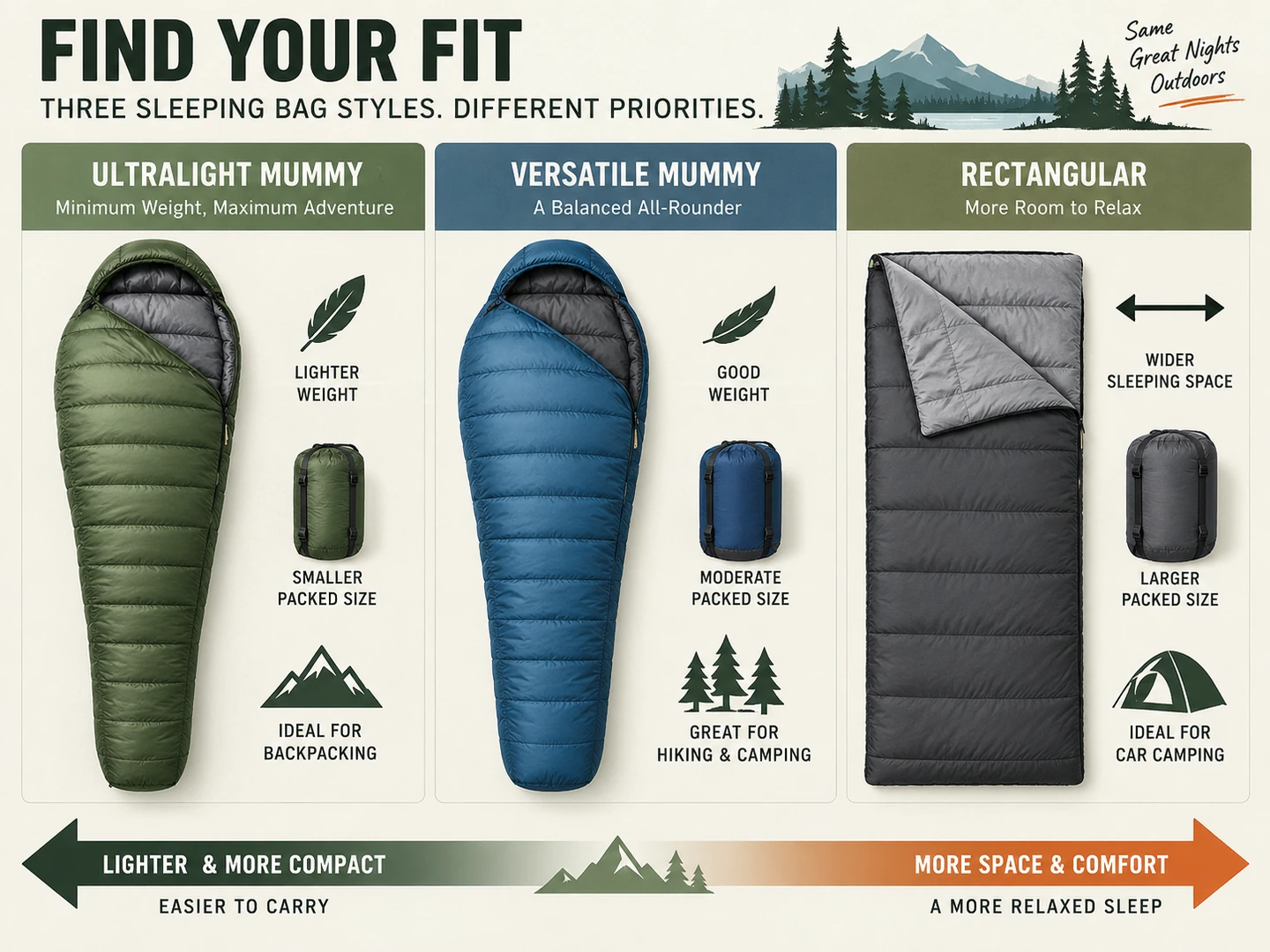
A 7-pound rectangular bag can be a terrific value in a car and a terrible backpacking purchase. A 2.5-pound mummy can be easy to carry but too narrow for a broad-shouldered side sleeper. Decide where the bag will travel, how much room you need and what sleeping pad sits underneath it before comparing temperature labels.
The 4 Best Budget Sleeping Bags Under $150
Klymit Wild Aspen 20 Regular
The strongest all-around value here because it keeps carried weight much closer to a backpacking bag than the heavier car-camping options.
#1
The Wild Aspen 20 is the easiest recommendation when you do not want to decide between “budget” and “carryable.” The exact Regular Amazon variant weighs 2.5 pounds, roughly two pounds less than the Amazon Basics bag and far less than the cold-weather car-camping picks. That difference is meaningful on a weekend backpacking trip or any walk-in campsite where the bag spends real time on your back.
Klymit uses synthetic insulation, a water- and abrasion-resistant micro-polyester shell, a built-out foot box, an adjustable mummy hood and a zipper draft tube. Those are sensible features for a value bag because they address the practical ways budget sleepers lose comfort: excess dead space around the head, drafts along the zipper and moisture exposure around camp.
The limitation is fit. The exact Regular is 74 inches long and 30 inches wide. Current owner feedback includes both happy smaller-framed users and people around average adult height who wished they had bought the larger size. If you are tall, broad through the shoulders, or hate close mummy cuts, the Large or a roomier product category is a better direction even if it adds weight.
Pros
- Lightest pick in this shortlist at 2.5 lb
- Synthetic insulation is forgiving around damp conditions
- Mummy hood and zipper draft tube improve heat retention
- Compression sack included
Limitations
- 30-inch Regular width is not generous
- Regular length can feel short for taller users
- 20°F is a product rating, not a universal comfort promise
- Owner zipper feedback is mixed rather than uniformly positive
Amazon Basics 20°F Cold Weather Mummy Sleeping Bag
A straightforward low-cost mummy for casual camping, with more interior length and width than the Klymit but a much larger weight penalty.
#2
This is the pick for someone who wants a recognizable, simple sleeping bag at the lowest spend in the group and does not need to optimize a backpack. The 82-inch length and 33-inch width provide more room than the Wild Aspen Regular, which matters for casual campers who would rather accept four-plus pounds than squeeze into a narrower mummy.
The current exact listing uses polyester materials and a no-snag zipper design, with a 20°F product label. Treat that label conservatively. The Amazon Basics listing does not give you the same clarity as a standardized ISO comfort and lower-limit pair, and owner comments span from people who find it warm for the money to others who note zipper hassle or fit limitations.
Its real strength is value at a campsite, not technical performance per dollar on trail. At 4.4 pounds, it is carryable for short distances, youth groups, festivals and drive-in campgrounds, but long backpacking days are where spending more for lower weight starts to make sense.
Pros
- Lowest-cost pick in the shortlist
- 82 x 33 inch mummy is relatively roomy for the category
- Exact Amazon US variant is clearly identified for the 82 x 33 inch mummy
- Simple synthetic construction is easy to understand and own
Limitations
- 4.4 lb is heavy for regular backpacking
- No separate standardized comfort rating shown on the listing
- Zipper comments are mixed across owner feedback
- Not nearly as compact as lightweight backpacking bags
TETON Celsius XXL 0°F
The comfort-first choice for tall, broad and restless sleepers who have trunk space and care far more about room than carried weight.
#3
The Celsius XXL is almost the opposite of the Klymit. It weighs 7 pounds and measures 90 x 39 inches in use, so it is a poor backpacking choice but an excellent answer to the question, “What if I hate sleeping-bag claustrophobia?” The rectangular body gives side sleepers and active sleepers more room to bend knees, turn over and change position.
The current Black and Red 101L model uses a polyester taffeta shell, polyester flannel liner, SuperLoft Elite synthetic fill, zipper and shoulder draft tubes and a hood. TETON also includes a compression sack, but “compression” does not turn seven pounds of bulky synthetic insulation into a small backpacking package.
TETON’s temperature communication is a reason we like this pick. The model name says 0°F, but the manufacturer separately publishes a 25-30°F comfort range. That distinction is much more useful for planning than assuming the number in the product name equals all-night comfort for every sleeper.
Pros
- Very roomy 90 x 39 inch sleeping area
- Soft flannel-style liner is a recurring comfort positive
- Manufacturer publishes a separate 25-30°F comfort range
- Hood, draft tubes and compression sack included
Limitations
- 7 lb makes it a car-camping bag
- Large packed volume takes real trunk and closet space
- Zipper snagging appears as a recurring complaint
- Can be excessive for warm summer nights
Coleman North Rim 0°F
A value-focused hooded mummy for colder car-camping conditions when you want less dead space than a wide rectangular bag, but do not need backpacking weight.
#4
The North Rim makes sense when the Celsius XXL looks too wide and bulky but you still want a budget bag aimed at colder nights. The 82 x 32 inch mummy shape reduces empty space around the body, while the adjustable hood and full-length zipper draft tube are designed to reduce heat loss.
Coleman markets the bag with a 0°F rating, but the company’s own current Q&A also says actual comfort varies with your clothing, sleeping pad and personal warmth. That is the right way to read this category. A budget bag should not be your only safety margin for a forecast near its printed limit.
There are two practical cautions. First, this is still a heavy car-camping bag. The current Amazon listing reports about 6.3 pounds, while Coleman has published a different weight in its own Q&A, so we would not use either number as a precision backpacking metric. Second, zipper problems are a repeated owner complaint. The no-snag guard works well for many users, but enough reports mention jamming, splitting or guard damage that the zipper deserves a pre-trip check.
Pros
- Hooded mummy shape reduces extra air space
- Thermolock full-length draft tube
- Fits advertised heights up to 6 ft 2 in
- Machine washable and backed by a 5-year limited warranty
Limitations
- Too heavy and bulky for normal backpacking
- 0°F label should not be read as guaranteed comfort
- Zipper issues recur across owner feedback
- Broad sleepers may still prefer the wider TETON rectangle
How to Choose a Budget Sleeping Bag Under $150
1. Decide whether the bag rides in a backpack or a trunk
This decision removes most bad options immediately. For backpacking, a 2.5-pound bag such as the Wild Aspen is already a compromise compared with premium ultralight insulation, but it is realistic to carry. A 4.4-pound Amazon Basics bag is better for short carries. A 6-7 pound North Rim or Celsius XXL belongs in a car, truck, RV or base-camp setup.
If weight is your primary filter rather than price, go directly to our best ultralight sleeping bags roundup. It is a separate buying problem with different winners.
2. Read the temperature language, not just the number
A product name that says 20°F or 0°F does not tell you whether that number is an ISO comfort rating, a lower limit, a manufacturer target or a survival-oriented label. Look for exact wording and do not compare unlike numbers as if they came from one standard.
TETON is the clearest example in this shortlist: the Celsius XXL carries a 0°F product name while the current manufacturer page separately lists 25-30°F as the comfort range. That is useful information, not a flaw. It gives you a more realistic starting point for trip planning.
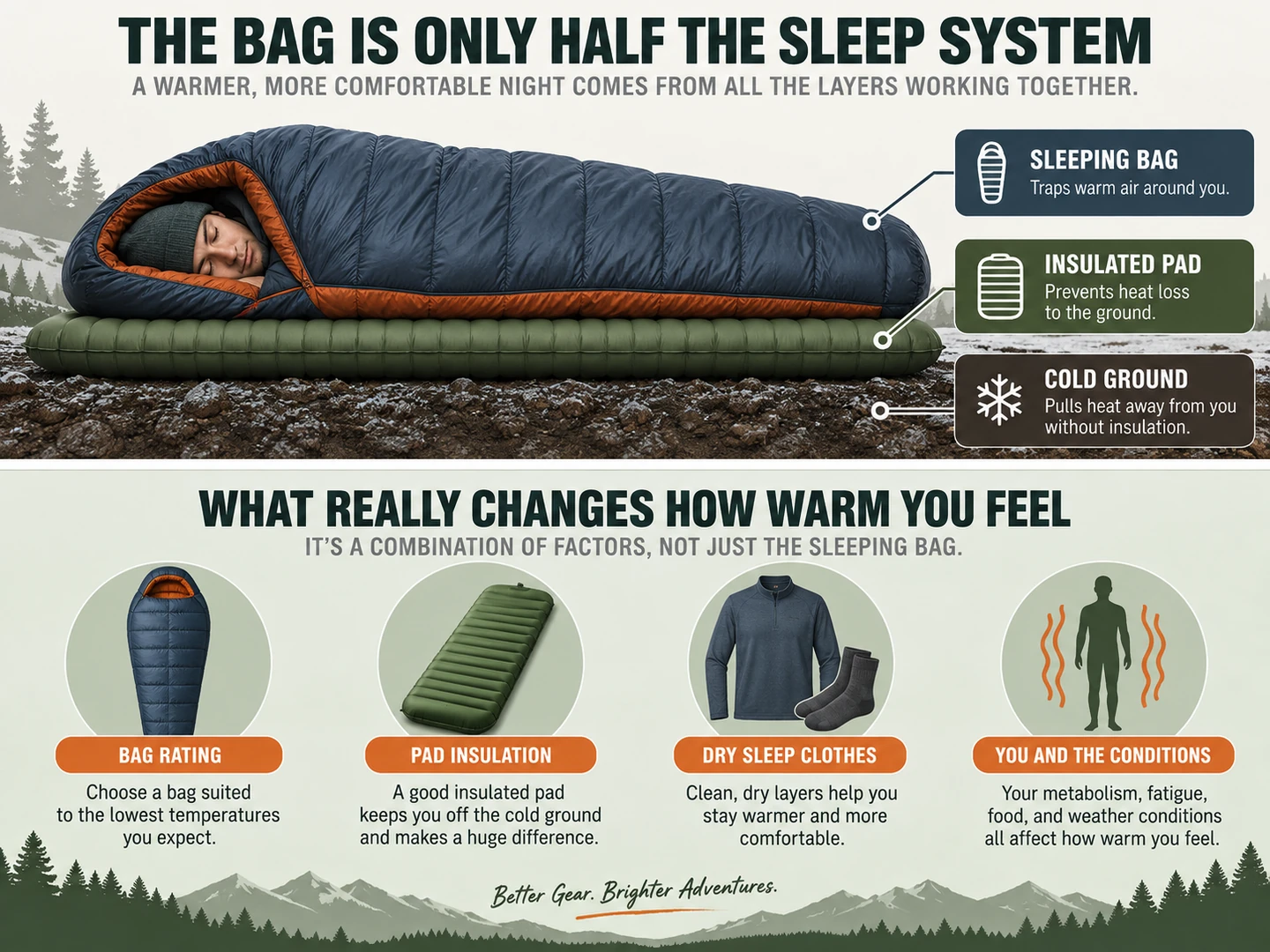
3. Your sleeping pad is part of the warmth rating in real life
A sleeping bag insulates the air around you, but the insulation under your body is compressed. The pad is what resists conductive heat loss into the ground. A warm bag on an under-insulated pad can still feel cold. Our sleeping pad R-value guide explains how to match pad insulation to expected conditions.
4. Fit can make a warmer-rated bag feel worse
Too much empty space takes more body heat to warm. Too little space can compress insulation, restrict sleep position and make it hard to layer clothing. The Wild Aspen Regular is narrow and light. The Celsius XXL is huge and comfortable but bulky. The Amazon Basics and North Rim sit between those extremes. Choose the geometry that fits your body and sleep position rather than assuming one mummy shape suits everyone.
5. Synthetic is usually the value sweet spot under $150
Synthetic insulation is heavier and bulkier than good down for the same warmth, but it is less expensive, more forgiving around moisture and usually simpler to care for. That is why all four picks here use synthetic fill. Current down options do exist near this price band, but the strongest established models can now sit above the cap.
For example, the current Kelty Cosmic Down 20 starts above $150 at its normal manufacturer price. A temporary promotion can move a product across a price ceiling, but we do not build an evergreen “under $150” winner around a sale that may disappear tomorrow.
6. Leave margin for the trip you actually have
Forecast error, wind exposure, humidity, fatigue, calorie intake, clothing, shelter and individual metabolism all change how warm you feel. A rating should help you compare products, not replace a conservative trip plan. If a cold night would create a safety problem rather than just an uncomfortable morning, use more insulation margin than the marketing label alone suggests.
7. Build the whole system before upgrading one component
A more expensive sleeping bag cannot fix a pad with too little insulation, a wet shelter, or a poor fit. Our complete backpacking sleep system guide covers how bag, pad, clothing, shelter and pillow work together. If you are outfitting a first solo setup, the solo camping checklist helps make sure the rest of the sleep system is not missing.
How We Chose These Budget Sleeping Bags
We started with the current US search results for “best budget sleeping bags under $150” and related commercial queries. The dominant intent is a product-selection roundup, so this page is deliberately decision-first rather than a long sleeping-bag explainer.
A primary pick had to fit the $150 ceiling through its normal manufacturer price or a current regular listing. We did not qualify a normally more expensive model only because of a short promotion.
Amazon CTAs use exact US ASINs for the specific variant described. Ambiguous child variants were removed rather than guessed.
Manufacturer pages and exact retailer listings establish dimensions, weight, materials, rating language and warranty details. When published sources conflict, the article says so instead of hiding the mismatch.
Owner reviews, retailer feedback, community discussion and independent reviews are used to identify repeat patterns such as fit, zipper behavior, warmth perception, packed bulk and long-term practicality.
Best Overall, Best Budget and the car-camping awards reflect different buyer jobs. We do not turn unlike bags into a fake universal score.
This page is value-first and capped at $150. The existing ultralight roundup remains weight-first, so a shopper who values ounces above cost has a clear next page instead of a duplicated list.
FAQ
What is the best budget sleeping bag under $150?
For most buyers in this shortlist, the Klymit Wild Aspen 20 Regular is the best balance because it weighs 2.5 pounds while still providing synthetic insulation, a mummy hood, a zipper draft tube and a compression sack. If you are car camping and do not care about weight, roomier options can be more comfortable.
Can you get a good sleeping bag for under $100?
Yes, especially for car camping and occasional use. The important trade-off is usually weight and packed bulk rather than the absence of basic sleeping-bag features. Check the exact temperature language, zipper quality, dimensions and owner patterns before buying purely by price.
Is a 20°F sleeping bag comfortable at 20°F?
Not necessarily. A 20°F number can refer to different rating methods, and not every product publishes a standardized comfort value. Your pad insulation, clothing, shelter, metabolism and conditions also affect warmth. Treat the printed number as one comparison input rather than a guaranteed comfort temperature.
Is a 0°F sleeping bag actually comfortable at 0°F?
Do not assume so. The TETON Celsius XXL 0°F is a useful example because TETON separately publishes a 25-30°F comfort range for the current model. Coleman also notes that actual North Rim comfort varies with clothing, sleeping pad and personal warmth.
Are budget sleeping bags too heavy for backpacking?
Many are. In this shortlist, the Klymit Wild Aspen 20 Regular at 2.5 pounds is the most realistic backpacking option. The 4.4-pound Amazon Basics bag is better for short carries, while the Coleman North Rim and TETON Celsius XXL are primarily car-camping bags.
Is synthetic or down better for a budget sleeping bag?
Synthetic is usually easier to find under a strict $150 ceiling and remains useful in damp conditions, but it is heavier and bulkier than good down. Down becomes more attractive when low weight and small packed size justify a higher purchase price.
Do I still need an insulated sleeping pad with a warm sleeping bag?
Yes when conditions require ground insulation. The insulation beneath your body is compressed, so the sleeping pad plays a major role in limiting heat loss to the ground. Match the pad R-value to the conditions instead of expecting the bag to do all the work.