
Gear & Home is reader-supported. As an Amazon Associate I earn from qualifying purchases. When you buy through links on our site, we may earn an affiliate commission, at no extra cost to you. Learn more.
A budget rain jacket can be a smart hiking shell, but only if the compromises match your trip. Under the $100 ceiling, the biggest differences are not brand prestige. They are ventilation, seam sealing, weight, packability and how much abrasion the fabric can tolerate.
For this guide, we focused on current men’s shells that were selling at $100 or less from the manufacturer or a major primary retailer when checked. We excluded premium jackets that only slip below the cap during an occasional clearance sale, so this page stays distinct from our broader best rain jackets for backpacking guide.
The best budget rain jacket under $100 for most hikers
The REI Co-op Rainier is our Best Overall pick. It combines a 2.5-layer waterproof shell, fully sealed seams, pit zips, self-stowing packability and an official 11.3-ounce weight. That combination matters because most cheaper shells save money by giving up mechanical ventilation, and pit zips are one of the most useful features when you are climbing in rain.
Choose the Columbia Hikebound II if you want a roomier, more substantial shell for cooler day hikes and do not mind extra weight. Choose the Columbia Watertight II if self-packability and everyday versatility matter more than high-output venting. For the lowest carried weight and cost, Frogg Toggs offers two very different answers: the Xtreme Lite is the more practical lightweight jacket, while the Ultra-Lite2 is best treated as an emergency shell.
Quick Picks
REI Co-op Rainier
Best balance of venting, weight and hiking features near the $100 ceiling
Columbia Hikebound II
Roomy, fully seam-sealed shell with useful adjustability and a more substantial feel
Columbia Watertight II
Self-stowing two-layer shell for daypacks, travel and lower-output hiking
Frogg Toggs Xtreme Lite
Fully taped, 8.3 to 11.5 oz depending on size, with a low replacement cost
Frogg Toggs Ultra-Lite2
Very low cost and very low packed burden, with clear durability trade-offs
Best Budget Rain Jackets Under $100 Compared
| Pick | Construction | Venting | Packability | Weight | Best for | Where to check |
|---|---|---|---|---|---|---|
| REI Co-op Rainier Best Overall |
2.5-layer HydroWall, sealed seams | Pit zips | Stows in left pocket | 11.3 oz | General hiking and backpacking | Check at REI |
| Columbia Hikebound II Best for Cooler Day Hikes |
2-layer Omni-Tech, fully seam sealed, mesh lined | No pit zips | Not listed as self-stowing by Columbia | About 18 oz in independent measurement | Cooler, lower-output hikes | Check availability on Amazon |
| Columbia Watertight II Best Packable |
2-layer Omni-Tech, fully seam sealed, mesh lined | No pit zips | Stows in hand pocket | About 12.7 oz in independent measurement | Daypacks, travel and everyday rain | Check availability on Amazon |
| Frogg Toggs Xtreme Lite Best Lightweight Value |
2-ply shell, fully taped seams | No pit zips | Self-storage pocket | 8.3 to 11.5 oz by size | Weight-conscious hikers on maintained trails | Check at Frogg Toggs |
| Frogg Toggs Ultra-Lite2 Best Emergency Shell |
Lightweight nonwoven waterproof shell | No pit zips | Included stuff sack | Very light, varies by size | Emergency and backup use | Check availability on Amazon |
REI Co-op Rainier
2.5-layer
Pit zips
11.3 oz
Stows in pocket
Columbia Hikebound II
2L Omni-Tech
No pit zips
About 18 oz measured
Not self-stowing
Columbia Watertight II
2L Omni-Tech
No pit zips
About 12.7 oz measured
Stows in pocket
Frogg Toggs Xtreme Lite
2-ply, taped seams
No pit zips
8.3 to 11.5 oz
Self-storage pocket
Frogg Toggs Ultra-Lite2
Nonwoven shell
No pit zips
Very light
Stuff sack
Prices change by color and size. These jackets qualified because their current manufacturer or primary-retailer selling price was at or below the $100 ceiling when this guide was checked. We do not hardcode temporary sale prices, and we excluded premium shells that only enter the category during an occasional clearance event.
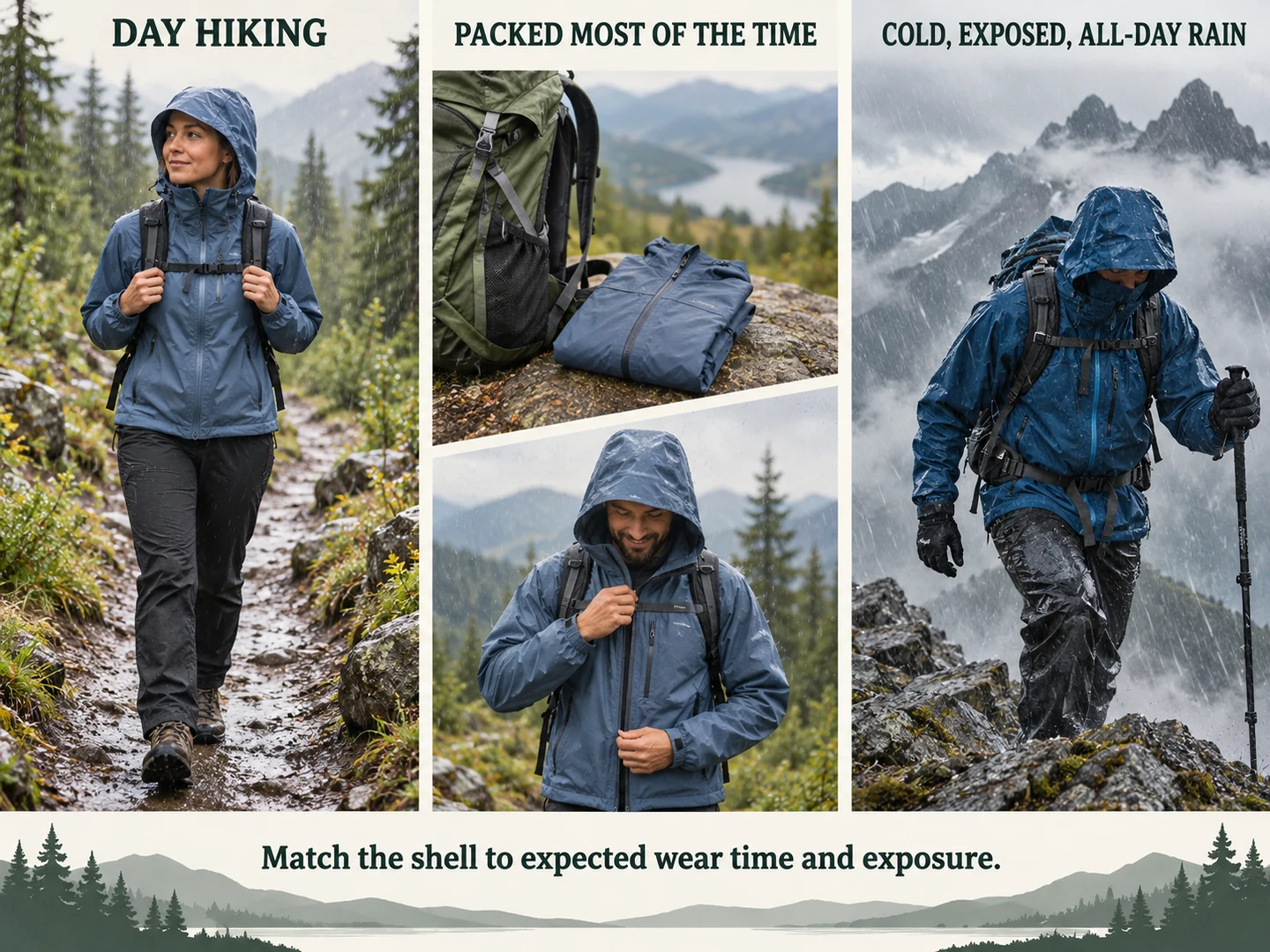
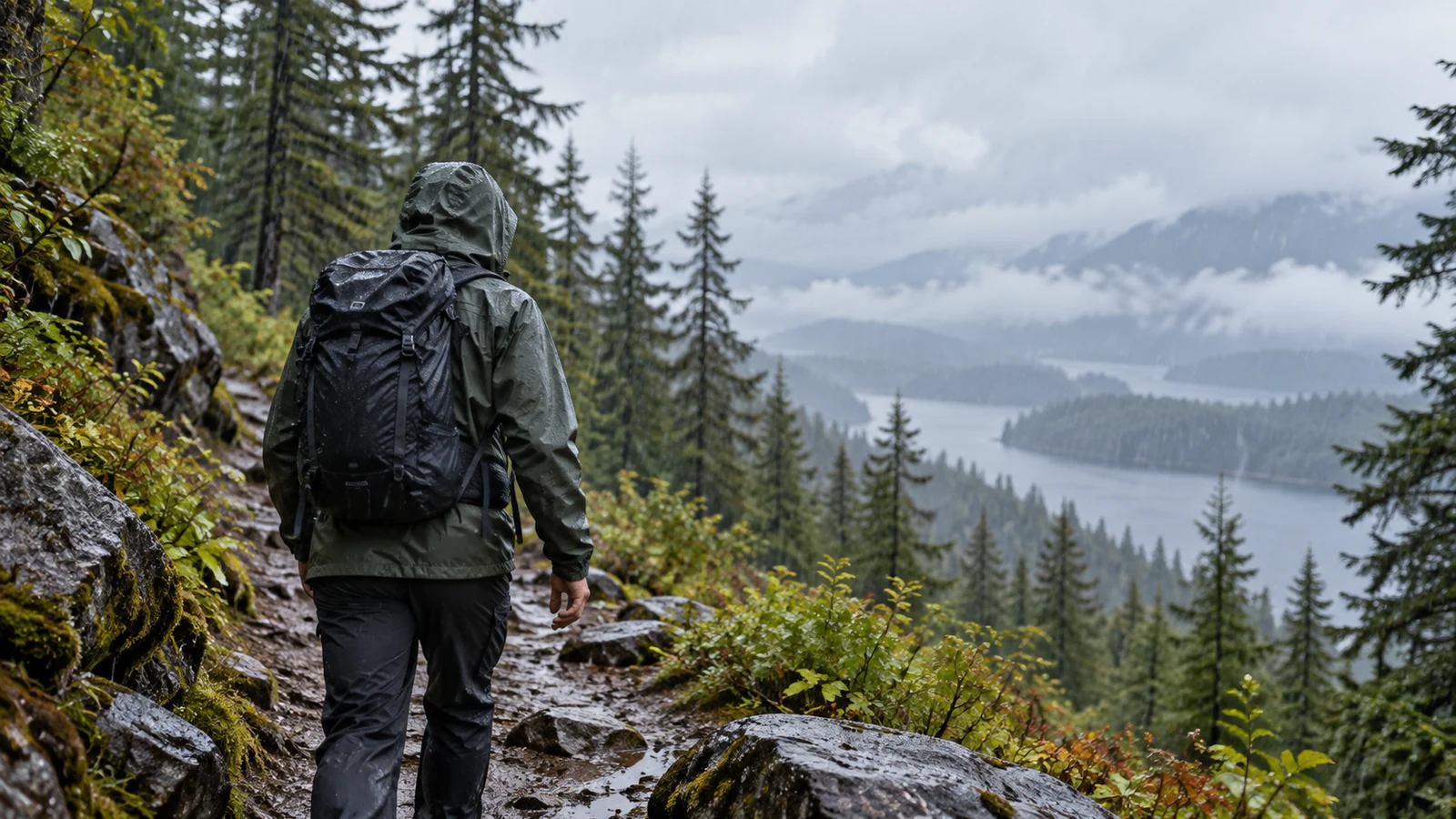
For ordinary day hikes, travel and many backpacking trips, these shells can provide useful rain protection at a sensible cost. For repeated all-day rain, exposed alpine travel, heavy brush, or trips where a shell will spend hours rubbing under a loaded pack, durability and moisture management deserve more priority than the price cap. In those conditions, compare the stronger options in our broader rain-jacket guide instead of forcing a sub-$100 purchase.
The 5 Best Budget Rain Jackets for Hiking and Backpacking
REI Co-op Rainier
The most complete hiking feature set under the cap, especially for people who want real mechanical ventilation rather than relying only on breathable fabric.
#1
The reason Rainier wins this specific roundup is not that it is the cheapest. It is that it spends the budget on the parts that matter while hiking. Pit zips give you a direct way to dump heat before sweat becomes the bigger moisture problem, and the 2.5-layer construction avoids the full hanging mesh liner used by the two Columbia picks.
The shell is also practical to carry. REI lists it as packable into its left pocket, and the official 11.3-ounce weight is light enough for a daypack or a backpacking rain layer without pushing into fragile emergency-shell territory. Adjustable cuffs, hood and hem make it easier to close openings when weather turns colder or windier.
The fit is intentionally forgiving, and current owner feedback on REI trends slightly large. That is useful if you want a light fleece or puffy underneath, but trim-fit buyers should pay attention to the size chart instead of assuming their usual fashion-jacket size.
Pros
- Pit zips are uncommon at this price
- Official 11.3 oz weight is backpacking-friendly
- 2.5-layer waterproof shell with sealed seams
- Stows into its own pocket
- Good adjustability for changing weather
Limitations
- Near the top of the budget ceiling
- Roomy fit will not suit everyone
- Still can feel humid during hard uphill effort
- Not our first choice for repeated severe, all-day exposure
Columbia Hikebound II
A more substantial budget shell with a comfortable regular fit and strong adjustability, best when low weight and maximum airflow are not the priority.
#2
The Hikebound II makes sense for a different buyer than the Rainier. It feels more like a conventional lined rain jacket, with a regular cut and mesh interior rather than a stripped-back backpacking shell. That can be pleasant in cool weather and around town, and it provides useful room for a light insulating layer.
Columbia lists the shell as fully seam sealed and gives it a 29-inch center-back length. The hood, cuffs and hem all adjust, and the extra zippered chest pocket is useful if you want more organization than the most minimalist shells provide.
The cost is weight and ventilation. An independent comparison measured the jacket at about 18 ounces and notes that it has no pit zips. That combination makes it a better match for cooler, lower-output walking than for humid summer climbs. Columbia also does not currently describe the Hikebound II as self-stowing, so we do not treat it as a pack-into-pocket shell despite conflicting retailer copy elsewhere.
Pros
- Fully seam-sealed Omni-Tech construction
- Comfortable regular fit with mesh lining
- Adjustable hood, cuffs and hem
- Chest pocket plus zippered hand pockets
- Useful choice for cooler day hikes and everyday wear
Limitations
- Much heavier than the lightest picks
- No pit zips
- Can run warm during hard climbs
- Not manufacturer-listed as self-stowing
Columbia Watertight II
A simple self-stowing rain shell that works especially well as a daypack, travel and everyday backup when you can manage heat with the front zipper.
#3
The Watertight II is one of the easiest jackets here to understand. It is not trying to be an ultralight specialist shell. It is a regular-fit, two-layer waterproof jacket that can fold into its own hand pocket and live in a daypack, suitcase or car until the weather changes.
That makes it a good choice for mixed hiking and everyday use. The adjustable hood, cuffs and hem help close gaps, while the mesh lining keeps the membrane off bare skin. Columbia specifies a 29-inch center-back length and fully seam-sealed construction.
For backpacking, ventilation is the deciding issue. There are no pit zips, and multiple review sources flag internal humidity on longer climbs. If your hiking style is steady and the weather is cool, that can be an acceptable compromise. If you routinely climb hard in warm rain, the Rainier’s pit zips are worth prioritizing.
Pros
- Self-stows into a hand pocket
- Fully seam-sealed waterproof construction
- Adjustable hood, cuffs and hem
- Comfortable regular fit for mixed use
- Easy daypack and travel backup
Limitations
- No pit zips
- Mesh-lined two-layer design is bulkier than very light shells
- Can feel humid during high-output hiking
- Hand pockets are not optimized around a backpack hipbelt
Frogg Toggs Xtreme Lite
The better Frogg Toggs choice when you want low weight and low cost but need a more conventional jacket than the fragile Ultra-Lite2.
#4
The Xtreme Lite occupies a useful middle ground. It is substantially more jacket-like than the cheapest Frogg Toggs shell, with adjustable wrists and waist, zippered pockets and a normal fitted shape. Yet it remains light enough to compete with mainstream hiking shells on carried weight.
Its waterproofing approach is simple: a lightweight 2-ply fabric with fully taped seams. That simplicity also explains the trade-off. The Xtreme Lite has no pit zips, and independent backpacking reviews repeatedly report noticeable internal moisture when effort rises. You should treat the front zipper as a temperature-control tool and vent before you are already overheated.
Durability is better than the Ultra-Lite2 but still not something to ignore. Maintained trails and normal pack use are a better match than thorny brush or repeated scraping against rock. If you expect rough off-trail travel, a tougher shell is a better investment even if it weighs more.
Pros
- Low official weight range for the price
- Fully taped seams
- Self-storage pocket
- More conventional fit and features than Ultra-Lite2
- Simple waterproof fabric requires less fuss than some coated face fabrics
Limitations
- No pit zips
- Limited moisture management during hard effort
- Thin fabric still needs care around brush and rock
- Less refined than mainstream 2.5-layer hiking shells
Frogg Toggs Ultra-Lite2
An extremely inexpensive, extremely light backup layer for hikers who understand that low weight here is purchased with lower durability and limited ventilation.
#5
This is the pick for a specific problem: you want some rain insurance in the pack for very little money and very little carried burden. For a dry-weather trip where the shell may never leave its stuff sack, that can be a rational trade.
What it is not is a bargain substitute for a durable hiking jacket. The lightweight nonwoven material can be damaged by branches, rough rock and repeated backpack abrasion. It also lacks pit zips, so the same basic rule applies as with the Xtreme Lite: expect internal condensation when you are producing a lot of heat.
That is why we call it an emergency shell rather than the Best Budget pick. A low sticker price is only good value if the product fits the job. For regular hiking in wet climates, spend more for the Rainier, Hikebound II, Watertight II or Xtreme Lite. For occasional backup duty, the Ultra-Lite2 is hard to ignore.
Pros
- Very low purchase cost
- Very low carried burden
- Includes a stuff sack
- Waterproof shell is useful for emergency coverage
- Widely available exact Amazon variants
Limitations
- Fragile around brush and abrasion
- No pit zips
- Can become clammy during exertion
- Loose, utilitarian fit
- Poor choice for frequent rough-weather use
How to Choose a Rain Jacket Under $100
1. Prioritize seam sealing before extra features
A waterproof fabric can still leak through stitch lines if the seams are not properly protected. Every mainstream hiking pick in this shortlist uses sealed or taped seams. That basic construction detail matters more than adding another pocket or cosmetic feature.
2. Pit zips matter most when you hike hard
Waterproof-breathable fabric does not eliminate sweat. When your output rises, a large mechanical opening can move heat and humid air faster than a membrane alone. Rainier is the only pick here with pit zips, which is a major reason it ranks first for backpacking. The other four require earlier use of the front zipper and more deliberate pace management.
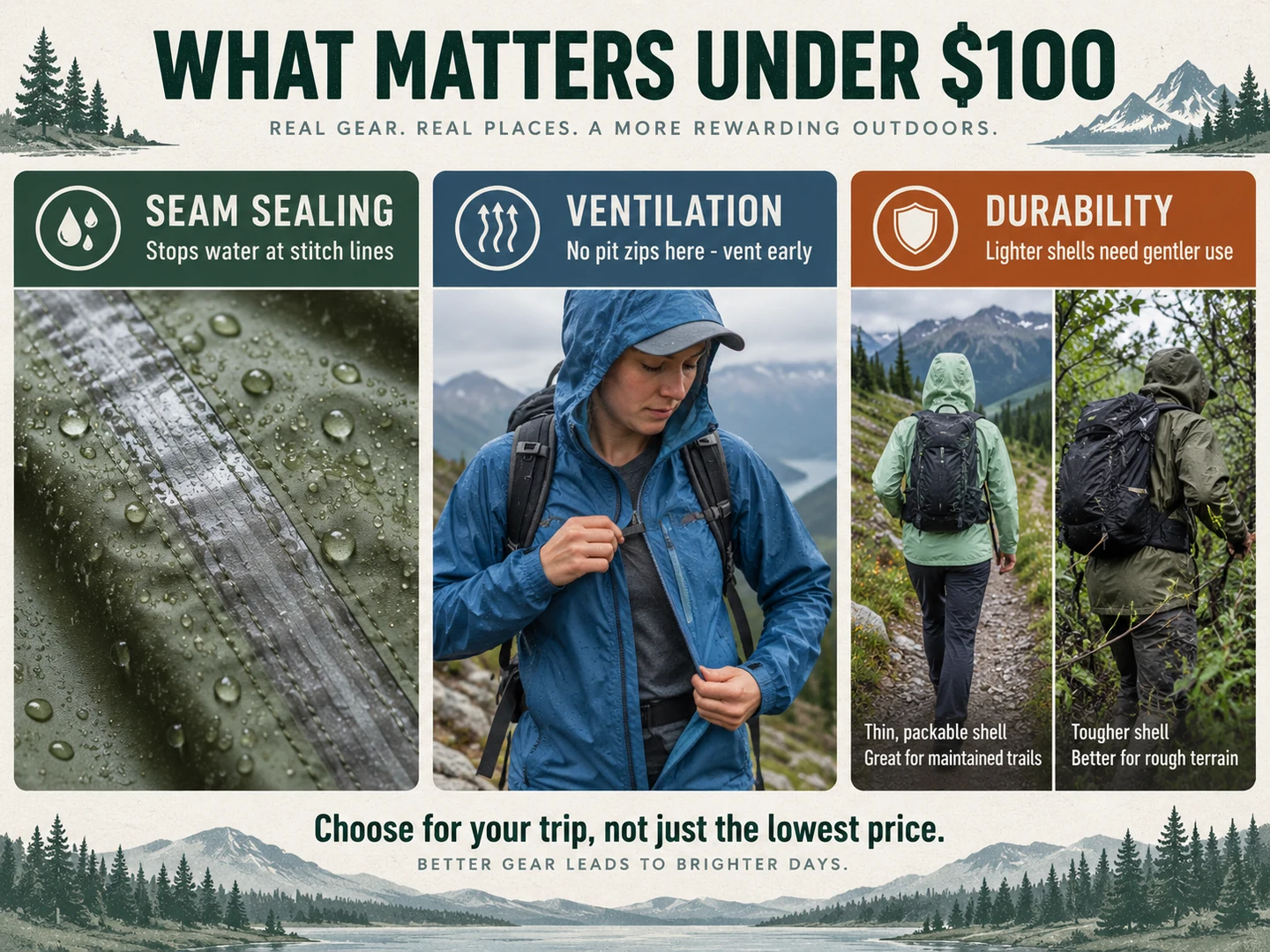
Graphic note: the ventilation warning in the graphic applies to the four non-pit-zipped picks in this shortlist. Rainier is the exception and includes pit zips.
3. Two-layer comfort and 2.5-layer packability feel different
The Columbia Hikebound II and Watertight II pair a waterproof shell with a mesh lining. That can feel more familiar against clothing or skin, but it adds bulk and tends to hold more warm air. Rainier uses a 2.5-layer construction that is lighter and more compact, though the inner surface can feel less soft. Neither design is universally better. Match it to how long you wear the jacket and how much you sweat.
4. Low weight can mean lower abrasion tolerance
The Frogg Toggs options illustrate the budget trade-off clearly. A very light shell is attractive when it spends most of the trip packed away, but thin materials demand more care around brush, rough rock and loaded shoulder straps. If rainwear is a daily working layer, durability deserves more weight in the decision.
5. Packability matters most when rain is uncertain
A shell that lives in your pack should be easy to stash. Rainier and Watertight II stow into their own pockets, Xtreme Lite has a self-storage pocket, and Ultra-Lite2 includes a stuff sack. Hikebound II is the least pack-focused option here and makes more sense when you expect to wear the jacket rather than carry it all day.
6. Leave room for insulation without buying a parachute
A rain shell is not insulation. For cool conditions, it needs enough room for a base layer and light fleece or puffy without restricting your shoulders. At the same time, excess fabric catches wind and can make the hood and cuffs harder to seal. Use the manufacturer’s size chart and check whether current owner feedback trends large or trim.
7. Know when a poncho or rain pants solve the problem better
A jacket is only one part of a wet-weather system. If maximum airflow and pack coverage matter more than wind control, compare our best rain ponchos for backpacking. If wet legs are the weak point in your current setup, our best rain pants for backpacking covers lower-body protection. For consistently wet footwear conditions, see our waterproof hiking socks guide.
How We Chose These Budget Rain Jackets
We started with the current US search results to confirm that shoppers searching specifically for rain jackets under $100 have a distinct commercial intent. The SERP contains dedicated under-$100 roundups and retailer price-filter pages, so a separate budget page is justified. To reduce overlap with Gear & Home’s broader rain-jacket roundup, this page stays focused on the price ceiling and the compromises created by it.
A model had to be selling at $100 or less from the manufacturer or a major primary retailer when checked. We did not include premium shells solely because a temporary clearance price dipped under the cap.
Manufacturer pages are the primary source for construction, seams, hood and cuff adjustment, packability, official weight and model identifiers.
Owner feedback, retailer reviews, backpacking discussions and independent comparisons were used to identify repeated strengths and complaints such as heat buildup, roomy fit, fragility and pocket practicality.
Amazon buttons are used only for child ASINs that resolve to the named model and exact size/color variant on Amazon.com. Products without a confidently resolved US child listing stay on the manufacturer or primary retailer page.
FAQ
Can a rain jacket under $100 be genuinely waterproof?
Yes. Budget does not automatically mean unsealed construction. The Rainier, Hikebound II, Watertight II and Xtreme Lite in this guide all use sealed or taped seams. The more common compromises under $100 are ventilation, weight, fabric refinement and durability rather than the complete absence of rain protection.
Which budget rain jacket is best for backpacking?
For most backpackers, the REI Co-op Rainier is the strongest all-around choice here because it combines an official 11.3-ounce weight, 2.5-layer construction, pocket stowage and pit zips. Hikers who mainly want a very light emergency layer can spend less and carry less with Frogg Toggs, but they give up durability and ventilation.
Do I really need pit zips in a rain jacket?
Not everyone needs them, but they are especially useful for steep hiking, warm weather and people who run hot. A waterproof-breathable membrane still has limits, and pit zips provide direct mechanical ventilation. If your rain jacket is mostly for lower-output walking, travel or short showers, front-zip venting may be enough.
Are Frogg Toggs rain jackets good for backpacking?
They can be excellent when low cost and low carried weight matter most. The Xtreme Lite is the more practical regular-use option in this shortlist. The Ultra-Lite2 is better treated as a backup or emergency shell because its very light material is more vulnerable to tears and abrasion. Both can feel clammy during high-output hiking.
Is a 2-layer or 2.5-layer rain jacket better?
Neither is automatically better. A 2-layer jacket with a mesh liner can feel more familiar and comfortable, while a 2.5-layer shell is usually lighter and more compact. For backpacking, weight and venting often favor 2.5-layer designs. For casual day hiking and everyday wear, a mesh-lined 2-layer jacket can be perfectly sensible.
When should I spend more than $100 on a rain shell?
Consider a higher budget if you expect repeated all-day rain, exposed alpine weather, frequent brush, scrambling, heavy pack abrasion or many hours of hard hiking in the shell. Those scenarios put more value on durable face fabrics, refined hoods, better ventilation and higher-end construction than on staying below a strict price ceiling.