
Gear & Home is reader-supported. As an Amazon Associate I earn from qualifying purchases. When you buy through links on our site, we may earn an affiliate commission, at no extra cost to you. Learn more.
Sleeping bag temperature ratings are easiest to use when you stop treating the number in the product name as a promise. For ISO- or EN-rated bags, the Comfort and Lower Limit figures describe different reference sleepers, and the colder number is not automatically the one you should shop by.
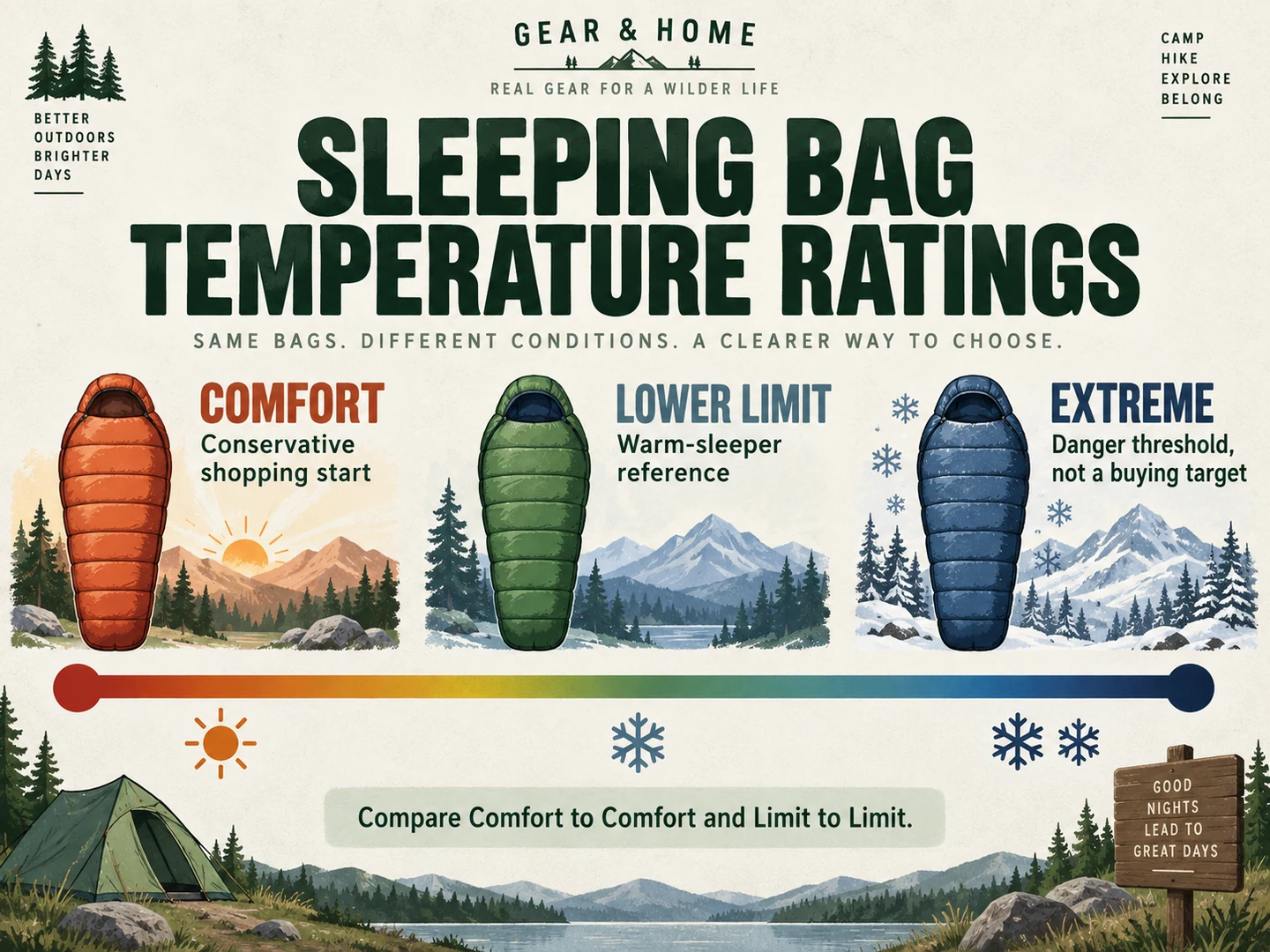
Use Comfort if you sleep cold or do not know your personal margin
For most cautious buyers, the Comfort rating is the safer starting point. If you already know you sleep warm and have experience with standardized bag ratings, the Lower Limit can be a useful comparison number. Do not plan a trip around the Extreme rating.
Compare the ISO/EN Comfort rating with the lowest overnight temperature you realistically expect.
The Lower Limit can be useful, but it is a colder reference condition and should not be read as guaranteed comfort.
Treat it as a safety threshold in the standard, not as a shopping target or a comfortable operating temperature.
Comfort vs Lower Limit vs Extreme: what each number actually means
ISO 23537-1 is the current international framework used for standardized temperature testing of many adult sleeping bags. The point of the standard is comparison: two bags tested under the same protocol are far easier to compare than two bags carrying only brand-created temperature claims.
Comfort rating
The Comfort rating represents the warmer reference point. In practical shopping language, it is the number typically associated with a colder sleeper being able to rest in a relaxed position without feeling cold. If you are unsure whether you run warm or cold, this is the more conservative figure to start with.
Lower Limit rating
The Lower Limit is colder. It represents the lower boundary for a warmer reference sleeper in a more heat-conserving posture. That makes it useful for comparing bags, but it is not the same promise as the Comfort number. A bag with a 20°F Lower Limit can easily have a Comfort rating around freezing.
Extreme rating
The Extreme rating sits below both. It belongs in the safety side of the standard, where cold stress and hypothermia risk matter. It is not a temperature you should target for normal trip planning. If a listing highlights only the Extreme number, look for the Comfort and Lower Limit figures before making a decision.
Lower Limit is not the same thing as a survival rating
This is one of the most important distinctions in sleeping bag shopping. Some simplified explanations collapse the rating scale into “comfort” and “survival.” That skips a key layer. The Lower Limit is still part of the normal thermal rating range; the colder Extreme value is the danger-oriented threshold.
That does not mean you should casually sleep at the Lower Limit. The standard uses controlled conditions and a reference sleeper. In the field, your metabolism, fatigue, food, clothing, moisture, shelter, pad insulation and bag fit can all move your real comfort point. Think of Lower Limit as a standardized comparison point, not permission to remove your safety margin.
Why a “20°F bag” may not be comfortable at 20°F
Model names are often rounded for easier shopping. A number such as 15°F or 20°F may line up with a Lower Limit, may be rounded from the laboratory result, or may be a manufacturer estimate if the bag is not standardized. The product name alone does not tell you which.
The practical fix is simple: find the actual ISO or EN Comfort and Lower Limit values in the technical specifications. Then compare like with like across brands.
NEMO Tempo 20, Men’s Regular
Here the 20°F name sits close to the colder Lower Limit, while the Comfort figure is around freezing. If you sleep cold or do not know your personal margin, comparing this bag by its 32°F Comfort rating is more conservative than shopping from the model name alone.
NEMO Tempo 20, Women’s Regular
That makes the comparison especially useful: two bags in the same Tempo 20 family carry the same rounded temperature name, yet the standardized figures are not the same. The lesson is to compare the actual Comfort or Lower Limit metric you care about, not the number printed in the model name.
How to choose a sleeping bag temperature rating
Use the rating as a decision framework, not a single magic number. The goal is to match a standardized reference point to your expected conditions and your own tendency to sleep warm or cold.
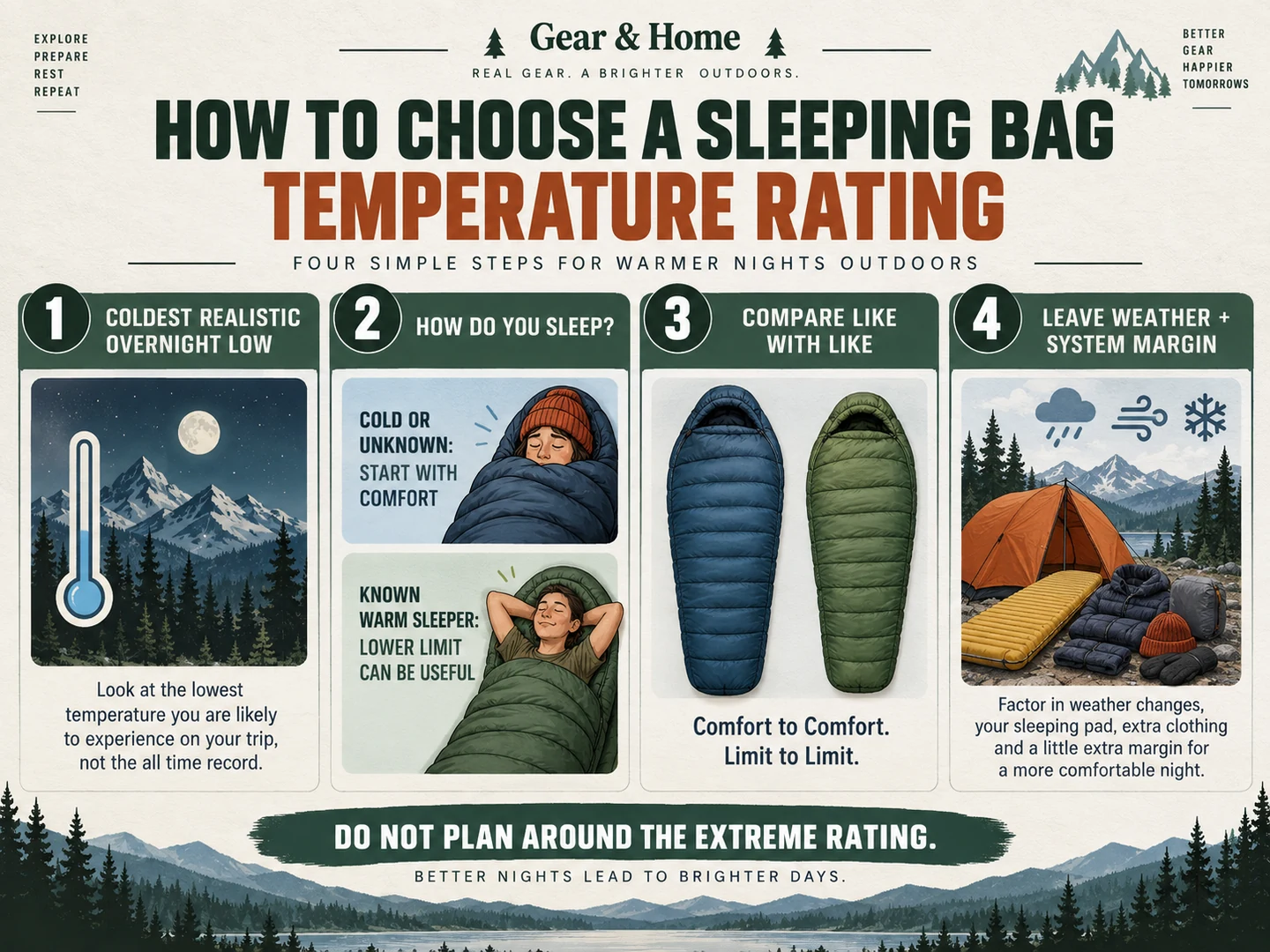
1. Start with the coldest realistic overnight low
Use the coldest temperature you could reasonably encounter on the trip, not the daytime forecast and not the month’s average low. Elevation, clear skies and local terrain can make campsites colder than a broad regional forecast suggests.
2. Decide whether Comfort or Lower Limit fits you better
If you know you are a cold sleeper, or you simply do not have enough experience to know, shop from the Comfort figure. If you consistently sleep warm and already understand how previous ISO/EN-rated bags feel for you, the Lower Limit can be a useful reference.
3. Compare the same rating across every candidate
Do not compare one bag’s Comfort rating with another bag’s Lower Limit. Do not compare an ISO result directly with a vague manufacturer temperature claim and assume they mean the same thing. Standardized ratings are most useful when the metric stays consistent.
4. Leave margin for the rest of your sleep system
A laboratory rating is not a field guarantee. If your trip has uncertain weather, a marginal sleeping pad, high humidity, exposed camps, or you simply dislike being cold, choose a warmer setup rather than planning directly on the edge of the rating.
How ISO and EN sleeping bag testing works
Standardized testing uses a heated thermal manikin inside the sleeping bag in a controlled cold environment. Sensors measure the heat needed to maintain the test conditions, which lets the laboratory estimate the bag’s thermal resistance and derive the published temperature range.
The setup matters. Current industry explanations of the ISO protocol describe the manikin wearing insulating base layers and a cap, and the bag resting on a well-insulated pad. Sea to Summit notes an R-value of 5.38 for the test pad. That is substantially more ground insulation than many warm-weather backpacking pads provide.
For the ground-insulation side of the equation, see our sleeping pad R-value guide. For the complete interaction among bag, pad, clothing and shelter, use the complete backpacking sleep system guide.
Why your real comfort temperature can be warmer than the label
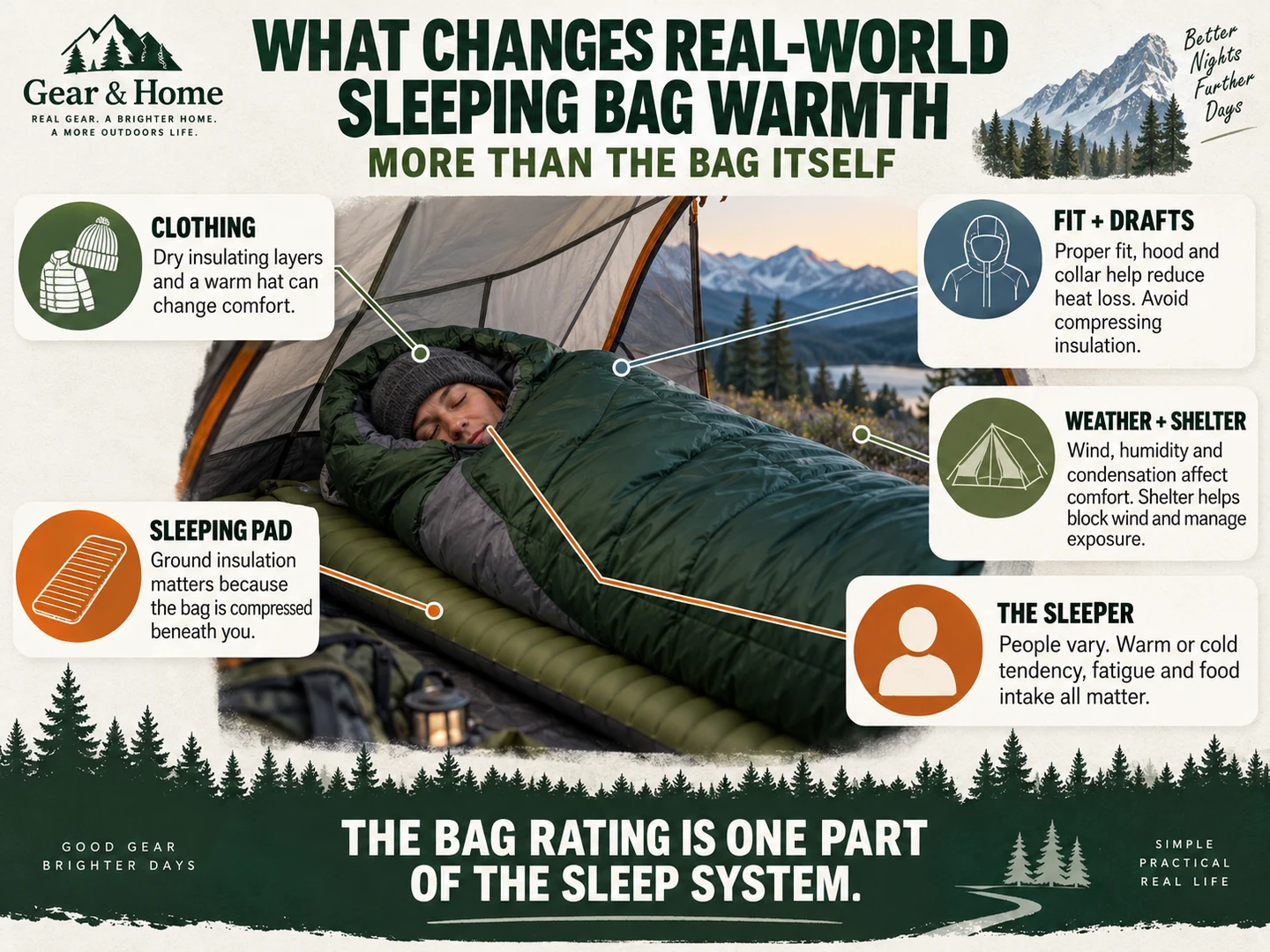
Compressed insulation under your body contributes little. Ground insulation comes mainly from the pad.
Standardized tests assume insulating clothing. Sleeping in damp or minimal layers changes the system.
Too much unused space can take more energy to warm, while a very tight fit can compress insulation or make it harder to manage the hood and collar.
Wind, condensation, humidity and exposed camps can make the same air temperature feel very different in practice.
People vary. Your own history with rated bags is more useful than assuming a generic warm-sleeper or cold-sleeper label fits perfectly.
A long day, low energy intake and general fatigue can change how comfortable you feel during a cold night.
EN vs ISO ratings: can you compare them?
EN 13537 was the earlier standardized system used by the sleeping bag industry. ISO 23537 replaced it and improved consistency across laboratories, but the core shopping logic is similar enough that older EN-rated bags and newer ISO-rated bags can still provide useful standardized comparison points.
The bigger mistake is not EN versus ISO. It is mixing a standardized Comfort or Limit rating with an unlabeled manufacturer estimate. If a listing only says “rated to 20°F” and never identifies ISO, EN, Comfort or Limit, treat that number as a separate class of evidence.
When a sleeping bag may not have an ISO rating
ISO 23537-1:2022 covers adult-sized sleeping bags for sports and leisure use with limit temperatures of -20°C (-4°F) and higher. Some products fall outside the standard or are difficult to test under it, including certain extreme-cold bags, kids’ bags and designs that do not match the assumptions of a conventional hooded sleeping bag.
That does not automatically make an unrated bag poor. It simply means you lose the cleanest apples-to-apples temperature comparison. In that case, give more weight to transparent manufacturer methodology, construction details and conservative trip planning.
Six temperature-rating mistakes to avoid
A “20” in the product name may be rounded and may not be the Comfort rating.
It is a colder standardized reference, not a promise for every sleeper.
Extreme is not the normal operating target for a recreational sleep system.
A warm bag cannot fully compensate for major heat loss into cold ground.
Compare Comfort with Comfort and Limit with Limit whenever standardized data exists.
Forecast uncertainty and field conditions can erase a paper-thin temperature buffer.
How Gear & Home built this guide
This page is a standards-and-specification decision guide, not a claim of physical product testing. The article cross-checks the current ISO 23537-1 scope, current manufacturer explanations of the test protocol, current product specification tables and live Amazon US listings for the two worked examples.
Definitions and scope are anchored to ISO 23537-1:2022 rather than retailer shorthand.
Worked examples use identifiable product variants and current manufacturer rating tables.
We do not present third-party laboratory or owner experience as Gear & Home physical-use testing.
The goal is to tell you which number to use, what can shift real comfort and when ratings are not directly comparable.
FAQ
Should I use the Comfort or Lower Limit sleeping bag rating?
Use the Comfort rating if you sleep cold, do not know your personal cold tolerance, or want the more conservative starting point. Experienced warm sleepers can use the Lower Limit as a comparison reference, but it should not be treated as guaranteed comfort.
Is the Lower Limit a survival rating?
No. The Lower Limit is a standardized cold-side reference for a warmer sleeper. The colder Extreme rating is the danger-oriented threshold in the rating range. Neither should replace a sensible weather and safety margin.
Why can a 20°F sleeping bag have a 32°F Comfort rating?
Because the number in a model name often follows the colder Lower Limit or a rounded marketing convention. For example, current ISO data for the NEMO Tempo 20 Men’s Regular lists a 21°F Tested Lower Limit and a 32°F Tested Comfort rating. Always check which metric the product name most closely represents.
Are EN and ISO sleeping bag ratings comparable?
Generally, yes for shopping purposes. EN 13537 was the earlier standardized method and ISO 23537 is the current standard. The protocols are closely related, so an older EN-rated bag can still provide a useful comparison with a newer ISO-rated bag when you match the same rating type.
Does sleeping pad R-value affect how warm a sleeping bag feels?
Yes. Your body compresses the bag insulation beneath you, so the sleeping pad supplies most of the insulation from the ground. Standardized bag testing uses a well-insulated pad, which means a low-R-value field pad can make your real sleep system feel colder than the bag rating suggests.
What if a sleeping bag has no Comfort or Lower Limit rating?
If the listing does not identify an ISO or EN Comfort or Limit value, treat the temperature number as a manufacturer estimate unless the brand documents another standardized method. Do not compare it directly with an ISO Comfort or Limit number as though the metrics were identical.