
Gear & Home is reader-supported. As an Amazon Associate I earn from qualifying purchases. When you buy through links on our site, we may earn an affiliate commission, at no extra cost to you. Learn more.
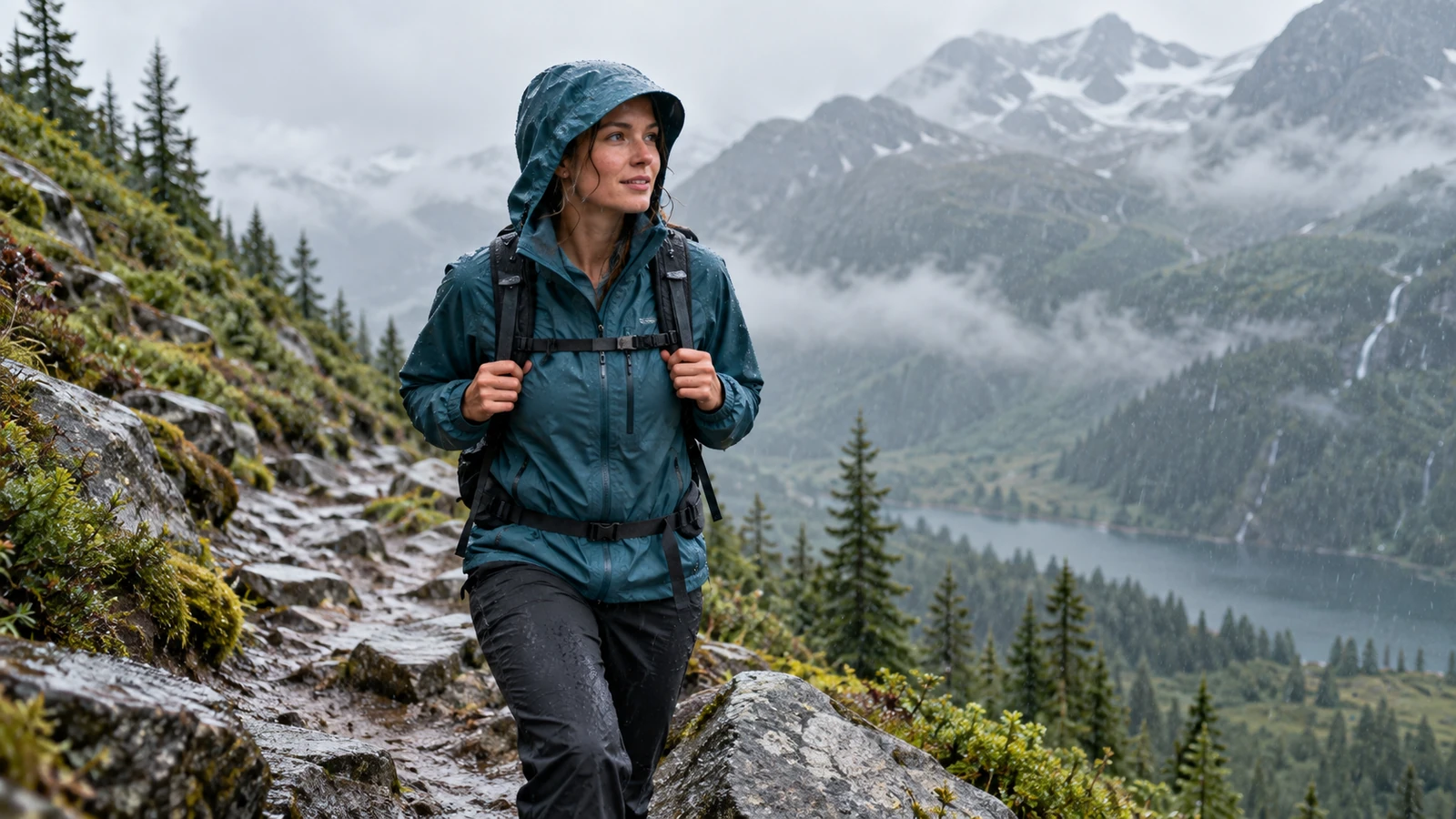
For most women hikers, the best rain jacket is not the lightest shell or the one with the most aggressive storm spec. It is the jacket that stays comfortable while climbing, gives you enough room for the layers you actually wear, vents fast when effort rises, and still has enough structure for the rain you expect.
Gear & Home approach: We do not claim proprietary lab or field use. These picks are based on current manufacturer specifications, exact model revisions, recurring owner feedback, and patterns across independent women’s rain-jacket testing and hiking-focused reviews. Specs and availability were rechecked for the current 2026 models.
Best Women’s Rain Jacket for Hiking: Outdoor Research Aspire 3L
The Outdoor Research Aspire 3L is our best overall pick for hiking because it combines a real 3-layer shell with unusually large TorsoFlo vents that open from the hem toward the bicep. That makes it easier to dump heat on steep climbs without giving up the structure and durability of a full 3-layer jacket. At a listed 12.42 oz, it is not an ultralight shell, but the balance of ventilation, mobility, storm coverage and current women’s sizing is stronger than the more specialized alternatives below.
Quick Picks
Outdoor Research Aspire 3L
Best all-around balance of 3-layer protection, mobility and unusually large TorsoFlo vents for hiking in mixed weather.
Patagonia Torrentshell 3L
A straightforward 50D 3-layer shell for sustained rain, regular pack use and hikers who prioritize durability.
Marmot PreCip Evo Pro
A practical 3-layer option with pit zips and trail-friendly features for buyers who want more structure without premium-shell pricing.
Mountain Hardwear Stretch Ozonic
A lighter, softer stretch shell that makes the most sense for warm conditions and high-output hiking.
Outdoor Research Helium UL
The lightest pick for trips where the rain jacket spends most of its time packed as an emergency layer.
Women’s Hiking Rain Jackets Compared
| Pick | Jacket | Construction | Listed weight | Mechanical venting | Best fit |
|---|---|---|---|---|---|
| #1 | Outdoor Research Aspire 3L | AscentShell Dry 3L, 40D | 12.42 oz | TorsoFlo hem-to-bicep vents | All-around hiking and mixed weather |
| #2 | Patagonia Torrentshell 3L | H2No 3L, 50D | 12.4 oz | Pit zips | Sustained rain and durability |
| #3 | Marmot PreCip Evo Pro | NanoPro 3L | 14 oz | Pit zips | Feature-rich 3-layer value |
| #4 | Mountain Hardwear Stretch Ozonic | DrySpell 2.5L, 50D stretch | 9.9 oz | Underarm zip vents | Warm, high-output hiking |
| #5 | Outdoor Research Helium UL | Dermizax 2.75L, 15D | 5.6 oz | None | Emergency shell and ultralight packs |
Best balance for hikers who want strong ventilation without dropping to a minimalist shell.
A simple, durable shell for hikers who put sustained rain protection ahead of soft fabric feel.
A newly revised 2026 shell with full 3-layer construction and practical trail features at a lower tier than many premium shells.
Soft, stretchy and highly breathable, but less convincing for hours of hard rain.
The weight winner when your rain jacket is mostly an emergency layer rather than an all-day shell.
Our 5 Picks
Outdoor Research Women’s Aspire 3L
The most balanced hiking choice here if you want 3-layer protection and much more mechanical ventilation than a typical pit-zip shell.
#1
The Aspire 3L is our first choice because hiking often creates a ventilation problem before it creates a waterproofing problem. A shell can have a good membrane and still feel miserable if you cannot dump enough heat on a climb. Outdoor Research’s TorsoFlo system opens much farther than ordinary underarm zips, running from the hem toward the bicep, so you can create real side ventilation while the jacket stays on.
The current style 322107 uses a 3-layer, 40D recycled-nylon AscentShell Dry fabric with mechanical stretch. Outdoor Research lists the jacket at 12.42 ounces and 28 inches in center-back length, with a fully adjustable hood, Aquaguard zippers, chest and hand pockets, adjustable cuffs and a drawcord hem. It is a full hiking shell rather than an emergency windbreaker with waterproofing added.
The main compromise is that you carry more jacket than with the Helium UL or Stretch Ozonic. It also does not stow into its own pocket. If your trips are mostly dry and you carry a shell only for short thunderstorms, that extra structure may be unnecessary. For hikers who expect to spend meaningful time wearing their rain jacket, however, the ventilation is exactly why the extra weight earns its place.
Pros
- Large TorsoFlo side vents move far more air than standard pit zips
- 3-layer 40D shell with mechanical stretch
- Good balance of mobility, protection and trail features
- Current women’s sizing spans a wide range, with a separate Plus version also available
Limitations
- Heavier than minimalist 2.5-layer and 2.75-layer shells
- Does not pack into its own pocket
- Premium choice if you only need an occasional emergency shell
- Layering room can be fit-sensitive, so check the size chart with your midlayer
Patagonia Women’s Torrentshell 3L
A simple 50D 3-layer shell for hikers who value durable storm protection, straightforward controls and long-term utility over a soft or especially airy feel.
#2
Patagonia’s Torrentshell is the workhorse pick because very little about it is exotic. The current women’s style 85246 uses a 3-layer H2No shell with a 50D ECONYL recycled-nylon face, a tricot backer, adjustable hood, pit zips, hook-and-loop cuffs and an adjustable hem. It self-stuffs into the left hand pocket, which is useful when you want a compact bundle without carrying a separate sack.
At 12.4 ounces, it weighs essentially the same as the manufacturer-listed Aspire, but it feels like a more traditional hardshell. That is good when you want a jacket that can spend long periods under pack straps and in sustained rain. It is less appealing if your priority is quiet fabric and maximum airflow during warm climbs.
Fit deserves more attention on this model than a simple size label suggests. Current owner feedback includes both true-to-size reports and complaints about a boxier or longer shape. Try your actual hiking layers under it if possible, and pay attention to hip and hem movement when you raise your knees or tighten a pack belt.
Pros
- 50D 3-layer shell is a sensible choice for regular hiking use
- Pit zips, adjustable cuffs and a two-way-adjustable hood
- Self-stuffs into a hand pocket
- Current shell fabric, membrane and DWR are made without intentionally added PFAS
Limitations
- More traditional, crinkly shell feel than the Stretch Ozonic
- Can run warm on sustained climbs despite pit zips
- Fit can feel boxy or long depending on body shape
- Not the lightest option for low-rain itineraries
Marmot Women’s PreCip Evo Pro
The 2026 PreCip update moves into true 3-layer construction while keeping the practical pit zips, packability and uncomplicated trail layout that made the line popular.
#3
The important detail here is the model name. The current PreCip Evo Pro is not the old 2.5-layer PreCip Eco that appears in years of search results and retailer leftovers. Marmot’s 2026 style M16755 uses 3-layer NanoPro fabric with mechanical stretch, fully taped seams, pit zips, adjustable cuffs and hem, a chest pocket, two hand pockets and an adjustable hood.
Marmot lists the women’s jacket at 14 ounces with a 29-inch center-back length. That puts it at the heavy end of this shortlist, but the weight buys a full feature set and a smoother 3-layer interior rather than the exposed-feeling half-layer print found on many budget shells. It can also stuff into its own pocket.
Because this revision is new, we would not pretend it has the same years of owner history as the Torrentshell. The early signal is still strong enough to recommend because multiple current reviewers are converging on the same point: the Evo Pro is not the lightest or most premium shell, but it is a lot of hiking jacket for the category.
Pros
- Current 2026 revision uses 3-layer NanoPro fabric
- Pit zips and mechanical stretch improve active comfort
- Chest pocket plus low hand pockets
- Self-stowing design is practical for daypacks
Limitations
- 14 oz listed weight is the heaviest here
- Fabric feels stiffer than soft 2.5-layer stretch shells
- New revision has limited long-term owner history
- Not the right choice if every ounce is being counted
Mountain Hardwear Women’s Stretch Ozonic
The comfort-first choice for hikers who run hot and care about stretch, quiet fabric and ventilation more than maximum protection in a long downpour.
#4
If you dislike the crunchy, restrictive feeling of a traditional rain shell, the Stretch Ozonic is the alternative to try. Mountain Hardwear uses a 50D 2.5-layer stretch ripstop that is intentionally soft and quiet, then adds underarm vents, adjustable cuffs and hem, a chest pocket and two hand pockets. The jacket packs into one of its own hand pockets.
At 9.9 ounces, it drops meaningful weight compared with the three 3-layer jackets above without stripping away the vents and pockets that make a shell useful while hiking. That is why it works so well for warm trails, humid conditions and fast-moving users who create a lot of internal moisture.
The compromise is not subtle. Current independent testing finds the Ozonic highly breathable and mobile, but less dependable than the top storm shells in sustained hard rain, and the hood provides less complete coverage than the strongest competitors. If your forecast says hours of rain rather than scattered showers, the Aspire or Torrentshell is the safer category choice.
Pros
- Soft, quiet stretch fabric is unusually comfortable for a rain shell
- Underarm vents plus breathable fabric suit high-output hiking
- 9.9 oz listed weight is easy to justify in a daypack
- Packs into its own pocket
Limitations
- Less storm-focused than the 3-layer picks above
- Hood coverage is a recurring weak point in independent reviews
- Officially a slim fit, so thick-layer users should verify room
- Not our first choice for very wet climates or multi-hour downpours
Outdoor Research Women’s Helium UL
A 5.6-ounce emergency rain shell that makes sense when carrying less matters more than ventilation or all-day storm comfort.
#5
The Helium UL is a different answer to the same problem. Outdoor Research lists the women’s style 322837 at just 5.6 ounces using a 15D Toray Dermizax 2.75-layer ripstop. It still includes fully taped seams, Aquaguard front and hand-pocket zippers, an adjustable hood with a small wire brim, an adjustable hem and two high hand pockets. The left pocket doubles as a stuff sack.
That feature list is impressive at this weight, but the omissions matter more. There are no pit zips, no fully adjustable wrist closures and less fabric mass to absorb abrasion and repeated hard use. Current independent testing also positions it as an emergency or fast-and-light shell rather than the jacket to choose for a wet climate where rain protection is worn daily.
This is the pick for a hike where the forecast is mostly good but the consequence of carrying no shell is unacceptable. It is also useful for runners, fastpackers and minimalists who already understand the trade-offs of ultralight rain gear.
Pros
- Only 5.6 oz in the manufacturer specification
- Packs into its own pocket and takes very little pack space
- Current 2026 fit is roomier than the previous Helium generation
- Wire-brim hood and Aquaguard zippers add useful storm details
Limitations
- No pit zips or other dedicated mechanical vents
- 15D shell demands more care around abrasion
- Minimal cuffs and features are less secure in prolonged storms
- Not the best single jacket for a persistently rainy climate
How to Choose a Women’s Rain Jacket for Hiking
Start with the weather you actually hike in
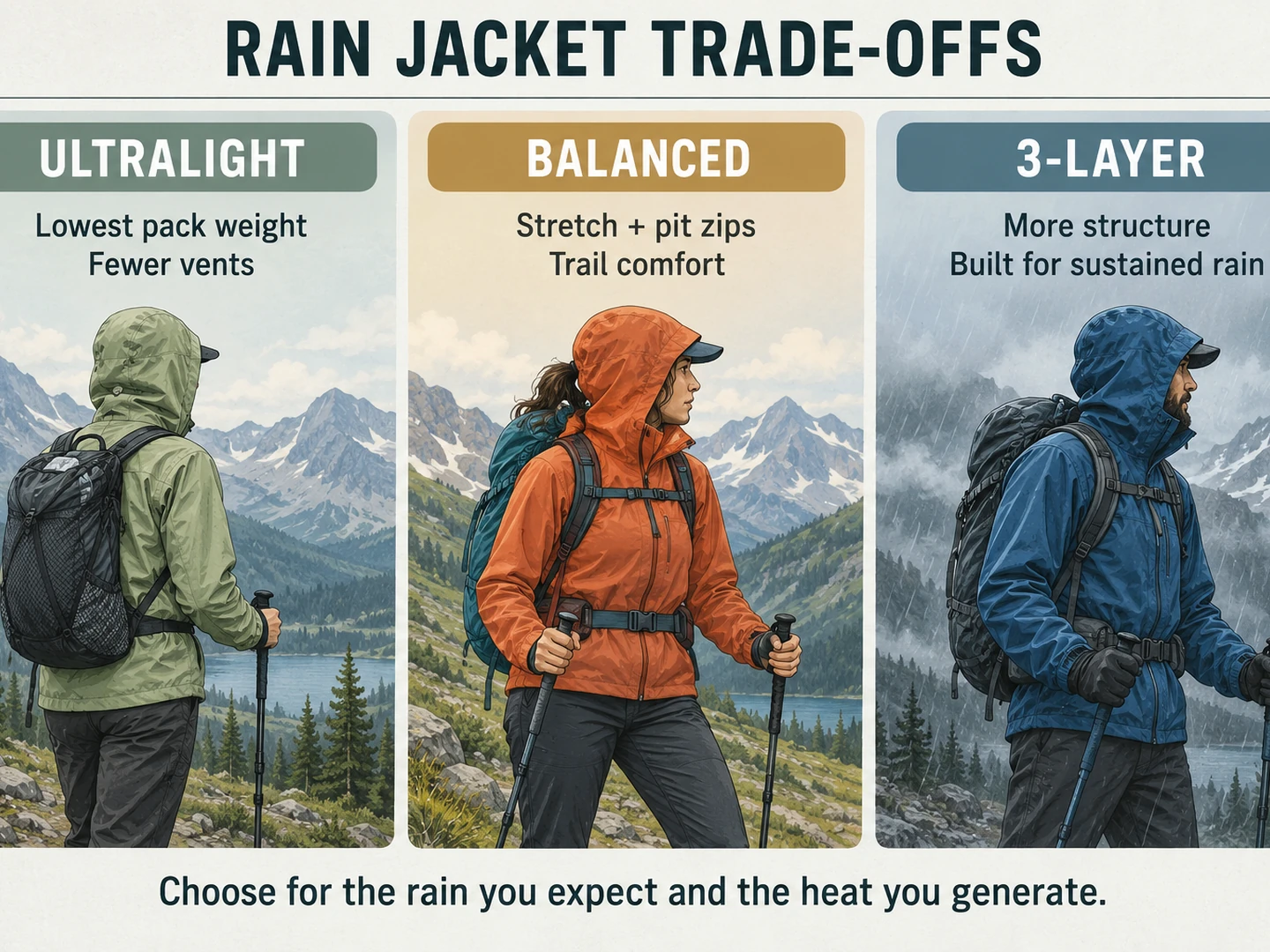
For frequent, sustained rain, prioritize a structured 3-layer shell, reliable hood adjustment and real mechanical vents. For mostly dry climates with short afternoon storms, a lighter 2.5-layer or 2.75-layer shell can save several ounces. The wrong move is buying an ultralight emergency jacket and expecting it to behave like a daily Pacific Northwest workhorse.
Ventilation matters because waterproof-breathable does not mean sweat-proof
Every waterproof membrane creates a barrier. When hiking intensity rises, mechanical ventilation often matters more than a small difference in membrane marketing. The Aspire’s large side vents are the strongest example here. Standard pit zips on the Torrentshell, PreCip Evo Pro and Stretch Ozonic also give you a direct way to release heat.
3-layer vs 2.5-layer: use the construction as a durability clue, not a quality score
A 3-layer shell sandwiches the waterproof membrane between a face fabric and a separate backer. That usually gives a more protected interior and makes sense for repeated use. A 2.5-layer shell uses a lighter interior print or coating instead of a full backer, which saves weight and can feel less substantial. Neither construction wins automatically. The Stretch Ozonic is a good example of a 2.5-layer jacket that earns its place through comfort and breathability.
Women’s fit should be checked under a real backpack
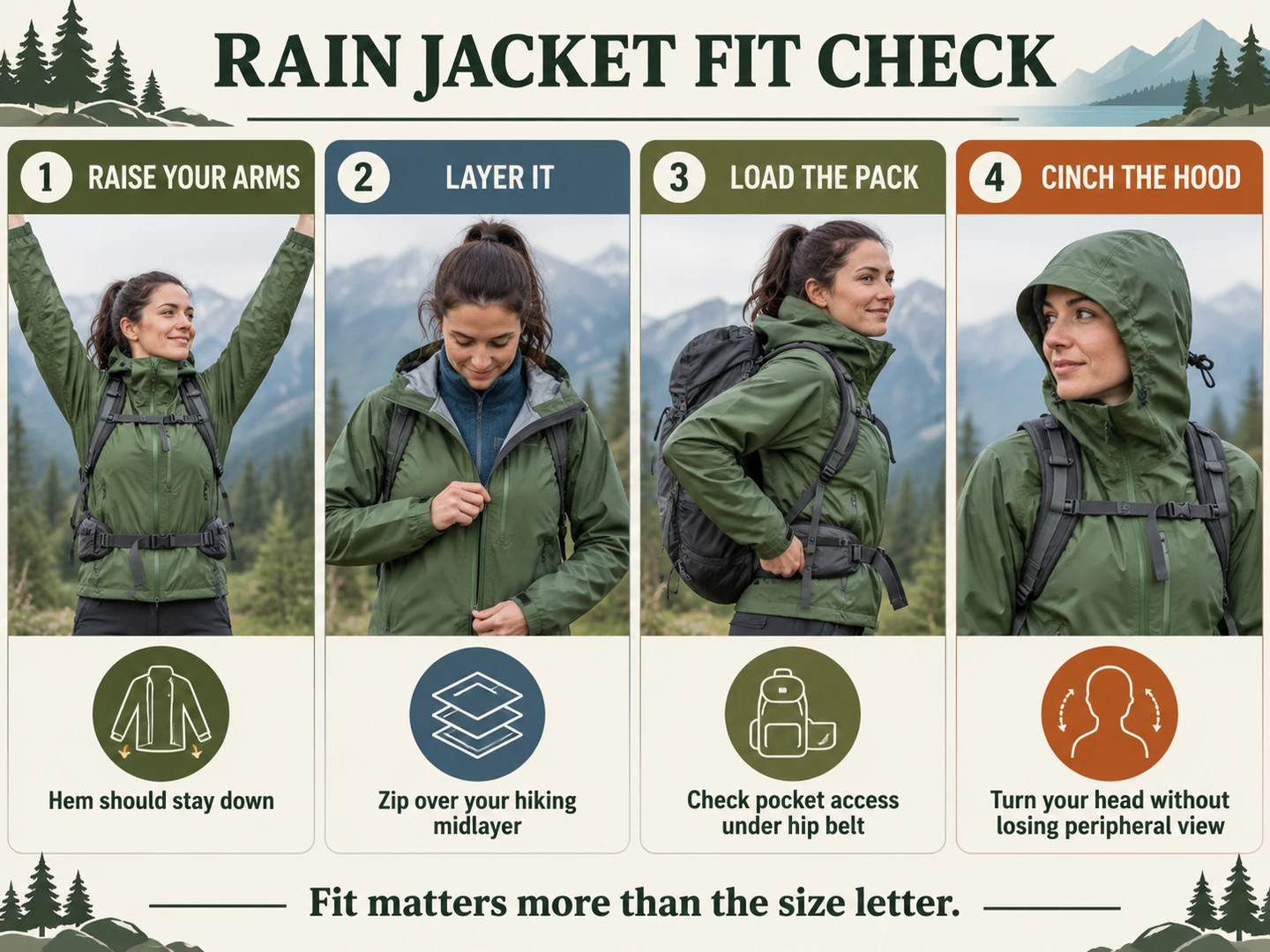
Do not stop at chest measurement. Put on the midlayer you hike in, zip the shell fully, raise both arms, turn your torso, then tighten a loaded pack hip belt. Check whether the hem rides up, whether the jacket binds across shoulders or hips, and whether you can still reach the pockets. A technically excellent shell that fights your movement is the wrong shell for you.
Hood fit is a trail feature, not a cosmetic detail
Cinch the hood, then turn your head left and right. You should be able to see the trail without the hood blocking peripheral vision or staying behind while your head turns. A brim helps keep water off your face, but adjustment range matters just as much. If you wear a cap, glasses or climbing helmet, verify the hood with that setup.
Pocket placement matters with a hip belt
Hand pockets that sit directly under a backpack hip belt can become hard to use. Higher pockets or a separate chest pocket are more useful on long hikes. If you rarely carry a pack, lower hand pockets can be more comfortable around town, but this page prioritizes trail use.
Do not buy by waterproof rating alone
Manufacturers do not all publish comparable lab numbers, and a single hydrostatic-head figure does not tell you how the hood, zippers, seams, cuffs and ventilation behave together. We give more weight to complete construction, fit, venting and repeated cross-source performance patterns than to one large number on a product page.
Reality Check: A Rain Jacket Cannot Keep You Completely Sweat-Free
If you are climbing hard in warm rain, some internal moisture is normal even in expensive shells. The practical goal is to manage the balance between outside rain and inside heat. Slow down, use pit zips or side vents early, and adjust layers before you are already overheated. If you need full lower-body protection too, see our best rain pants for backpacking and our guide to rain ponchos for backpacking for alternatives with different airflow trade-offs.
How We Chose These Jackets
FAQ
What is the best women’s rain jacket for hiking?
For most hikers, our current best overall pick is the Outdoor Research Aspire 3L because it combines a 3-layer shell, useful stretch and unusually large TorsoFlo vents. Hikers who prioritize sustained rain durability may prefer the Patagonia Torrentshell 3L, while ultralight hikers may prefer the Outdoor Research Helium UL.
Should a women’s hiking rain jacket be loose or fitted?
It should be close enough that excess fabric does not flap or bunch, but roomy enough to zip over your normal hiking midlayer and let you raise your arms without pulling at the shoulders or hips. Test fit with the backpack and layers you actually use.
Is a 3-layer rain jacket better for hiking than a 2.5-layer jacket?
Not automatically. A 3-layer shell generally offers a more protected interior and makes sense for frequent wear and sustained rain. A well-designed 2.5-layer shell can be lighter, softer and more breathable, which may be better for warm, high-output hiking.
How much should a women’s hiking rain jacket weigh?
There is no universal target. In this shortlist, the options run from 5.6 ounces for an ultralight emergency shell to 14 ounces for a full-featured 3-layer jacket. Choose the lightest jacket that still has the durability, ventilation and storm coverage your trips require.
Do I need pit zips in a hiking rain jacket?
If you run warm, climb steep trails or hike in humid conditions, pit zips or larger side vents are extremely useful. A membrane can move some moisture, but opening a vent moves heat much faster. Minimalist shells without vents make more sense when carried weight is the priority.
How should I care for a waterproof hiking jacket?
Follow the exact manufacturer’s care label. In general, technical shells work better when clean because body oils and dirt interfere with moisture transport and water beading. Many modern DWR finishes also benefit from the manufacturer’s recommended wash and low-heat drying routine. Do not assume one care method fits every membrane.