


Gear & Home is reader-supported. As an Amazon Associate I earn from qualifying purchases. When you buy through links on our site, we may earn an affiliate commission, at no extra cost to you. Learn more.
A camping cot and a sleeping pad can both make a night outdoors more comfortable, but they solve different problems. A cot gives you a raised, firm sleep surface and easier entry and exit. A sleeping pad gives you far better portability and, when you choose by R-value, a measurable way to manage insulation.
Choose a cot for comfort-first car camping, a pad for portability and cold-weather control
For most car campers who have room in the vehicle and tent, a camping cot is the better choice when getting off the ground, easier entry and exit, and a stable bed-like platform matter most.
For backpacking, walk-in sites, small tents and any trip where insulation must be predictable, a sleeping pad is the better choice. Pads are dramatically easier to carry and their R-values give you a standardized insulation metric that cots do not provide.
There is also a strong third option for drive-in camping: put an insulated sleeping pad on top of a cot. You keep the cot’s elevation while the pad adds cushioning and insulation from cool air moving below the cot.
Camping Cot vs Sleeping Pad: The Decision Table
| Decision factor | Camping cot | Sleeping pad | Better choice |
|---|---|---|---|
| Car-camping comfort | Raised, firm platform that avoids direct contact with rocks, roots and hard ground. | Comfort ranges from thin foam to thick, adjustable inflatables. | Cot for elevation; thick pad for cushioning |
| Getting in and out | Much easier because the sleep surface is elevated. | Requires sitting down close to floor level and standing from the ground. | Cot |
| Cold-weather insulation | No standardized R-value. Air can circulate below your body, so extra insulation may be needed. | Insulated models publish standardized R-values for comparing thermal resistance. | Sleeping pad |
| Pack weight | Traditional steel cots are heavy and intended for vehicle-supported camping. | Backpacking pads can weigh a small fraction of a full-size steel cot. | Sleeping pad |
| Packed volume | Usually a long, bulky carry bag that competes for trunk space. | Inflatables pack very small; foam pads are bulky but still easier to carry than most cots. | Sleeping pad |
| Tent space | Wide footprint and rigid height can conflict with sloping tent walls, but under-cot storage can recover floor area. | Low profile fits small tents and angled walls more easily. | Sleeping pad |
| Uneven or rough ground | Raises your body above rocks and roots, but the legs still need a stable, reasonably level footprint. | You feel site quality more directly, especially on thin pads. | Cot on rough but level sites |
| Failure mode | No air chamber, but fabric, joints and frame parts can wear or fail. | Foam cannot deflate; inflatable pads can puncture or develop valve or seam leaks. | Depends on pad type |
| Setup | Varies from fast folding designs to tensioned crossbars that require leverage. | Foam is instant; inflatables require inflation and deflation. | Depends on exact design |
| Best use | Car camping, base camp, festivals, guest-bed duty and campers who value elevation. | Backpacking, walk-in camps, small vehicles, small tents and cold-weather systems. | Trip dependent |
Best when elevation and easy entry matter
Low
Add a pad
Large
Car camping
Best when weight, pack size and insulation matter
High
Choose by R-value
Low profile
Backpacking or compact camp
The most important distinction is that elevation and insulation are not the same thing. A cot can move you away from damp or lumpy ground, but it does not automatically replace the insulating function of a sleeping pad.
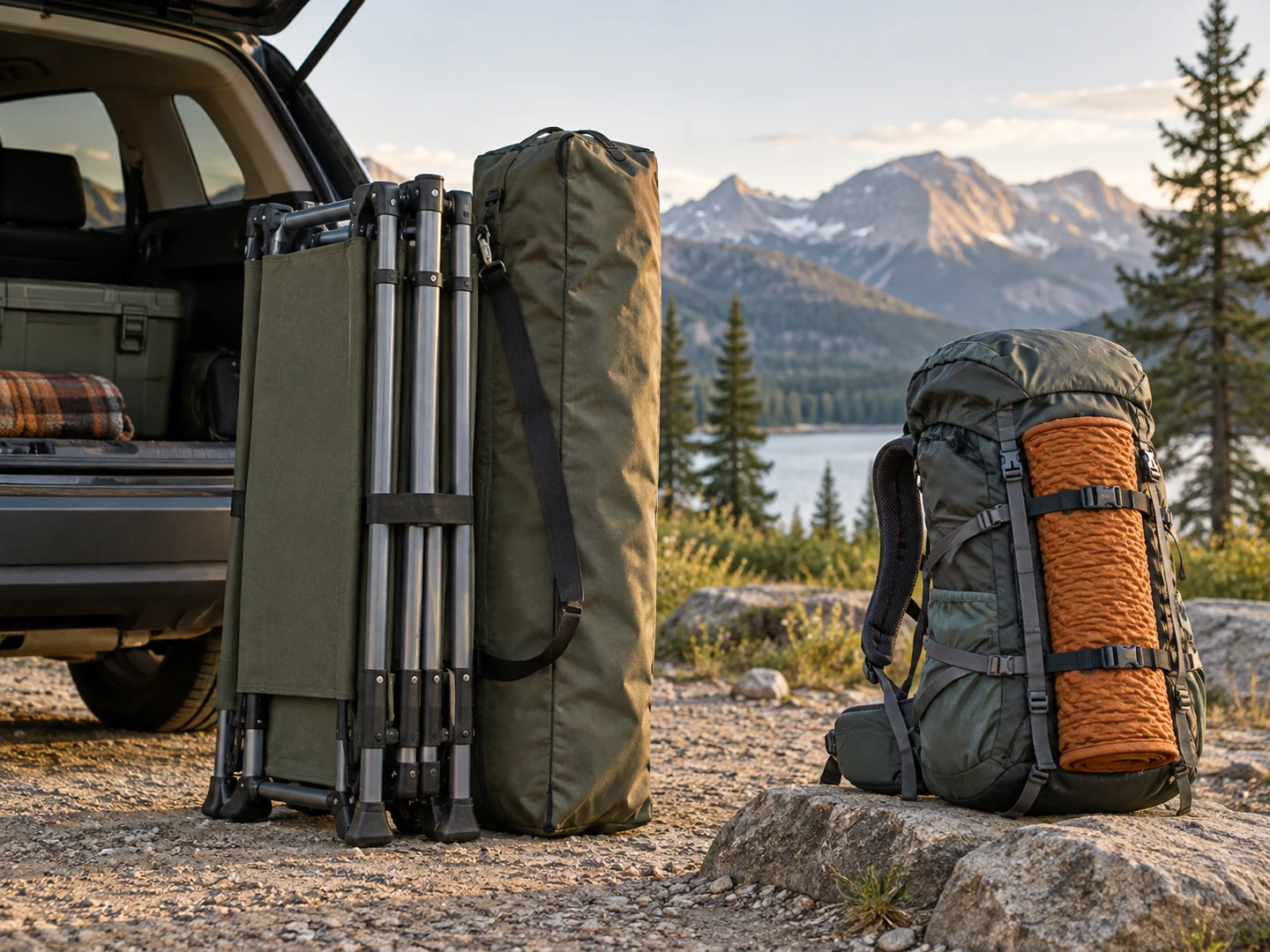
When a Camping Cot Is Better
You drive to the campsite and do not care about carrying 20 pounds
A full-size folding cot makes the most sense when transport is handled by a car, truck or camper van. The weight difference that would be unacceptable on a trail is much less important when the carry is from the trunk to the tent.
The payoff is a raised platform that is easier to sit on, easier to stand from and less sensitive to every small rock or root beneath the tent floor. That can be valuable for campers who dislike crawling up from ground level or who simply want their campsite to feel more like a temporary bedroom.
You prefer a firm, stable surface
A taut cot deck feels different from an inflatable pad. It does not have the same air-mattress movement, and there is no inflation pressure to adjust during the night. That firmness is appealing to some sleepers, although side sleepers may still want a pad or topper to soften pressure at the shoulder and hip.
You want storage under the bed
Elevation can create useful storage volume under the cot for shoes, soft bags and low bins. That does not make a wide cot physically smaller, but it can help organize a family tent where loose gear would otherwise occupy the walkway.
When a Sleeping Pad Is Better
You carry your sleep system any meaningful distance
For backpacking, bikepacking and walk-in campsites, the category decision is straightforward: a sleeping pad is usually the practical answer. Even a bulky closed-cell foam pad is easier to carry than a traditional steel cot, while modern inflatables can disappear inside a pack.
If you are still choosing between foam and inflatable designs, our sleeping-pad R-value guide explains the insulation metric, and our NeoAir XLite NXT vs NEMO Tensor comparison shows how two premium inflatable approaches differ.
You camp in a small tent
Pads sit low and follow the tent floor, so they fit beneath sloping walls that may interfere with a tall cot. They also make it easier to place two sleep systems side by side without rigid legs and crossbars consuming the same usable floor area.
You need a measurable insulation target
Sleeping pads are the clear winner when temperature management is part of the purchase decision. Standardized R-values let you compare insulation across pad brands and types. Higher R-values indicate greater resistance to heat flow. Your sleeping bag or quilt and your pad work together, so a warm bag does not compensate for inadequate insulation underneath you.
Cold Weather Changes the Answer: A Cot Still Needs Insulation
A common mistake is assuming that getting off cold ground automatically makes a cot warmer. In cool conditions, air moving beneath the cot can carry heat away from the underside of your sleep system. A cot’s fabric deck also does not come with the standardized R-value you can use to compare insulated sleeping pads.
That is why an insulated pad remains useful even when you sleep on a cot. REI’s current sleeping-pad guidance treats R-value as the comparison metric for thermal resistance and notes that higher values provide more insulation. The exact level you need depends on the conditions, your sleeping bag or quilt and how warm or cold you personally sleep.
Practical rule: if you expect cool nights and choose a cot for comfort, plan on putting an appropriately insulated pad on top rather than relying on elevation alone.
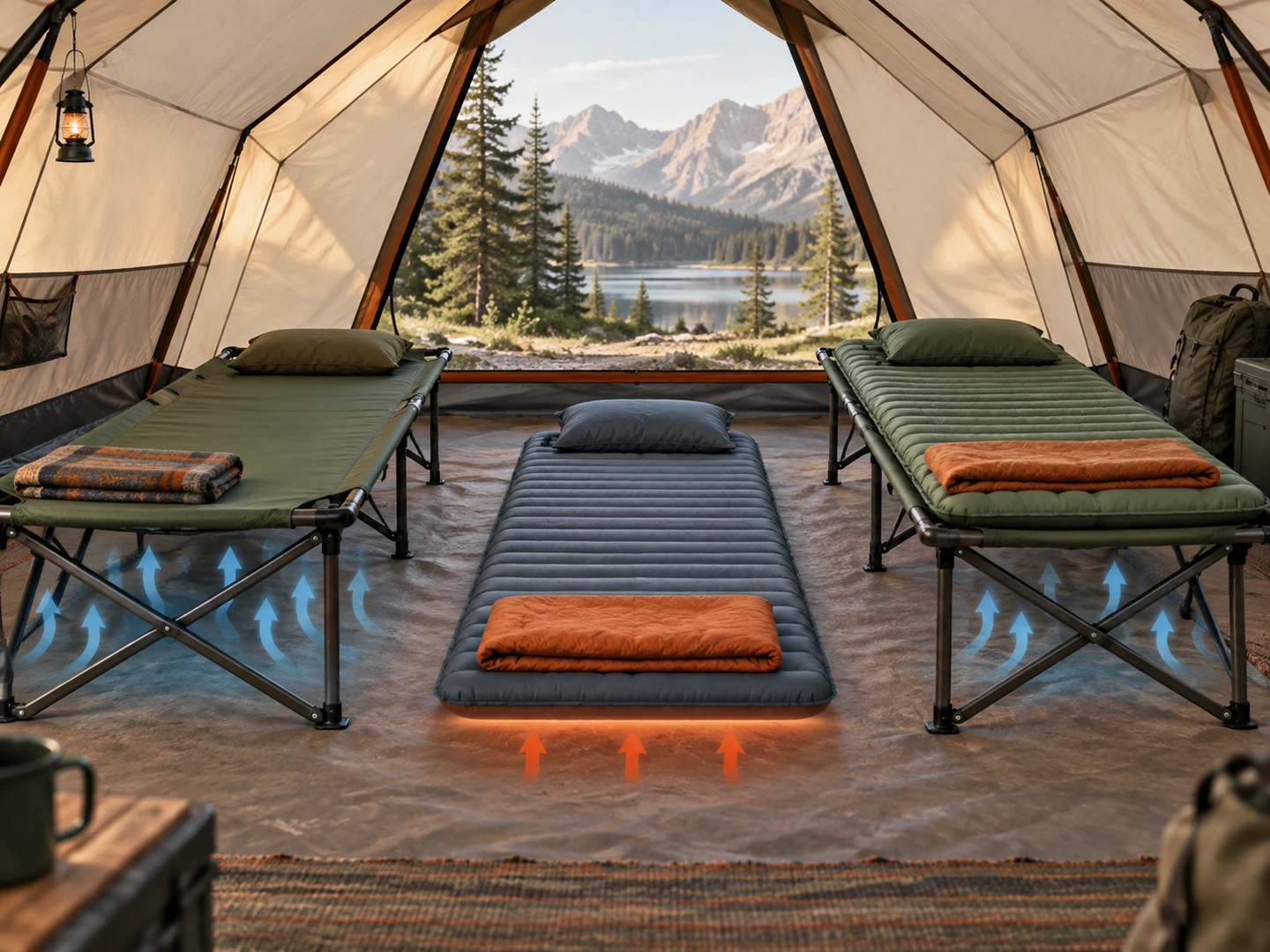
Can You Put a Sleeping Pad on a Cot?
Yes, and for comfort-first car camping this can be the strongest setup of all. The cot supplies elevation and a stable base. The pad supplies extra cushioning plus insulation. Side sleepers often benefit from the additional conformity because a taut cot surface does not let the shoulder and hip sink in the same way a thick pad can.
The trade-off is obvious: you are now carrying two sleep-surface components. For a car campsite that may be completely reasonable. For a backpacking trip it usually defeats the main advantage of a sleeping pad, which is carrying less bulk and weight.
Cot + insulated pad
Maximum comfort and easier entry when cargo space is available.
Sleeping pad alone
The weight and packed-volume penalty of a full-size cot rarely makes sense.
Cot can work alone
If the cot surface is comfortable for you, extra insulation may be unnecessary in mild conditions.
Prioritize pad insulation
Use an insulated pad whether it is on the tent floor or on top of a cot.
Two Concrete Examples of the Trade-Off
These are category examples, not a hidden two-product roundup. They show what changes when you move from a traditional car-camping cot to an insulated backpacking pad.
Coleman Trailhead II Camping Cot
A simple example of why traditional cots belong in the car-camping column: wide, elevated and sturdy, but far too heavy for normal backpacking.
Coleman’s current specifications list a steel cross-bar frame, polyester deck and a 35-inch width. That width gives one sleeper generous room, but it also means you should check the exact interior width and wall angle of your tent before buying two cots.
Owner feedback is useful here because it shows a real trade-off rather than a universally easy setup. Many owners describe the cot as sturdy and comfortable once assembled, while repeated complaints focus on the leverage needed to install the final crossbar, especially when the fabric is new.
NEMO Tensor All-Season Regular Wide
A useful contrast: a 25-inch-wide insulated inflatable with a published R-value and compact backpacking design, but with the normal puncture and air-loss risks of an inflatable.
The exact Regular Wide variant illustrates what a cot cannot do by itself: publish a standardized R-value while packing for trail use. NEMO lists a 5.4 R-value, 3.5-inch thickness and 72 x 25-inch sleeping surface for this variant.
That does not make an inflatable automatically more comfortable for every sleeper. Some owners love the thick support; others find particular air-pad baffle shapes or pressures too firm. The practical advantage is adjustability and portability, not a guarantee that one pad feel suits everyone.
Before You Buy a Cot, Measure the Tent, Not Just the Floor
A tent can have enough floor length for a cot and still fit poorly because the walls slope inward. A 17-inch-high cot pushes your shoulders and bedding closer to the wall than a 3-inch pad does. Measure where the cot deck will sit, not only the floor dimensions printed on the tent box.
Also check leg placement. Cot feet concentrate load on small contact points, which can stress a tent floor on hard ground. Keep the floor clean, make sure the legs are stable and use manufacturer-approved floor protection if your shelter or cot instructions call for it.
For two sleepers, sketch the cot widths before the trip. Two 35-inch cots need 70 inches before you allow any walkway or wall clearance. Pads usually give you more flexibility because they can sit closer together and remain below the steepest part of the tent walls.
A Simple Decision Framework
If the car carries the weight
You want elevation, easier entry and exit, under-bed storage and a firm sleeping platform.
If you carry or pack tightly
You backpack, use a small vehicle or tent, or want to choose insulation by a standardized R-value.
If comfort matters more than cargo space
A cot plus insulated pad is a strong car-camping system for cushioning and cool nights.
If tent space is close
Check cot width, height, wall slope and leg placement before assuming the listed floor dimensions are enough.
How We Compared Camping Cots and Sleeping Pads
Gear & Home treated this query as a Type C decision page because current US search results are dominated by direct cot-versus-pad comparisons. The page therefore focuses on trade-offs and use cases instead of competing with future camping-cot or sleeping-pad roundups.
Coleman and NEMO product data were used for exact dimensions, construction, capacity and insulation details on the two examples.
Each commerce example uses an exact ASIN and variant mapping. Prices, star ratings and review counts are intentionally not hardcoded.
Retailer reviews and camper discussions were checked for repeated issues such as cot setup tension, weight, tent fit, air-pad comfort differences and leak concerns.
Current category guidance was used to cross-check the key thermal distinction: an insulated sleeping pad has an R-value, while a cot alone should not be treated as equivalent insulation.
FAQ
Is a camping cot better than a sleeping pad?
A cot is better for many comfort-first car campers because it raises the sleep surface and makes getting in and out easier. A sleeping pad is better for backpacking, small tents and cold-weather planning because it packs smaller and insulated models provide a standardized R-value.
Is a camping cot warmer than a sleeping pad?
Not automatically. A cot lifts you off the ground, but air can circulate beneath it and carry heat away. An insulated sleeping pad has a measurable R-value, so it is the more useful tool for managing insulation. In cool weather, putting an insulated pad on top of a cot can combine elevation with thermal resistance.
Do I need a sleeping pad on top of a camping cot?
Not always in mild weather if the cot is comfortable by itself. A pad becomes more useful when you want extra cushioning or when cool conditions make underside insulation important. Side sleepers may also prefer the additional conformity of a pad over a taut cot deck.
Can you use a camping cot for backpacking?
Ultralight cots exist, but traditional steel cots are generally too heavy and bulky for normal backpacking. If you are hiking a meaningful distance to camp, a sleeping pad is usually the more practical sleep surface.
Is a cot better for a bad back?
There is no universal answer because back comfort depends on your body, sleep position and the exact cot or pad. A cot can make getting up easier and provides a firm elevated surface, while a thick adjustable pad may better relieve pressure for some sleepers. Treat comfort claims as personal fit, not a medical guarantee.
What is the most comfortable setup for car camping?
If cargo and tent space are not limiting, a cot topped with an appropriately insulated sleeping pad is a strong comfort-first setup. The cot provides elevation and easier entry, while the pad adds cushioning and insulation. Measure the tent carefully because this combination uses more space than a pad alone.