
Gear & Home is reader-supported. As an Amazon Associate I earn from qualifying purchases. When you buy through links on our site, we may earn an affiliate commission, at no extra cost to you. Learn more.
Cold-weather sleeping bags get confusing fast because a large 0°F label can describe very different things. We compared current 0°F and below-zero bags by rating method, insulation, weight, packed practicality, fit and the kind of trip each one actually suits.
Quick reality check: a 0°F label is not automatically a 0°F comfort promise. Standardized bags may publish separate comfort and lower-limit figures, while many value and base-camp bags use a manufacturer rating. Build margin for your body, pad, clothing, shelter and forecast.
The best cold-weather sleeping bag for most buyers
The TETON Sports ALTOS Synthetic 0°F is our Best Overall pick because it is the most portable bag in this group that still targets the 0°F class, at about 3.5 pounds with a mummy shape and compression sack. It makes more sense for backpacking than the 7 to 13 pound rectangular bags below, while synthetic insulation is a practical choice when condensation and damp conditions are concerns.
If price matters more than packability, the Coleman North Rim 0°F is the budget pick. For roomy car camping, the TETON Celsius XXL 0°F is much easier to live with, but TETON itself lists a 25 to 30°F comfort range for the Celsius 0°F family, so do not buy it expecting 0°F comfort. For heavy base-camp use in genuinely colder weather, the ALPS OutdoorZ Redwood -25 and Browning McKinley -30 give much more rating margin, at the cost of enormous weight and bulk.
Quick Picks
TETON Sports ALTOS Synthetic 0°F
Best balance of cold-weather intent, 3.5 lb carried weight and backpack-friendly shape.
Coleman North Rim 0°F
Low-cost mummy design for occasional cold camping when 6-plus pounds is acceptable.
TETON Celsius XXL 0°F
Huge 90 x 39 in rectangular fit, but treat the 0°F label as a rating, not a comfort target.
ALPS OutdoorZ Redwood -25
Canvas, flannel and 13 lb of base-camp bulk for hunters and vehicle-supported winter trips.
Browning McKinley -30
Oversized hooded rectangle with more stated cold-weather margin than the 0°F group.
Best Sleeping Bags for Cold Weather Compared
| Pick | Stated rating | Weight | Shape / size | Rating context | Best for | Where to check |
|---|---|---|---|---|---|---|
| TETON Sports ALTOS Synthetic 0°F Best Overall |
0°F | 3.5 lb | Mummy, 84 x 32 in | Manufacturer rating, no published ISO comfort figure found for this variant | Backpacking value and damp-cold trips | Check availability on Amazon |
| Coleman North Rim 0°F Best Budget |
0°F product title | About 6.3 lb | Mummy, up to about 6 ft 2 in | Current Amazon copy contains conflicting temperature language, so use extra margin | Budget car camping and occasional cold nights | Check availability on Amazon |
| TETON Celsius XXL 0°F Best Roomy Car Camping |
0°F model label | 7 lb | Rectangular, 90 x 39 in | TETON lists roughly 25 to 30°F comfort for the 0°F Celsius family | Roomy car camping, cots and cabins | Check availability on Amazon |
| ALPS OutdoorZ Redwood -25 Best Canvas Base Camp |
-25°F | 13 lb | Rectangular, 80 x 38 in | Manufacturer rating, not presented as an ISO comfort figure | Hunting camps, truck camps and long base-camp stays | Check availability on Amazon |
| Browning McKinley -30 Best Sub-Zero Oversized |
-30°F | 12.8 lb | Hooded rectangle, 90 x 36 in | Manufacturer rating, not presented as an ISO comfort figure | Vehicle-supported sub-zero base camp | Check availability on Amazon |
TETON Sports ALTOS Synthetic 0°F
0°F
3.5 lb
Mummy
Backpacking value
Coleman North Rim 0°F
0°F title
About 6.3 lb
Mummy
Budget car camping
TETON Celsius XXL 0°F
0°F
7 lb
90 x 39 in
25 to 30°F
ALPS OutdoorZ Redwood -25
-25°F
13 lb
80 x 38 in
Cotton canvas
Browning McKinley -30
-30°F
12.8 lb
90 x 36 in
Hooded rectangle
Ratings above are the manufacturers’ stated model ratings unless a standardized comfort or lower-limit figure is explicitly identified. That distinction matters more in this category than a one or two pound weight difference.
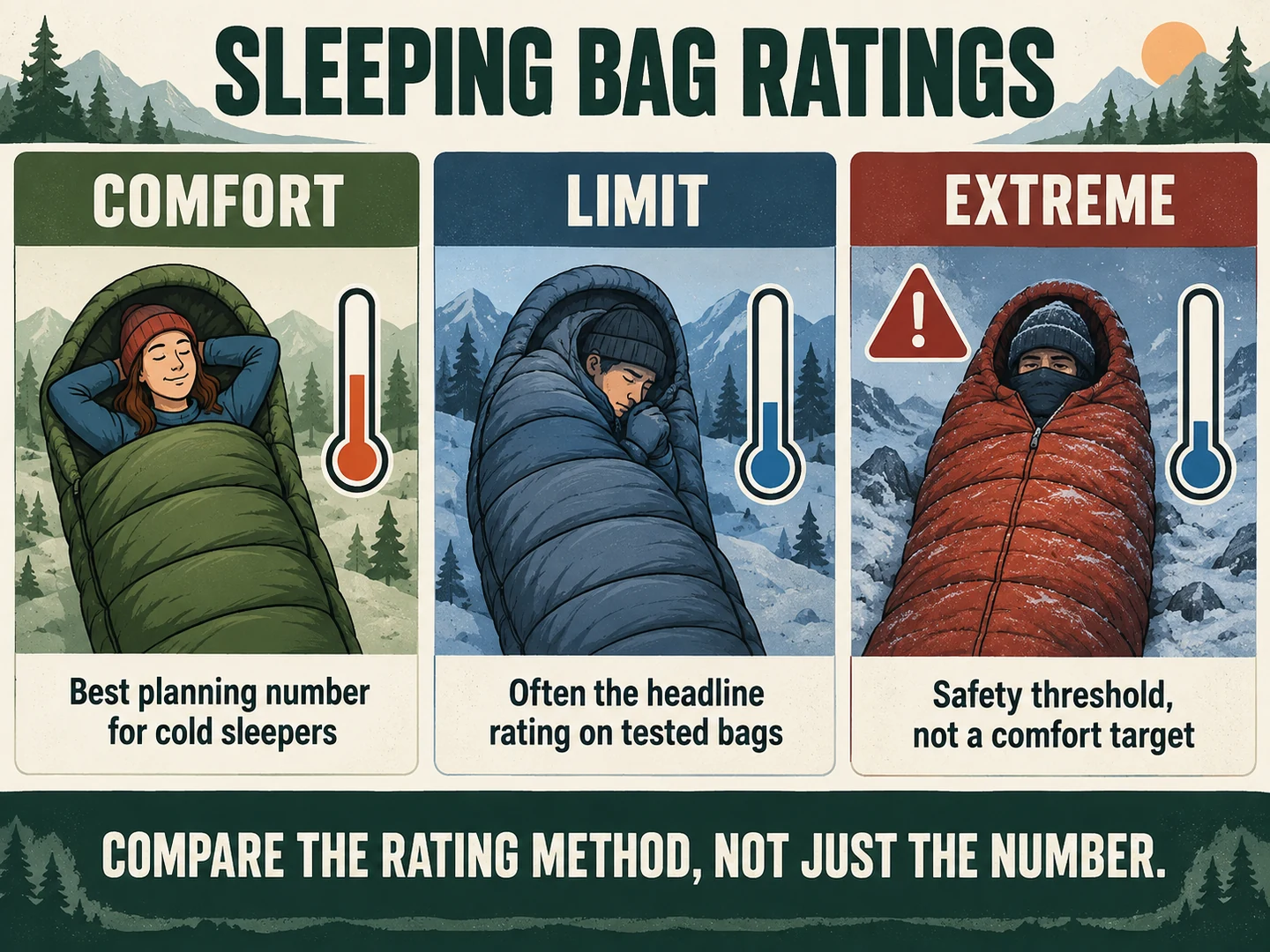
On ISO or EN tested bags, the headline number is often close to the lower-limit value, while the comfort value can be substantially warmer. On many value bags there is no published standardized comfort number at all. If the forecast low is near 0°F, a cold sleeper should not plan around the label alone. Use the comfort number where available and leave safety margin in the entire sleep system.
The 5 Best Cold-Weather Sleeping Bags for 0°F and Below
TETON Sports ALTOS Synthetic 0°F
The most sensible crossover pick here when you need a cold-rated synthetic bag that is still realistic to carry away from the car.
#1
The ALTOS wins this list because the decision is not only about the lowest temperature printed on a product page. A cold-weather bag still has to match how you travel. At 3.5 pounds, the ALTOS is roughly half the weight of the Celsius XXL and far less than the canvas Redwood, so it can fit short backpacking trips, pulk trips and walk-in sites that would be unrealistic with a 13 pound bag.
Synthetic insulation is also a defensible winter choice when condensation, wet snow and damp tent walls are part of the plan. It will not compress like high-fill-power down, but it is less stressful when moisture management is imperfect. The mummy shape, hood and narrower foot section reduce the amount of internal air your body has to warm.
The key limitation is temperature transparency. We did not find a current published ISO comfort figure for this exact synthetic 0°F variant, so we will not convert the model name into a promise that every sleeper will be comfortable at 0°F. If your expected low is actually around 0°F, especially if you sleep cold, choose more rating margin or move into a bag with published standardized data.
Pros
- Much lighter than the roomy base-camp bags in this roundup
- Synthetic insulation is practical in damp winter conditions
- Mummy shape, hood and footbox are built around heat retention
- Current exact Amazon child verified as Synthetic, 0F
Limitations
- No current ISO comfort figure found for this exact variant
- Still heavy and bulky by premium backpacking standards
- Roomier mummy fit may be less thermally efficient on very small sleepers
- Not our choice for exposed winter mountaineering
Coleman North Rim 0°F
A low-cost cold-weather mummy that makes sense when price matters more than packed size, with a temperature-label caveat buyers should know before checkout.
#2
The North Rim earns the budget slot because it gives occasional cold-weather campers a hooded mummy layout without pushing them into premium winter-bag pricing. Its Thermolock draft-tube concept and adjustable hood target the main places warm air leaks from an inexpensive sleeping bag.
The cost is bulk. At a little over six pounds, this is not a serious backpacking choice for most people. It fits better in a trunk, truck bed or short walk-in campsite where you can tolerate the packed volume. That also means you should compare it against roomy rectangular bags based on fit, not only price.
We would also buy it with more temperature margin than the product title suggests. The current marketplace copy is not internally clean enough for us to treat 0°F as a standardized comfort number. For a forecast in the teens or around freezing, it can be a value-oriented choice with an insulated pad and appropriate layers. For a true 0°F objective, move to a more conservative system.
Pros
- Accessible route into a hooded cold-weather mummy bag
- Draft tube and hood target common heat-loss areas
- Current Amazon child ASIN is verified
- Good fit for occasional car camping where pack weight is secondary
Limitations
- Heavy and bulky for backpacking
- Current listing contains inconsistent temperature wording
- Not a published ISO comfort rating
- Large sleepers should verify current fit dimensions before ordering
TETON Celsius XXL 0°F
The comfort-first choice for big rectangular sleeping space, with unusually useful manufacturer guidance that makes the 0°F label easier to interpret.
#3
If you dislike mummy bags, the Celsius XXL is the cleanest answer in this list. Ninety inches of length and 39 inches of width create enough room for broad shoulders, restless sleepers and people who simply sleep better when they can move their knees. The rectangular shape also feels more like conventional bedding on a cot or thick pad.
The most important specification is not the 7 pound weight. It is TETON’s own comfort guidance. A bag can carry a 0°F model label while the manufacturer’s expected comfort zone is much warmer. For many buyers, that is not a flaw. A 25°F car-camping night can feel far better in a roomy bag than in a cramped mummy. It only becomes a problem when the buyer assumes the large 0°F number is the comfort target.
Because this is a big synthetic rectangular bag, it works best when the vehicle handles transport. It is also a reasonable cabin, hunting lodge or emergency-kit bag where packed volume is less important than familiar comfort.
Pros
- Very roomy 90 x 39 in sleeping area
- Manufacturer publishes practical comfort guidance
- Current exact Amazon XXL 0F right-zip variant verified
- Good match for cots, thick pads and car camping
Limitations
- 7 lb is not backpacking friendly
- 0°F label should not be read as 0°F comfort
- Rectangular shape creates more internal air to warm
- Large packed volume
ALPS OutdoorZ Redwood -25
A 13 pound canvas-and-flannel cold-weather bag for hunters and winter base camps where durability and bed-like feel matter more than carrying weight.
#4
The Redwood is not trying to be a backpacking bag. That is why it works. Canvas resists the campsite abuse that would make you nervous with an ultralight shell, the flannel liner feels familiar in cold weather, and the oversized rectangle makes it easier to sleep in layers without fighting a narrow mummy cut.
The -25°F figure gives substantially more stated margin than the 0°F bags above, but it is still a manufacturer rating rather than a published ISO comfort number. We would treat it as evidence that this is the colder class of product, not as a promise that every sleeper can use it at -25°F without additional system planning.
Thirteen pounds is the decision. If you are carrying from a vehicle to a wall tent, hunting camp or cabin, that weight can buy comfort and ruggedness. If you are walking several miles, the Redwood stops making sense almost immediately.
Pros
- Rugged canvas exterior and soft flannel liner
- Oversized rectangular fit
- Much more stated cold-weather margin than 0°F models
- Excellent match for vehicle-supported hunting and base camp
Limitations
- Extremely heavy at about 13 lb
- Large even when rolled for transport
- -25°F is not presented as an ISO comfort figure
- Too bulky for normal backpacking
Browning McKinley -30
The pick for buyers who want an oversized hooded rectangle with the most stated temperature margin in this shortlist and do not need backpacking portability.
#5
The McKinley sits between a traditional rectangular camp bag and a winter mummy. It keeps the roomy 36 inch rectangular body, then adds an insulated hood and zipper baffle to reduce the biggest heat leaks. That makes it appealing to large sleepers and cold-weather car campers who dislike the restriction of a mummy shape.
Its -30°F manufacturer rating is the coldest label in this group, but our recommendation is about margin and construction class, not a claim of -30°F comfort. At severe temperatures, the pad underneath you, the shelter, dry clothing, calories and moisture control become just as important as the bag.
At 12.8 pounds, portability is effectively settled. This is a vehicle-supported bag. If that matches your use, the extra weight can be reasonable. If it does not, choose the ALTOS or move to a premium winter backpacking bag with standardized temperature data.
Pros
- Most stated temperature margin in this shortlist
- Oversized hooded rectangular shape
- Ripstop outer with brushed polyester liner
- Current exact Amazon child verified
Limitations
- 12.8 lb makes it a base-camp-only choice for most people
- -30°F is a manufacturer rating, not an ISO comfort figure
- Large packed size
- Too much bag for mild shoulder-season camping
How to Choose a 0°F or Below-Zero Sleeping Bag
Start with the rating method, not the biggest number
When ISO or EN numbers are available, compare comfort to comfort and lower limit to lower limit. The comfort figure is the more conservative planning number for many cold sleepers. If a bag publishes only a manufacturer temperature label, give yourself more margin because the number is not directly interchangeable with a standardized comfort rating.
Match the bag to how far you carry it
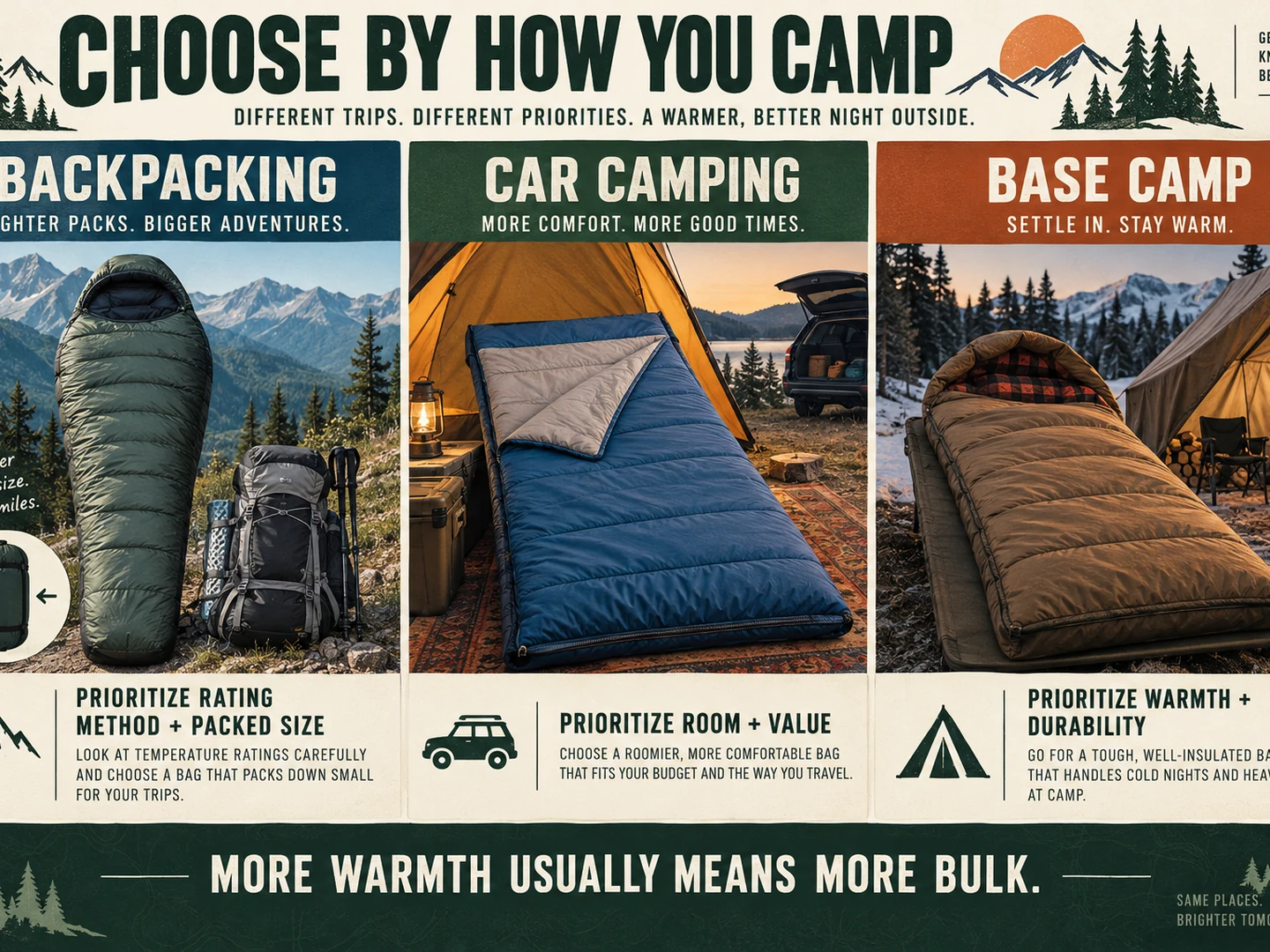
A 13 pound canvas bag can be excellent at a hunting camp and terrible in a backpack. A 3.5 pound synthetic mummy can be a reasonable value backpacking bag and still feel heavy next to premium down. If carried weight is your priority and your expected lows are not truly winter-grade, compare our best ultralight sleeping bags instead of buying more insulation than the trip needs.
For true 0°F nights, buy margin rather than marketing
If the forecast low is 0°F, choosing a bag with only a 0°F manufacturer label leaves very little room for a cold sleeper, an under-insulated pad, fatigue, wind exposure or a wetter-than-expected night. A lower-rated bag can provide useful margin, but only after you understand whether that rating is standardized and whether the rest of the sleep system is winter capable.
Your sleeping pad can decide whether the bag works
The insulation beneath you is compressed inside a sleeping bag, so the pad is responsible for much of the protection from cold ground. A warm bag on a low-R pad can still feel cold. Our complete backpacking sleep system guide explains how the bag, pad, shelter, clothing and moisture management work together.
Mummy vs rectangular: warmth efficiency vs room
Mummy bags use less fabric and create less dead air, so they are usually lighter and more efficient. Rectangular bags are easier to move around in and often feel more like normal bedding. For car camping, that comfort trade can be worth several extra pounds. For backpacking, it usually is not.
Synthetic vs down in cold weather
Down offers superior warmth-to-weight and compression when kept dry. Synthetic insulation is heavier for comparable warmth, but it is less sensitive to damp conditions and often costs less. That is why all five picks here use synthetic fill: they occupy the value and vehicle-supported side of the current Amazon cold-weather market. Premium winter backpackers should also consider standardized down options outside this price-and-portability class.
Do not size up automatically
Extra length and girth feel comfortable, but unused interior volume takes more body heat to warm. Choose enough room for your sleeping position and winter layers without buying a huge bag simply because it looks more comfortable in a product photo.
How We Chose These Cold-Weather Sleeping Bags
We first checked the live US search results to confirm that cold-weather and 0°F sleeping bags form a distinct commercial intent from Gear & Home’s existing ultralight sleeping-bag page. We then compared current product revisions rather than recycling old model lists.
Each Amazon CTA maps to a current US child ASIN and the selected temperature or color variant, not a guessed family listing.
Manufacturer labels are kept separate from standardized comfort or lower-limit numbers. We do not turn a 0°F model name into a 0°F comfort claim.
We compare backpacking weight, rectangular room, canvas durability and base-camp practicality because these products solve different cold-weather jobs.
Recurring feedback is used for practical trade-offs such as bulk, room and packability. One-off complaints are not promoted into universal conclusions.
FAQ
Is a 0°F sleeping bag comfortable at 0°F?
Not necessarily. On standardized bags, the headline number can be closer to a lower-limit rating than the comfort rating. On non-standardized bags, the 0°F figure may be a manufacturer rating with no directly comparable comfort number. Cold sleepers should plan with extra margin.
What temperature sleeping bag should I use for a 0°F night?
A conservative setup usually uses more margin than a bag whose only stated number is 0°F, especially for cold sleepers. Prefer a published comfort rating when available, then factor in your sleeping pad, clothing, shelter, moisture and forecast uncertainty.
Are below-zero sleeping bags too warm for 20°F weather?
They can be, especially in a warm shelter or for a warm sleeper. Many bags can vent through the zipper, but a very heavy -25°F or -30°F base-camp bag is unnecessary for most mild shoulder-season trips. Match the rating and ventilation to the actual forecast.
Is synthetic or down better for winter sleeping bags?
Down is generally lighter and more compressible for a given warmth level when kept dry. Synthetic insulation is usually heavier but is more forgiving of damp conditions and often costs less. The better choice depends on carry distance, moisture exposure and budget.
Do I need a winter sleeping pad with a 0°F bag?
You need enough ground insulation for the conditions. A warm sleeping bag cannot fully compensate for a pad with inadequate R-value because the insulation beneath your body is compressed. Treat bag and pad as one thermal system.
What is the best 0°F sleeping bag for car camping?
For room and comfort, the TETON Celsius XXL 0°F is our car-camping pick, but TETON’s own comfort guidance is much warmer than the model label. For colder vehicle-supported camps, the ALPS Redwood -25 or Browning McKinley -30 adds more stated rating margin at much higher weight.