
Gear & Home is reader-supported. As an Amazon Associate I earn from qualifying purchases. When you buy through links on our site, we may earn an affiliate commission, at no extra cost to you. Learn more.
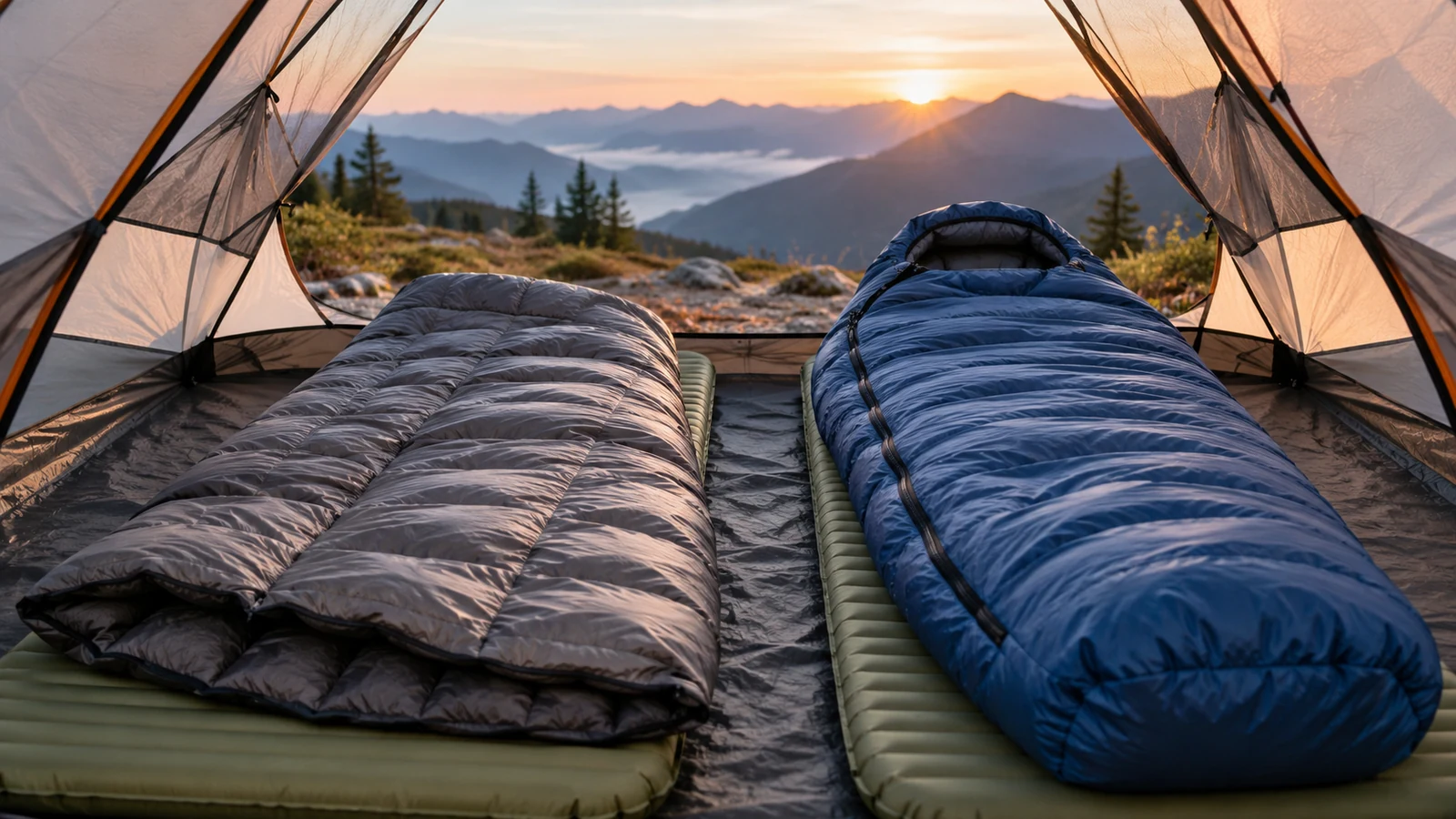
A backpacking quilt is usually the better choice when you want lower carried weight, easy ventilation and room to move. A sleeping bag is usually the safer default when cold-weather draft control, a built-in hood and simple setup matter more than shaving ounces.
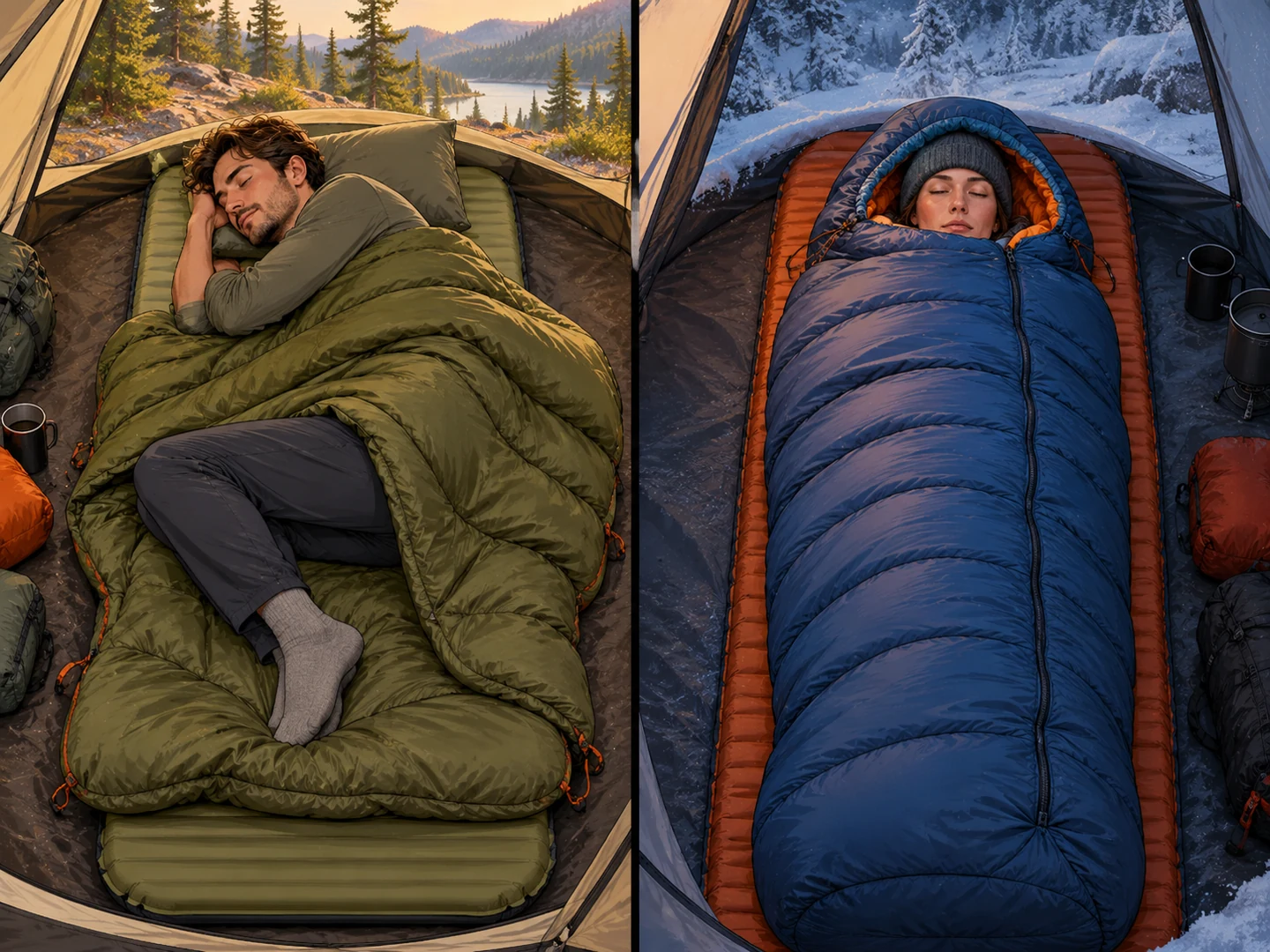
The important part is that neither design wins in every condition. A quilt saves material by leaving part of the underside open and relying on your sleeping pad to complete the insulation system. A mummy bag encloses you more completely, which costs some weight but reduces the number of ways cold air can reach you. Your sleep position, expected low temperature and tolerance for setup matter more than the label on the product.
Quilt vs sleeping bag: which should you choose?
Choose a quilt for three-season backpacking when weight and freedom of movement are priorities, especially if you are a warm sleeper or a side sleeper who dislikes a tight mummy shape. Choose a sleeping bag if you sleep cold, expect frequent near-freezing or below-freezing nights, dislike managing pad straps, or simply want the most forgiving draft protection.
Quilt vs Sleeping Bag: Quick Decision Table
| Decision factor | Backpacking quilt | Sleeping bag | Better choice |
|---|---|---|---|
| Weight and packed bulk | Usually lower because there is less shell, zipper, hood and underside insulation. | Usually higher because the design fully surrounds the sleeper. | Quilt |
| Draft protection | Depends heavily on width, pad straps and how still the edges stay. | More forgiving thanks to full enclosure, zipper draft tubes and often a hood/collar. | Sleeping bag |
| Side sleeping and movement | More blanket-like freedom if the quilt is wide enough. | Can feel restrictive in narrow mummy cuts, though roomy bags exist. | Quilt |
| Cold sleepers | Works well when sized conservatively, but gaps punish poor technique. | Less technique-sensitive and easier to seal around the head and shoulders. | Sleeping bag |
| Warm-night ventilation | Very easy to open, drape or kick aside. | Depends on zipper length; a full-zip bag can vent well. | Quilt |
| Ease of use | May require attaching straps and learning how tight to run the edges. | Get in, zip up and adjust the hood. | Sleeping bag |
| Head insulation | Usually separate: hat, hood, balaclava or insulated hood. | Usually integrated into the bag. | Sleeping bag |
Quilt advantage
Usually lighter
More open
Sleeping bag advantage
More forgiving
Usually built in
Quilt advantage
Easy
More technique
The Real Difference: Where the Insulation Goes
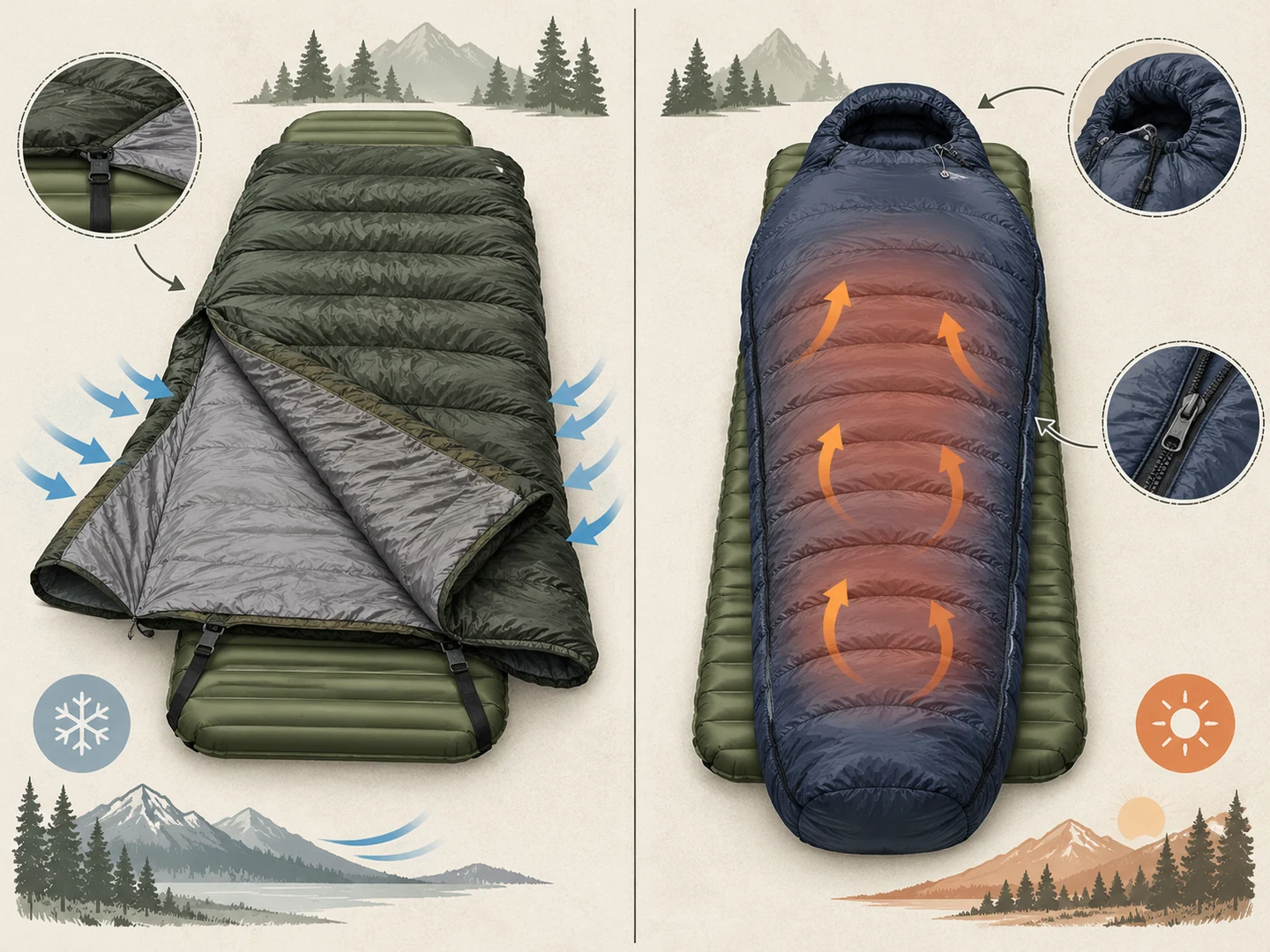
A conventional mummy sleeping bag wraps insulation around your torso, legs and head. A quilt removes much of the material that would be trapped beneath your body and compressed against the sleeping pad. That is the core efficiency argument: compressed insulation beneath you contributes little compared with the insulation above you, while the pad is already responsible for resisting heat loss to the ground.
The trade-off is obvious at the edges. A bag creates a mostly sealed tube. A quilt creates a controlled opening, usually managed with pad straps, clips or an elastic edge. When that opening stays underneath you, the design can be warm and efficient. When you roll far enough to lift an edge, cold air can enter quickly.
A warmer quilt cannot fix a pad that is too cold for the ground conditions. The same is true for a sleeping bag: both systems depend on the pad, but quilts make that dependency more obvious because they intentionally remove most underside insulation.
Which Is Warmer: a Quilt or a Sleeping Bag?
A sleeping bag is generally more forgiving, not automatically warmer in every apples-to-apples comparison. Warmth depends on loft, fill amount, construction, fit, pad insulation, clothing and how the temperature rating was produced. What the bag gives you is easier draft management: an enclosed footbox, zipped sides and usually a hood or collar.
A well-sized quilt can work below freezing. Experienced quilt users routinely pair conservative temperature ratings with effective pad straps, an adequately insulated pad and separate head insulation. But the margin for setup errors gets smaller as temperatures fall. If a gap opens at 50°F, you may notice it. If a gap opens at 20°F, you may wake up immediately.
For a first lightweight sleep system, the simplest rule is to give the sleeping bag the edge when you expect repeated nights near your personal cold limit. Give the quilt the edge when most nights are comfortably above that limit and you value weight savings and ventilation.
Do Not Compare Temperature Labels Blindly
Standardized EN/ISO sleeping-bag tests are useful because they create comfort and lower-limit numbers that can be compared across products tested under the same method. But not every sleeping bag is tested, and quilt ratings are even less uniform across the market. Some quilts have published laboratory ratings; many rely on a manufacturer rating instead.
That means a “20°F quilt” and a “20°F sleeping bag” are not automatically equivalent. Before buying, identify whether the number is a standardized comfort rating, a standardized lower-limit rating or the brand’s own estimate. If you sleep cold, plan around the more conservative number and add margin for elevation, wind, humidity, fatigue and your pad’s R-value.
Our complete backpacking sleep system guide goes deeper into how the bag or quilt, sleeping pad, clothing and shelter work together.
Weight and Packability: Why Quilts Appeal to Ultralight Hikers
The strongest case for a quilt is structural. If two sleep systems use similar insulation quality and target a similar temperature range, the quilt can avoid some combination of a full-length zipper, hood, back panel and insulated fabric under the sleeper. That can reduce both carried weight and compressed volume.
But do not assume the word “quilt” guarantees an ultralight product. Wide cuts, draft collars, zippered footboxes, heavy fabrics and generous overfill can push a quilt into sleeping-bag territory. Conversely, an aggressive ultralight mummy bag can weigh surprisingly close to a quilt by using high-fill-power down, thin fabrics and a narrow shape.
If you are choosing purely by ounces, compare actual size-specific weights and the same temperature benchmark. A lighter product with a less conservative rating is not a true weight saving if you need to add extra clothing or carry a second layer to stay warm.
Side Sleepers and Restless Sleepers: Quilts Usually Feel Less Restrictive
Quilts move more like bedding at home. You can bend a knee, rotate your hips and spread your legs without twisting an entire mummy bag around you. That is one reason many side sleepers prefer them.
There is a catch: active sleepers are also the people most likely to expose a quilt edge. Width and attachment design matter. A quilt that looks ultralight on a spec sheet may feel frustrating if it is too narrow for the way you actually sleep. Wider quilts add a few ounces but can be a better practical choice for side sleepers and larger bodies.
A sleeping bag can still work extremely well for side sleepers if the cut is generous. In our ultralight sleeping bag comparison, we separate narrow gram-saving mummy shapes from roomier options rather than treating all bags as equally restrictive.
Choose a Backpacking Quilt If…
Skip a quilt if you strongly dislike any draft sensation, regularly push your insulation to its temperature limit, or want a one-step setup with integrated head coverage.
Choose a Sleeping Bag If…
Skip a narrow mummy bag if claustrophobic fit ruins your sleep. A roomier sleeping bag or quilt can be worth more than saving the final few ounces.
The Trade-Offs That Matter Most
1. Quilt straps are part of the insulation system
Most backpacking quilts use one or more straps around the sleeping pad. They keep the quilt edges positioned as you move and can be tightened as temperatures drop. Too loose and drafts enter; too tight and you can compress the quilt or restrict movement. Expect a short learning curve.
2. A sleeping bag hood is real weight, but useful weight
Quilt users often carry a beanie, puffy hood, balaclava or dedicated insulated hood when temperatures fall. If that head insulation was already in your clothing system, the quilt’s weight savings remain meaningful. If you need to add a new insulated hood only because you switched to a quilt, count it in the system weight.
3. Wide is often warmer than ultranarrow
This sounds counterintuitive because extra width creates more air to warm, but a quilt that is too narrow can leak heat every time you turn. The best width is the narrowest size that still keeps both edges reliably under you or secured to the pad in your normal sleep position.
4. Full zippers narrow the ventilation gap
A full-zip sleeping bag can open almost flat on warm nights, reducing one traditional advantage of quilts. If you want one enclosed bag that also handles summer temperatures, zipper design is worth checking.
Two Real Product Examples to Compare
This is not a product roundup, but comparing one real quilt and one real sleeping bag makes the design differences easier to see. We verified the exact Amazon.com US product identities below; availability can change.
Sierra Designs Nitro Quilt 35
Quilt
A warm-weather/down quilt example that uses an open blanket-style upper body, insulated arm pockets and a hide-away hood rather than a conventional full mummy enclosure.
Sea to Summit Spark 15
Bag
A lightweight hooded mummy bag that keeps the conventional enclosed shape while using high-loft down and thin fabrics to stay competitive with quilt-style systems.
A Simple Decision Framework
Start with your coldest expected night, then your sleep style
If your forecast lows are well inside your comfort margin and you want to reduce pack weight, start by shopping quilts. If lows regularly approach the edge of your insulation rating, start with sleeping bags. Then use fit to break the tie: active and side sleepers should favor wider quilts or roomy bags; cold, still sleepers can take advantage of a closer mummy fit.
- Mostly 40°F+ nights, warm sleeper, ultralight priority: quilt is the natural starting point.
- Mixed three-season trips around freezing: either works; quilt users should size conservatively and master straps.
- Frequent 20s°F nights, cold sleeper or high wind exposure: sleeping bag is the easier default.
- Side sleeper who hates mummy bags: quilt or a deliberately roomy sleeping bag.
- First backpacking sleep system and uncertain personal warmth: sleeping bag offers fewer setup variables.
How We Reached This Verdict
This is a research-based Gear & Home decision guide, not a claim that we physically tested every quilt and sleeping bag discussed. We compared current search intent, standardized temperature-rating guidance, current manufacturer and retailer specifications, current Amazon product identities, and recurring owner/reviewer patterns around drafts, fit, movement and setup.
FAQ
Is a quilt actually lighter than a sleeping bag?
Usually, but not always. Quilts can save weight by removing a full back panel, hood and zipper, but a wide or heavily insulated quilt can weigh more than an aggressive ultralight mummy bag. Compare size-specific weights at a similar temperature benchmark.
Are backpacking quilts warm enough below freezing?
Yes, a properly rated quilt can work below freezing when it is wide enough, attached correctly, paired with an adequately insulated pad and combined with appropriate head insulation. A sleeping bag is simply more forgiving of small gaps and setup errors in cold conditions.
Do you need a sleeping pad with a quilt?
Yes. The pad provides the insulation underneath you. Sleeping bags also depend on an insulated pad because the fill compressed under your body loses much of its loft.
Are quilts better for side sleepers?
Often. Quilts allow more independent movement around the hips and knees, but they need enough width to prevent gaps when you turn. A roomy sleeping bag can be just as comfortable if you prefer full enclosure.
What is better for a beginner backpacker: a quilt or sleeping bag?
A sleeping bag is the easier default if you are still learning your personal temperature needs because it has fewer draft-management variables. A quilt is a reasonable first choice when your trips are mild, you understand your sleeping pad needs and weight savings are a priority.