
Gear & Home is reader-supported. As an Amazon Associate I earn from qualifying purchases. When you buy through links on our site, we may earn an affiliate commission, at no extra cost to you. Learn more.
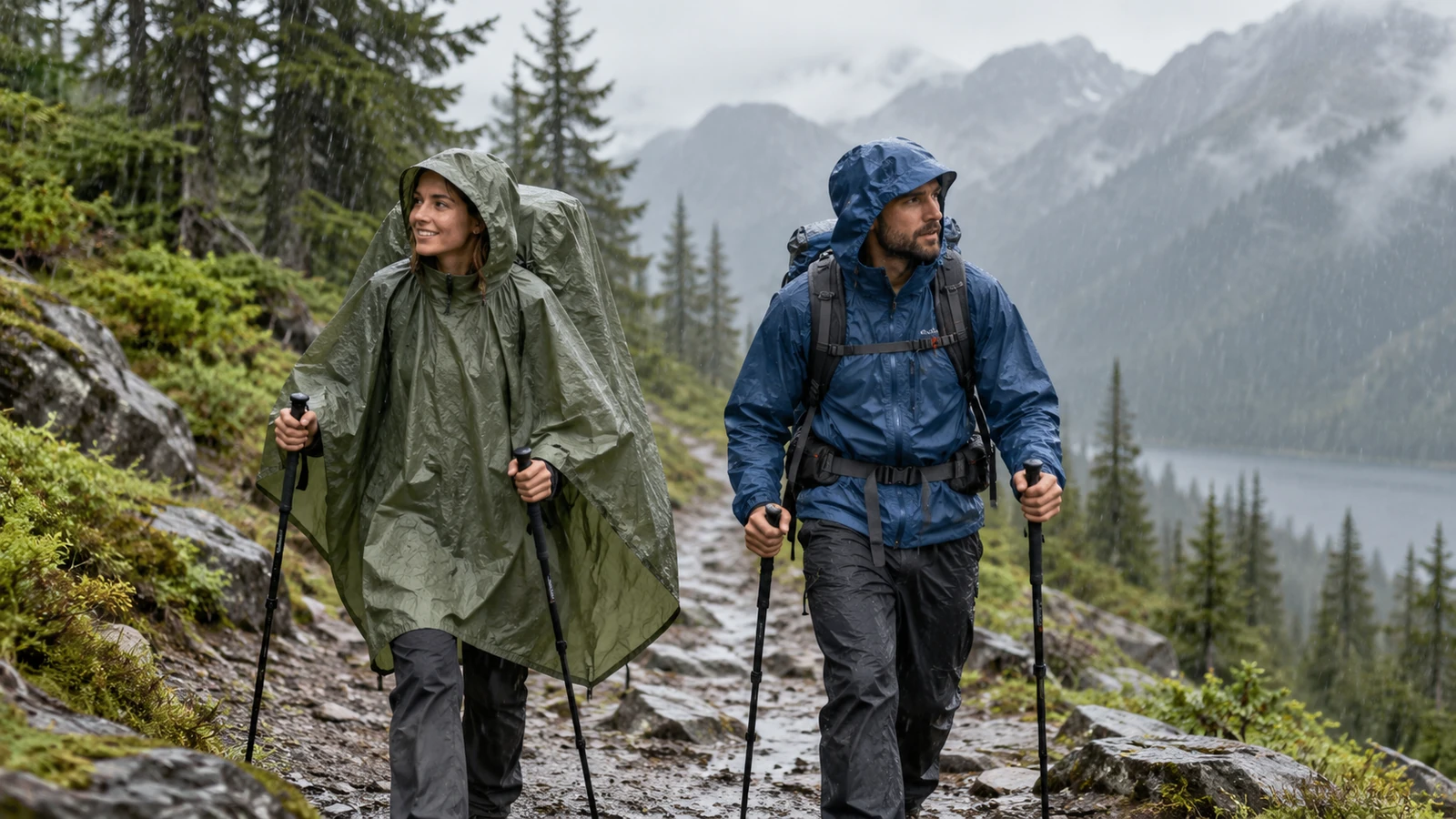
A rain jacket and a poncho can both keep falling rain off your upper body, but they solve backpacking weather in very different ways. A poncho trades wind control and close-fitting mobility for airflow, instant pack coverage and simplicity. A rain jacket trades some ventilation for a more secure fit, better layering and more predictable performance in wind, brush and technical terrain.
For most backpackers, the safer all-around default is a rain jacket plus a waterproof pack liner. A poncho becomes the more attractive system when the trip is warm, humid, mostly below treeline and not especially windy. The right answer is less about which fabric is “more waterproof” and more about the weather, terrain and movement you expect.
Choose a poncho for hot, low-wind trails. Choose a rain jacket for wind, cold and rough terrain.
Choose a poncho when ventilation and backpack coverage matter more than a close fit. It is especially compelling in warm, humid rain on maintained trails where overheating inside a shell is a bigger problem than wind exposure.
Choose a rain jacket when you expect cold rain, strong wind, exposed ridges, dense brush, scrambling or frequent on-and-off use. A fitted shell also integrates better with insulation, gloves and separate rain pants.
If the route or forecast is uncertain, start with the jacket and protect critical gear inside the pack with a liner. That combination is less elegant than one giant poncho, but it is more adaptable across changing conditions.
Rain Jacket vs Poncho for Backpacking: The Main Trade-offs
| Factor | Poncho | Rain jacket | Advantage |
|---|---|---|---|
| Ventilation | Open sides and loose shape move air well | Relies on breathable fabric, front zip and pit zips when present | Poncho |
| Wind control | Loose fabric can flap, lift and expose openings | Close fit is much easier to seal and stabilize | Rain jacket |
| Backpack coverage | Many models cover both hiker and pack in one layer | Pack usually needs a liner, dry bags or separate cover | Poncho |
| Mobility | Loose fabric can interfere with poles, hand placement and scrambling | Sleeves and fitted body move more predictably | Rain jacket |
| Cold-rain layering | Airflow can become a liability when heat retention matters | Works as a wind shell over fleece or insulation | Rain jacket |
| Lower-body coverage | Long hem protects part of the thighs, but legs remain exposed | Upper body only unless paired with rain pants or a skirt | Depends on system |
| Brush and technical terrain | Loose edges are easier to snag | Cleaner profile around branches, rock and straps | Rain jacket |
| Multi-use potential | Some models can become a tarp or emergency shelter | Primarily clothing | Poncho |
| Fast pack access | You may need to expose yourself or lift the poncho to reach the pack | Pack is independent of clothing | Rain jacket |
Poncho
Maximum airflow and one-piece pack coverage make the most sense when heat buildup is the main comfort problem.
Rain jacket
A fitted shell blocks wind more predictably and works better over insulating layers.
Rain jacket
Cleaner sleeves and less loose fabric are easier around poles, rock, brush and scrambling.
Poncho
Good ventilation plus direct pack coverage can be a very efficient warm-weather system.
The table looks decisive, but the most important row is the one that matches the worst realistic weather on your trip. A poncho that feels ideal in a muggy forest can become frustrating on a windy pass. A jacket that feels secure in a storm can become clammy during a humid summer climb.
When a Poncho Is Better for Backpacking
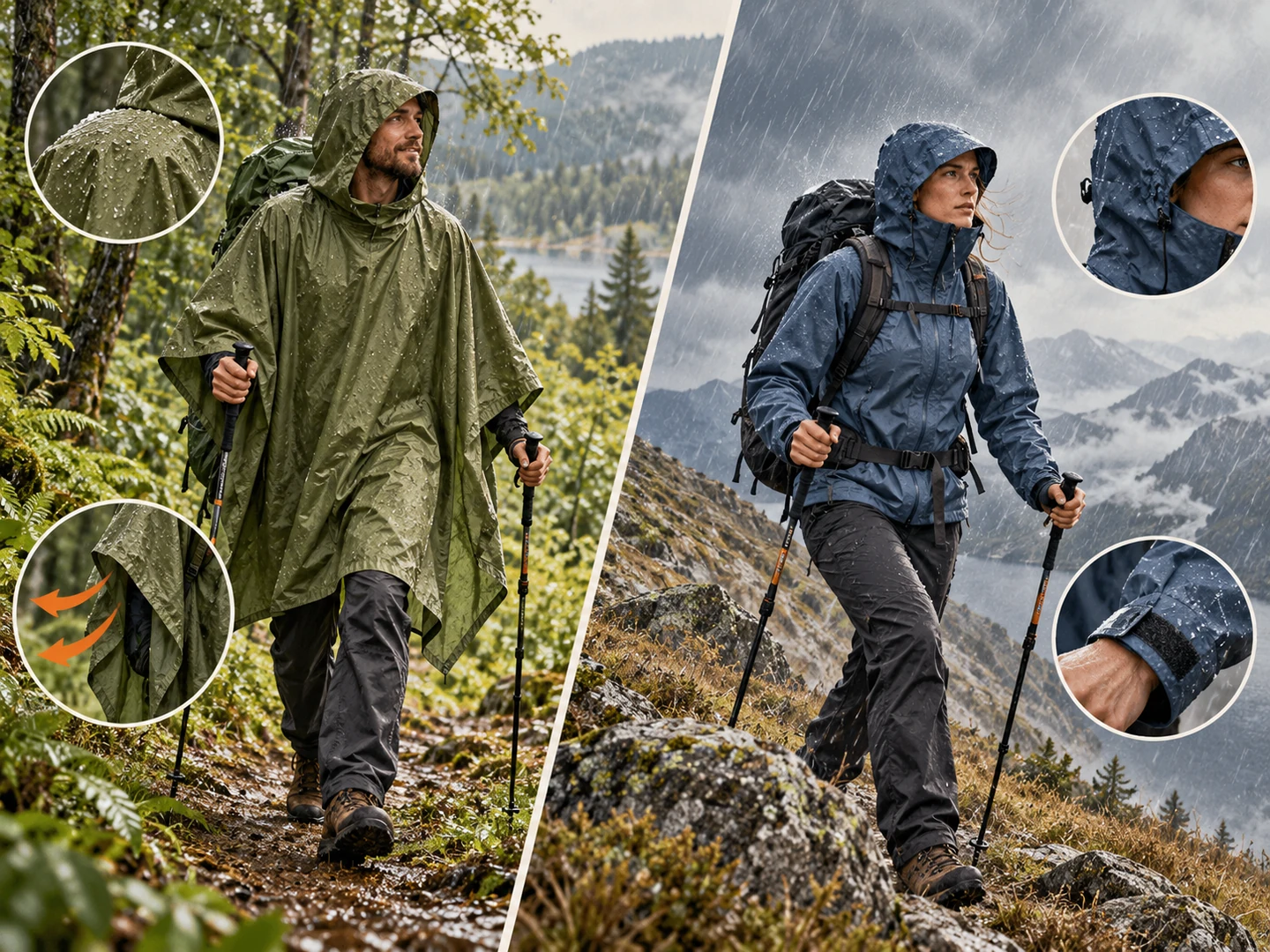
A poncho’s biggest advantage is geometric, not technological. Instead of sealing fabric close to your torso, it creates a loose roof around you. Air can enter and leave around the sides and hem, which reduces the amount of moisture trapped from sweat during warm rain.
That matters because waterproof-breathable fabrics cannot make hard uphill hiking feel dry in every condition. When the air is warm and saturated with moisture, the vapor-pressure difference that helps moisture move through a membrane is small. Mechanical ventilation becomes extremely valuable, and a poncho provides a lot of it by default.
Where a poncho shines
- Warm, humid rain where overheating is the main comfort problem
- Maintained forest trails with little exposure to strong wind
- Trips where one garment covering both hiker and pack simplifies the system
- Minimalist trips where a tarp-capable poncho can serve more than one role
- Frequent short showers where fast deployment matters
Where a poncho struggles
- Strong or gusty wind
- Dense brush and snag-prone vegetation
- Scrambling, climbing or off-trail travel
- Cold rain where retaining warmth matters
- Situations where you need frequent access to the backpack while staying covered
Backpack coverage is the second major advantage. A properly sized backpacking poncho can drape over the pack, reducing the need for a separate rain cover. That does not mean everything inside the pack is automatically safe. Wind can push rain through openings, water can run down straps and seams, and you still have to uncover the pack when accessing gear.
For that reason, a lightweight internal liner remains smart even with a poncho. Think of the poncho as the first barrier and the liner as protection for the sleeping bag, spare clothing and other gear that cannot afford to get wet.
When a Rain Jacket Is Better for Backpacking
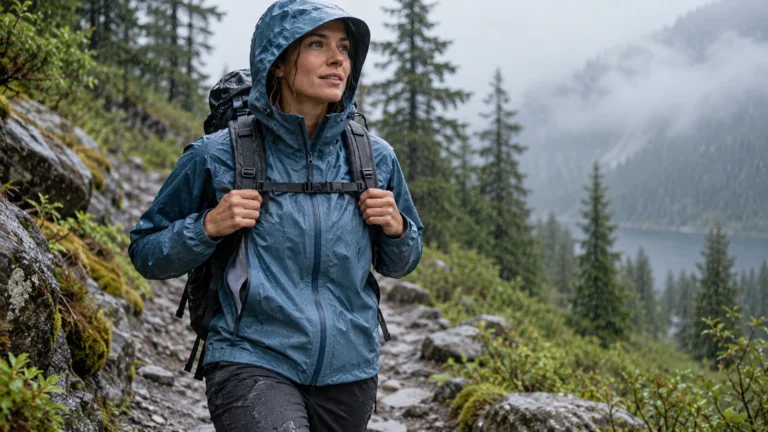
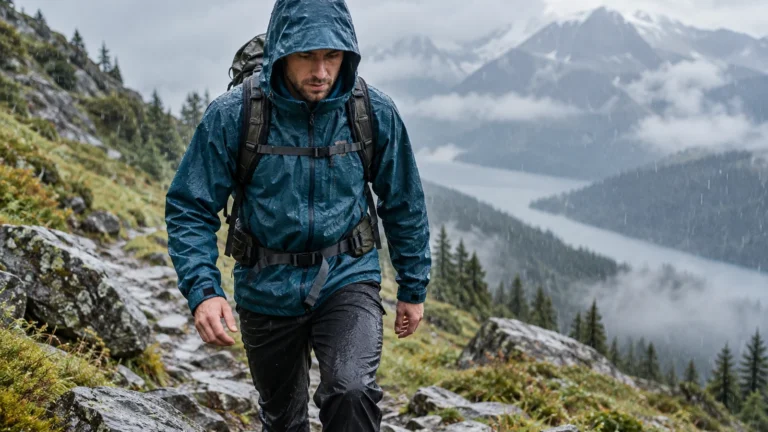
A rain jacket wins when the weather is not just wet, but wet plus windy, cold or complicated. Sleeves stay around your arms. The hood can be tightened around your face. Cuffs can seal around wrists. The hem does not billow far from the body. Those details matter when wind-driven rain is hitting from the side instead of falling straight down.
The fitted shape also makes a jacket easier to combine with a backpack. Shoulder straps and a hip belt sit in predictable places, and the jacket remains useful when the pack comes off. You can cook, set camp, fetch water or wear the shell around town without carrying a large drape of fabric.
A jacket also integrates naturally with separate lower-body protection. If cold wind and rain are expected, pair it with backpacking rain pants. If conditions are warm enough that waterproof pants would be excessive, quick-dry hiking pants or a rain skirt can keep the system more breathable.
The trade-off is sweat management. A good shell can use a front zipper, pocket vents or pit zips to dump heat, but it still wraps more closely around the body than a poncho. On a steep climb in warm rain, you may feel damp even when outside water is not passing through the fabric.
Wind Is the Biggest Reason to Choose a Jacket
If you remember only one limitation of a backpacking poncho, make it wind. Loose fabric creates surface area for gusts to grab. The poncho can flap, twist, lift around the thighs and pull at the hood. A waist cord or belt can help control the fabric, but it also reduces some of the free airflow that made the poncho appealing in the first place.
This is why route exposure matters more than a generic weather icon. A forecast that says “rain and 15 mph wind” can feel very different in dense forest than above treeline, where gusts have room to accelerate and the consequences of getting chilled are higher.
If wind is a routine part of the route rather than an occasional nuisance, choose the jacket. A poncho can be excellent in calm rain, but a jacket is much easier to trust when the storm has a horizontal component.
Ventilation Is the Biggest Reason to Choose a Poncho
Hot-weather backpacking creates the opposite problem. You may be protected from rain but still soaked by sweat. In humid conditions, simply buying a shell with impressive breathability claims does not eliminate that problem. Air exchange through openings can matter more than small differences in membrane specifications.
A poncho’s open geometry gives moisture more escape routes. This is particularly useful during steady summer rain on a trail where wind is low and you are generating a lot of body heat. The lack of a close waist, fitted sleeves and tight cuffs is an advantage here.
There is still a limit. A poncho does not create cool, dry air. On a muggy climb, you can still sweat heavily. The realistic goal is usually to stay more comfortable and reduce heat buildup, not to finish completely dry.
What About the Backpack?
This is where the two systems look most different. A poncho can create a continuous outer layer over your head, torso and pack. A rain jacket protects you while the backpack becomes a separate waterproofing problem.
For a jacket system, we prefer an internal pack liner as the primary defense for critical gear. Pack covers can help keep the outside of the pack from soaking up water, but they leave the harness side exposed and can be awkward in wind. A liner protects the contents even when the pack exterior becomes wet.
Our ultralight pack liner and dry storage guide goes deeper on lightweight options. The important point here is that a liner still makes sense with a poncho. It is cheap redundancy for a sleeping bag and dry sleep clothes.
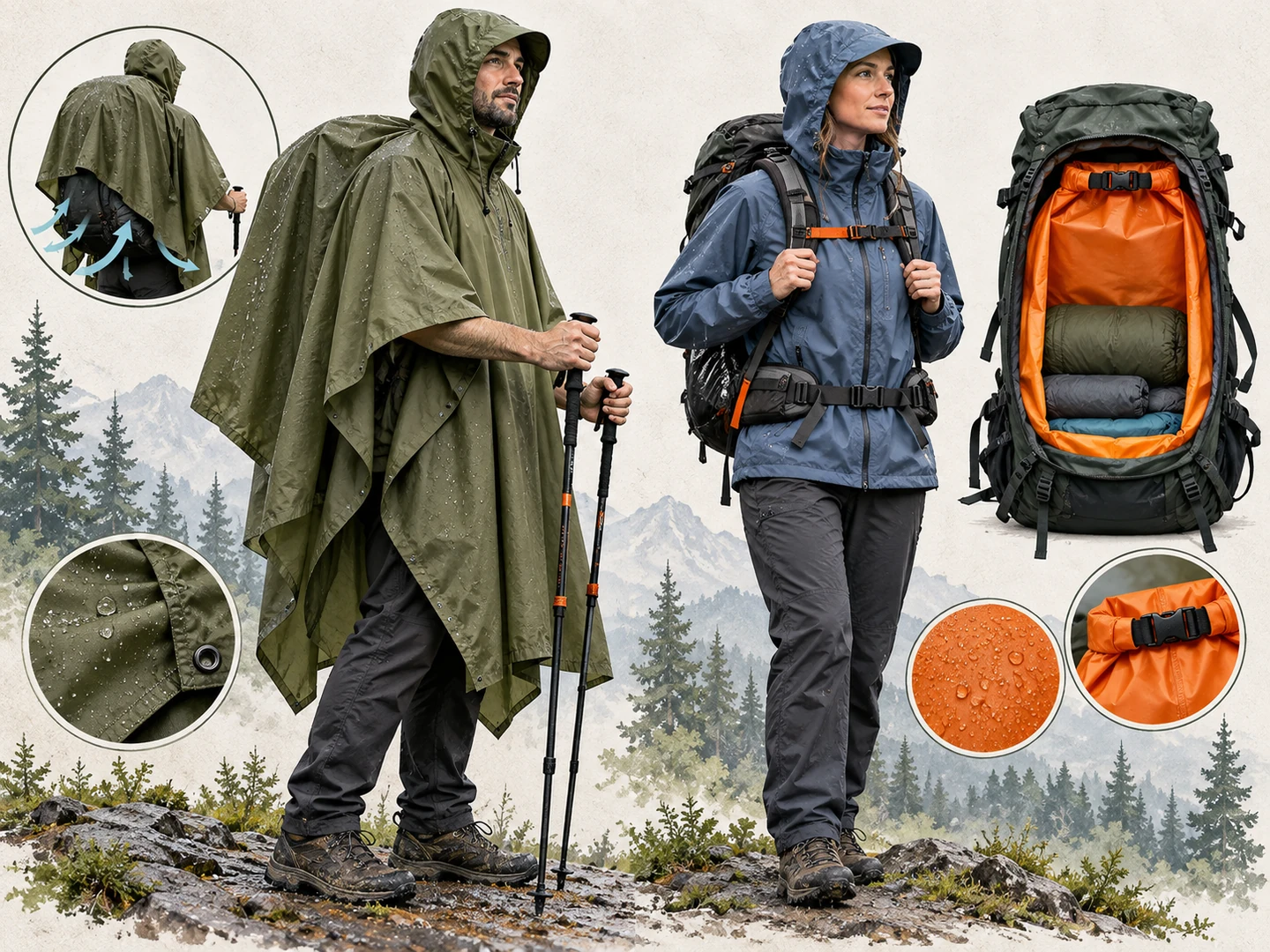
Terrain Changes the Answer More Than Most Buyers Expect
Maintained forest trail
This is classic poncho territory when temperatures are mild or warm. Trees reduce wind, the tread is predictable, and ventilation can matter more than a close storm seal.
Exposed ridge or alpine pass
Choose the jacket. A secure hood, fitted sleeves and reduced flapping are more useful when gusts can arrive suddenly and there is little shelter.
Dense brush
Choose the jacket. Loose poncho edges can catch branches and vegetation. A fitted shell gives you a cleaner profile and more predictable arm movement.
Scrambling and technical terrain
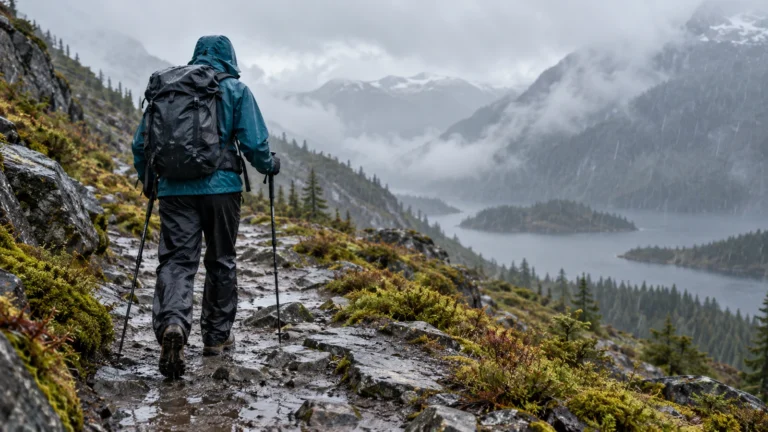
Choose the jacket. This is about mobility and fabric management rather than waterproofness. You want to see your feet, place your hands and move without loose material folding around you.
Long, warm trail with intermittent showers
A poncho can be excellent if the route stays sheltered. It goes on quickly, covers the pack and vents well when the rain stops and starts.
Cold Rain Favors a Jacket
Rain gear is also part of your warmth system. A fitted rain jacket blocks wind over a base layer or fleece, which can reduce convective heat loss when temperatures drop. A very ventilated poncho gives away some of that control.
That does not make a poncho inherently unsafe in cool weather. It means you need to consider the whole clothing system, the forecast and the consequences of getting cold. If the trip includes long exposure, strong wind, limited bailout options or temperatures near the point where being wet becomes serious, the jacket is the more conservative choice.
In hot conditions, the logic reverses. Retaining heat is not the goal. Dumping it is, and the poncho’s loose shape becomes an asset.
Do You Need Rain Pants With Either System?
Neither category automatically solves lower-body protection. A long poncho can cover the thighs, but wind and stride expose the legs. A rain jacket stops around the hips unless you add pants or a rain skirt.
Cold rain, strong wind, wet brush and long exposure all strengthen the case for true waterproof pants. In warm weather, many hikers accept wet lower legs and rely on quick-drying clothing because adding waterproof pants can trap more heat and sweat.
Do not choose the upper-body piece in isolation. A poncho plus quick-dry pants is a very different weather system from a jacket plus three-layer rain pants.
Two Amazon Examples That Show the Design Difference
You do not need to buy either of these products to use the comparison, but they are useful reference points because both are from the same budget-oriented Frogg Toggs Ultra-Lite2 family. That keeps the contrast focused on poncho geometry versus jacket geometry rather than comparing unrelated premium and budget products.
FROGG TOGGS Ultra-Lite2 Waterproof Rain Poncho
The current Adult Blue Amazon variant illustrates the typical poncho formula: hood, broad body coverage, open ventilation and enough material to drape over a pack. Frogg Toggs lists the poncho at 9 ounces and includes side snaps plus a stuff sack.
FROGG TOGGS Men’s Ultra-Lite2 2-Layer Waterproof Breathable Rain Jacket
The current Blue X-Large Amazon variant shows the fitted alternative: full front zipper, storm flap, hood, cuffs and a body shape designed to stay with you instead of covering the backpack. It is the cleaner template for wind and movement.
Which One Should You Pack? Six Common Scenarios
1. Appalachian summer backpacking in humid rain
Lean poncho. High humidity makes ventilation valuable, and forest cover reduces some wind exposure. Add a pack liner for critical dry gear.
2. Pacific Northwest shoulder season
Lean rain jacket. Cooler temperatures, wind and sustained wet conditions make a secure shell and flexible layering more valuable than maximum airflow.
3. Desert or mountain trip with short thunderstorms
It depends on exposure. On sheltered trails, a poncho is fast and simple. If thunderstorms arrive on exposed terrain with gusty wind, choose the jacket.
4. Thru-hike on maintained trail with aggressive weight goals
A poncho can make sense if you have already accepted its wind limitations and can use it for more than one purpose. Multi-use value matters more when every item has to justify its place.
5. Scrambling route with wet rock and brush
Choose the jacket. A fitted shell is easier to manage when hands, feet and body position matter.
6. You want one rain system for many different trips
Choose the jacket plus pack liner. It is the more flexible default across cold, wind, camp chores, travel and technical movement. Add rain pants when the lower-body exposure justifies them.
How to Choose Before Your Next Trip
- Check wind, not just rain probability. Wind is the condition most likely to turn a pleasant poncho system into a frustrating one.
- Check the lowest temperature. The colder the storm, the more useful a fitted wind-blocking jacket becomes.
- Look at terrain exposure. Forest trail, ridge, brush and scrambling demand different levels of fabric control.
- Decide how you will protect the pack interior. Use a liner for sleeping insulation, dry layers and electronics regardless of the outer system.
- Think about how hard you hike. High-output hiking in humid weather increases the value of mechanical ventilation.
- Plan the lower body too. Decide whether wet legs are acceptable or whether the trip calls for rain pants or a skirt.
FAQ
Is a poncho better than a rain jacket for backpacking?
A poncho is better when warm-weather ventilation, backpack coverage and simplicity matter most. A rain jacket is better for wind, cold rain, exposed terrain, brush and technical movement. There is no universal winner because the two systems solve different problems.
Do you still need a pack liner with a poncho?
Yes, a pack liner is still a good idea. A poncho can reduce the amount of rain reaching the backpack, but openings, wind, water running down straps and gear access can still expose the pack. A liner protects the items that absolutely need to stay dry.
Are ponchos good in wind?
They are less predictable in wind than fitted jackets. Loose fabric can flap, lift and twist. A belt or waist cord can improve control, but if strong wind is expected as a normal part of the trip, a rain jacket is usually the better choice.
Do you need rain pants with a poncho?
It depends on temperature, wind and how much wet-leg exposure you can tolerate. A long poncho covers part of the thighs, but it does not seal the legs. Cold rain, wet brush and sustained exposure make rain pants more valuable.
What is the best rain gear for hot and humid backpacking?
A well-designed poncho is often the most comfortable upper-body option when the trail is sheltered and wind is low because its open shape provides strong mechanical ventilation. A jacket with large vents can also work, especially if the route later becomes exposed.
Can a backpacking poncho replace a tarp?
Some backpacking ponchos are specifically designed to pitch as a small tarp or emergency shelter, but not every poncho has the dimensions, tie-outs or construction for that job. Check the exact manufacturer’s instructions before relying on one as shelter.
Bottom Line
Pick a poncho when the trip is warm, humid, sheltered and simple. Its ventilation and one-piece pack coverage are real advantages, and the best use cases play directly to them.
Pick a rain jacket when the trip is cold, windy, exposed or technically demanding. A fitted shell gives you better fabric control, more reliable wind protection and easier integration with layers, gloves, a backpack and rain pants.
If you are still undecided, the rain jacket plus pack liner is the more versatile default. If you already know your route is a warm, low-wind trail and you value airflow above everything else, the poncho can be the smarter backpacking tool.
How We Built This Comparison
We separated system-level differences from product-level differences so the article answers which format fits a trip rather than pretending one product proves an entire category.
We checked current manufacturer pages and exact Amazon.com US listings for the two example products used in the monetized section.
We compared professional backpacking guidance and recurring owner discussions for patterns around wind, ventilation, terrain and pack protection.
Specific product shortlists remain in the dedicated rain-poncho and rain-jacket guides. This page stays focused on the decision between the two systems.
Reference specifications: Frogg Toggs Ultra-Lite2 Rain Poncho and Frogg Toggs Ultra-Lite Rain Jacket. Product families and retailer variants can change, so verify current specifications before purchase.