
Gear & Home is reader-supported. As an Amazon Associate I earn from qualifying purchases. When you buy through links on our site, we may earn an affiliate commission, at no extra cost to you. Learn more.
Lightweight Camping Tarps: What Actually Matters
The best lightweight tarp is not automatically the lightest sheet of fabric. For most campers and backpackers, the useful question is how much weather coverage, pitch flexibility, and setup hardware you get for the weight you are willing to carry.
For this 2026 update, we rebuilt the shortlist around current tarps that solve clearly different shelter problems: a versatile flat tarp, a tiny solo shelter, a tougher lightweight option, a near-3 × 3 meter coverage tarp, and an easier hammock-oriented kit. We also rechecked current specifications and availability instead of carrying forward discontinued or mismatched 2025 variants.
Paria Sanctuary 10 × 8 Flat Tarp is the best all-around lightweight tarp for most backpackers
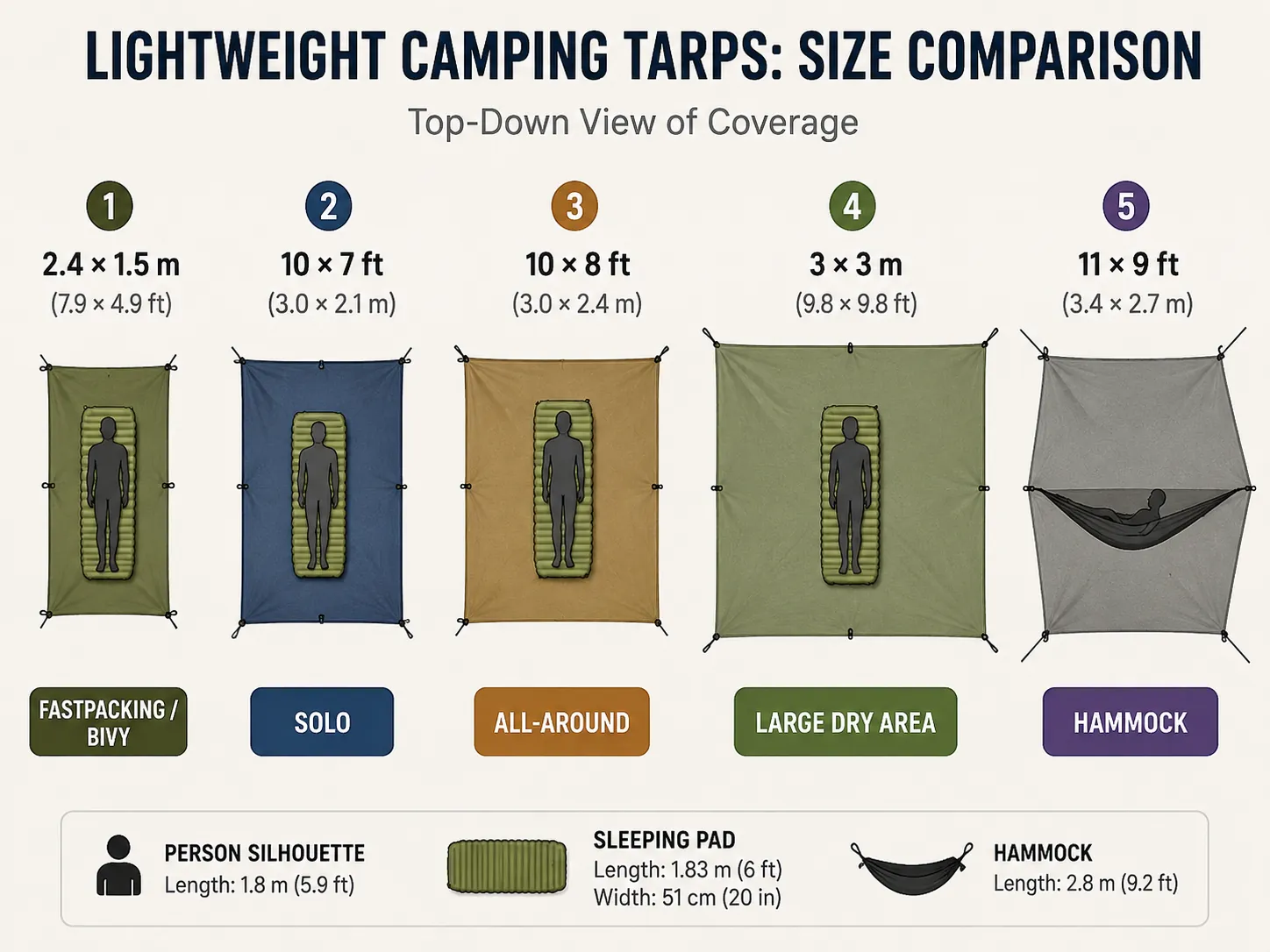
Paria’s Sanctuary 10 × 8 Flat Tarp is our Best Overall pick because the current version combines an 80-square-foot flat-cut shelter, 17 attachment points, 5,000 mm waterproofing, and a complete line-and-stake kit at a listed 20.5 ounces for the full setup. It is not the absolute lightest tarp here, but it asks for fewer compromises than the smaller ultralight options.
Choose the Rab Siltarp 1 if every ounce matters and you only need solo coverage. The AquaQuest Guide 10 × 7 is the tougher-feeling lightweight option, the DD SuperLight 3 × 2.9 m gives much more usable roof area for its weight, and the Wise Owl 11 × 9 Standard is the simplest budget-oriented hammock pick.
Paria Sanctuary 10 × 8 Flat
The best mix of useful coverage, pitch options, waterproofing, included hardware, and trail-friendly weight.
Rab Siltarp 1
Just 8.5 ounces, but its compact 2.4 × 1.5 meter footprint demands better site selection and tighter weather margins.
DD SuperLight 3 × 2.9 m
Nearly a 3 × 3 meter shelter with 19 attachment points at a current listed tarp weight of 490 grams.
Quick Comparison: Best Lightweight Tarps for Camping & Backpacking
| Pick | Size | Listed weight | Waterproofing | Tie-outs | Best for | Availability |
|---|---|---|---|---|---|---|
| Paria Sanctuary 10 × 8 Flat Best Overall |
10 × 8 ft | 15.5 oz tarp / 20.5 oz kit | 5,000 mm | 16 perimeter + 1 center | General backpacking, flexible pitches | View at manufacturer |
| Rab Siltarp 1 Best Ultralight Solo |
2.4 × 1.5 m | 8.5 oz / 242 g | 2,000 mm HH | 16 external + 1 center lifter | Fastpacking, solo bivy backup | View at manufacturer |
| AquaQuest Guide 10 × 7 Best Durable Lightweight |
9’7″ × 6’7″ finished | 14.4 oz | 5,000 mm | 13 | Solo ground shelter, tougher-use bias | Check availability on Amazon |
| DD SuperLight Tarp Best Coverage-to-Weight |
3 × 2.9 m | 490 g tarp | 3,000 mm | 19 | Large flexible shelter, camp admin area | View at manufacturer |
| Wise Owl 11 × 9 Standard Best Budget / Hammock |
11 × 9 ft | 26 oz | 3,000 mm PU | 6 guy lines included | Beginner hammock setup, casual camping | Check availability on Amazon |
Paria Sanctuary 10 × 8 Flat
10 × 8 ft
15.5 oz tarp
20.5 oz
5,000 mm
Rab Siltarp 1
2.4 × 1.5 m
8.5 oz
30D Cordura
2,000 mm
AquaQuest Guide 10 × 7
9’7″ × 6’7″
14.4 oz
40D ripstop nylon
5,000 mm
DD SuperLight Tarp
3 × 2.9 m
490 g tarp
19
3,000 mm
Wise Owl 11 × 9 Standard
11 × 9 ft
26 oz
Lines + stakes
3,000 mm
How We Picked These Lightweight Tarps
This is a research-based Gear & Home roundup, not a Gear & Home field test. We verified current manufacturer specifications, current variants, Amazon.com US listings where a button appears, retailer and marketplace identity data, recurring owner feedback, and independent outdoor-community evidence.
The old 2025 article contained unsupported “trail-tested” language, invented real-world cases, and mismatched current specifications. Those claims have been removed rather than rewritten as if Gear & Home performed the testing.
The 5 Best Lightweight Tarps for Camping & Backpacking
1. Paria Sanctuary SilTarp — 10 × 8 ft Flat Tarp
The best all-around choice because it gives you a genuinely versatile flat cut, useful solo-or-duo coverage, a complete pitch kit, and a still-manageable trail weight without moving into premium ultralight pricing.
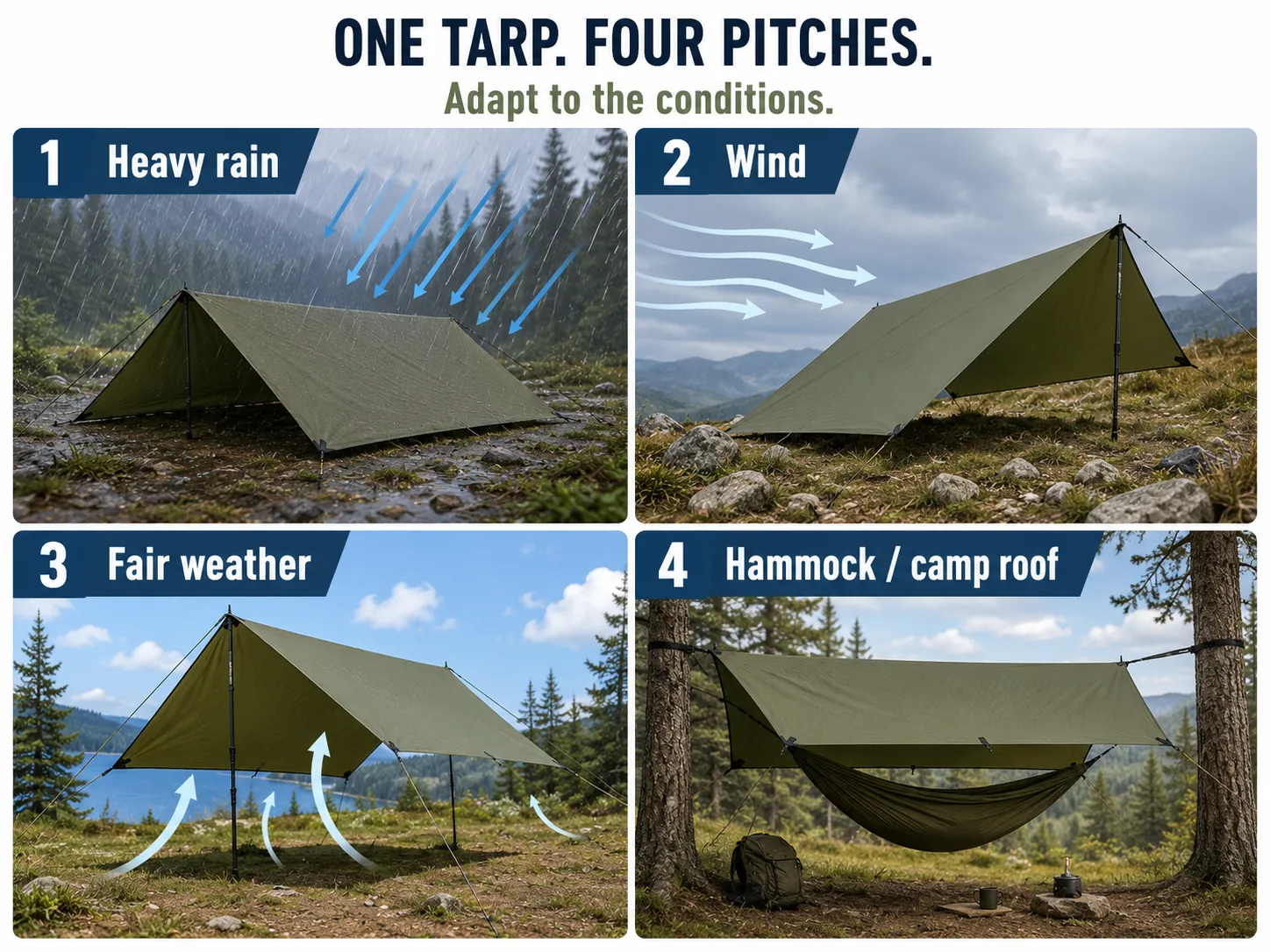
The 10 × 8 Flat Tarp wins because it is large enough to be forgiving without becoming a group tarp. A solo sleeper can pitch it low and protective in bad weather, while two people can use it as a simple overhead roof or cooking shelter when conditions are calmer. The flat cut also gives beginners more pitch options than a highly shaped tarp.
The important number is the 20.5-ounce full-kit weight, not only the 15.5-ounce tarp. That kit already includes the cord and stakes most people need to actually pitch it. If you already own lighter line and stakes, you can trim the system; if you do not, the out-of-box comparison is more honest than comparing a bare tarp with a complete competitor kit.
Silnylon does require some attention after temperature and moisture change. If a pitch loosens overnight, retensioning the lines is normal maintenance rather than evidence that the tarp failed.
Pros
- Useful 10 × 8 flat-cut coverage
- 17 attachment points support many pitch styles
- Full guyline-and-stake kit is included
- 5,000 mm waterproof rating with factory-taped seams
Limitations
- Not the lightest option for a dedicated solo shelter
- Silnylon can need retensioning as conditions change
- Some owners replace the included stakes with stronger ones
2. Rab Siltarp 1
An 8.5-ounce solo tarp that makes sense for fastpacking, emergency shelter, or a bivy-based sleep system—as long as you accept its deliberately small weather footprint.
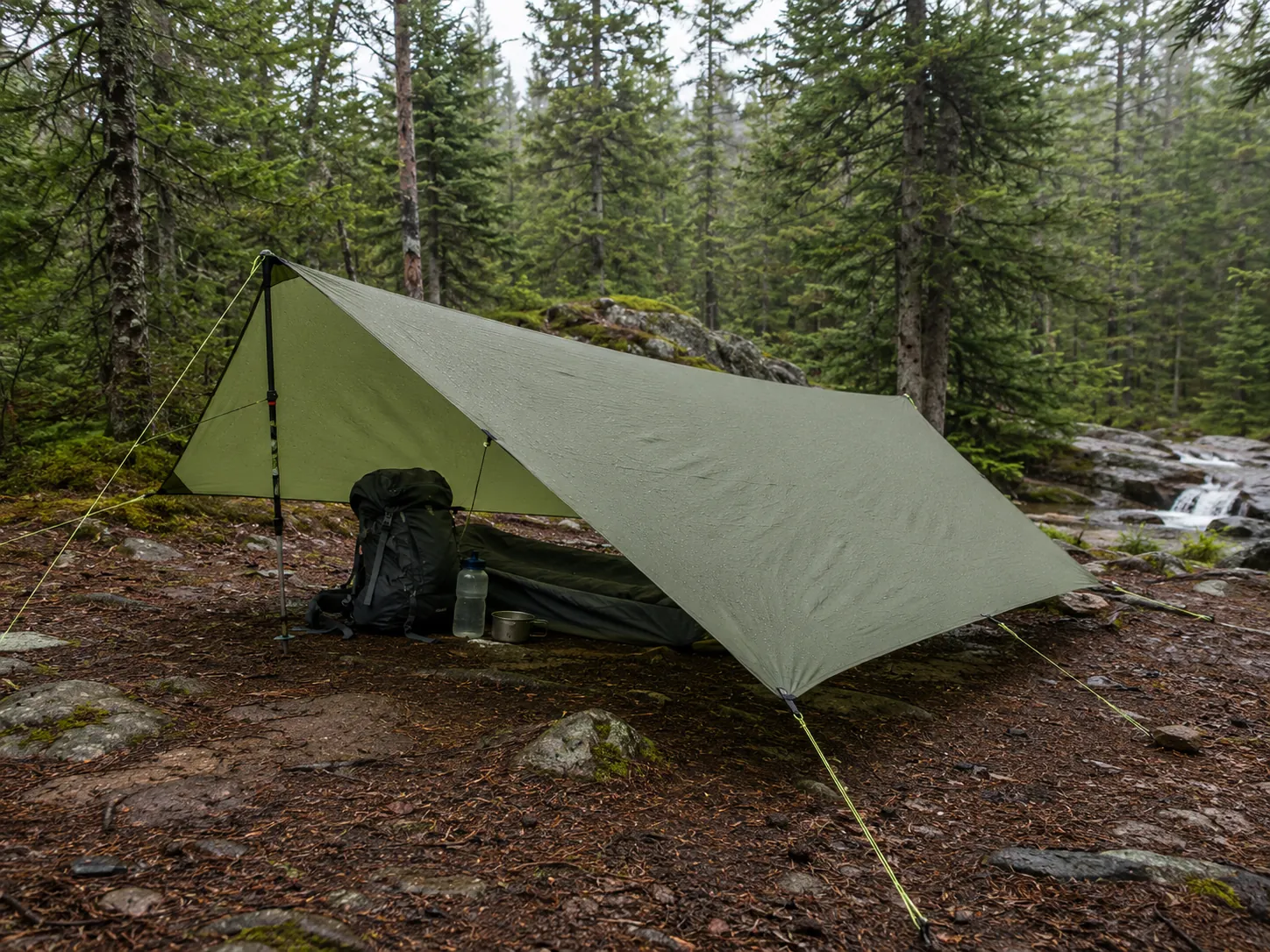
The Siltarp 1 is the pick for hikers who see the tarp as part of a system, not a freestanding tent replacement. Pair it with a bivy and a lightweight ground sheet, use trekking poles or trees for support, and it can cut shelter weight dramatically.
But the dimensions matter more than the attractive 8.5-ounce headline. At roughly 7.9 × 4.9 feet, this is a tight one-person roof. Site selection, orientation to wind, and pitch height have a much larger effect on comfort than they do under a 10 × 8 flat tarp.
Pros
- Only 8.5 ounces
- Very compact packed size
- Single-piece construction eliminates a main seam
- 17 total support/attachment points add flexibility for such a small tarp
Limitations
- Minimal storm margin around a sleeping person
- Less room for gear or cooking cover
- Premium cost for a relatively small piece of shelter fabric
3. AquaQuest Guide 10 × 7 — Forester Green
A compact 40D tarp for hikers who are willing to carry a few more ounces than the Rab in exchange for more fabric, a higher published waterproof rating, and a construction style that prioritizes reinforced tie-outs.
The Guide 10 × 7 is not the old 10 × 13 product described in the previous version of this article. This exact current variant is a much more backpacking-oriented 64-square-foot tarp. That makes it a reasonable solo shelter with more margin than the Rab, but not a group cooking roof.
AquaQuest’s tie-out density is a real advantage when the campsite dictates an awkward pitch. The downside is that a rectangular silnylon tarp with many setup possibilities asks more of the user than a pre-shaped hammock rainfly. Learn a low A-frame and one side-protected lean-to before relying on it in poor weather.
Pros
- 40D fabric is heavier-duty than many ultralight silnylon tarps
- 13 tie-outs on a compact solo footprint
- 5,000 mm published waterproof rating
- Exact current Amazon US child listing verified
Limitations
- Less coverage than a 10 × 8 or near-3 × 3 m tarp
- Amazon featured-offer availability was inconsistent at audit time
- Flat-panel tension can require practice and retensioning
4. DD SuperLight Tarp — 3 × 2.9 m
The pick for hikers and campers who want close to classic 3 × 3 meter tarp versatility without carrying the weight of DD’s heavier standard tarps.
The DD SuperLight earns this award because 3 × 2.9 meters changes what you can do under the tarp. It can create a roomy A-frame, a gear-and-cooking cover, or a large open lean-to while still staying around 17.3 ounces for the tarp itself. That is a different proposition from a 7-foot-wide solo sheet.
It also makes sense for campers who are not sleeping under the tarp at all. If your tent is small, a lightweight overhead shelter can keep wet packs, chairs, shoes, and cooking gear out of the sleeping area. Recent owners specifically describe this “dry admin space” use case as one of the tarp’s strengths.
DD sells into the US and Canada, but we did not verify a clean current Amazon.com US child listing for this exact 3 × 2.9 meter variant during this audit, so we are not attaching an Amazon affiliate button to a guessed ASIN.
Pros
- Large coverage for a sub-500-gram tarp
- 19 attachment points support many configurations
- Compact 19 × 10 × 4 cm packed size
- Useful as sleeping shelter or separate camp roof
Limitations
- 490 g excludes pegs and guy lines
- Thin fabric rewards careful site selection and handling
- No exact Amazon.com US CTA verified for this variant
5. Wise Owl Outfitters Hammock Rain Fly — Gray, Standard 26 oz
Not ultralight, but a straightforward 11 × 9 foot all-in-one kit that is easier to recommend to a new hammock camper than a minimalist bare tarp that still needs lines, stakes, and practice.
The Wise Owl is here because “lightweight” means something different to a first-time hammock camper than to a thru-hiker. A 26-ounce tarp is heavy beside the Rab Siltarp 1, but the Wise Owl arrives as a more complete, forgiving package and provides a useful 11-foot ridgeline for common hammock lengths.
If your goal is a truly ultralight hammock shelter, spend more time comparing dedicated hex or cat-cut tarps. If you want an affordable kit that lets you learn ridgeline height, drip-line protection, and side tension without buying every component separately, this is the more practical starting point. Pair it with our backpacking hammocks under 1 lb guide if you are building a full hanging sleep system.
Pros
- 11 × 9 ft coverage suits common hammock setups
- Guy lines, stakes, and bags are included
- Easy setup is a repeated owner theme
- Exact current Amazon US variant identity is clear
Limitations
- 26 ounces is not ultralight
- Less flexible than a large flat tarp for ground-shelter experimentation
- Some owners report missing hardware or isolated stitching issues
How to Choose a Lightweight Camping Tarp
1. Start with sleeping coverage, not the advertised tarp category
A solo tarp around 8 × 5 feet can work for an experienced bivy user, but it leaves little room for gear and very little error when rain blows under an edge. Around 10 × 8 feet is much more forgiving for a ground sleeper. A near-10 × 10 tarp adds room for two people or a separate camp roof, but also adds fabric weight and wind load.
2. Compare tarp weight and full-system weight separately
Manufacturers do not all quote the same thing. Paria publishes both tarp-only and full-kit weights; DD’s 490-gram figure excludes pegs and guy lines; the Wise Owl is sold as an all-in-one kit. When you compare two products, add the cord, stakes, poles, bug protection, and ground protection you will actually carry.
3. Flat tarps maximize options; shaped tarps reduce decisions
A rectangular flat tarp can become an A-frame, lean-to, plow point, half-pyramid, or simple roof. That flexibility is useful when campsites vary, but the trade-off is skill. Cat-cut or hammock-specific shapes generally make a taut pitch easier, but they give you fewer radically different configurations.
4. More tie-outs matter when you actually know how you will use them
Nineteen attachment points sound automatically better than six, but every guy line adds setup time and another stake or anchor. For a large flat tarp, extra perimeter and ridgeline points are useful. For a dedicated hammock fly with a fixed shape, six well-positioned points can be enough.
5. Hydrostatic-head numbers are not a simple durability score
A 5,000 mm tarp is not automatically “five times better” than a 1,000 mm tarp. Fabric construction, seam treatment, pitch angle, abrasion, and water pooling all affect real use. For overhead shelter, a clean steep pitch that prevents pooling is usually more important than chasing the highest published number.
6. Expect nylon tarps to need tension management
Many lightweight tarps use nylon because it balances weight, strength, and cost well. Nylon can relax as it gets wet or as temperature changes. Good line adjusters and a quick retension before bed matter. If you hate adjusting a pitch, that behavior may be more important to you than a few ounces of weight savings.
7. For wind, lower the pitch before adding more hardware
Wind loads grow quickly when a tarp is pitched high like a sail. Use natural shelter, lower the windward edge, keep the ridgeline appropriately tensioned, and orient the narrow or protected side toward the prevailing wind. Extra guy-outs help only if the anchors and fabric remain loaded sensibly.
8. Pack the shelter where you can reach it in rain
A tarp is useful only if you can deploy it before the rest of your gear gets soaked. Keep wet-weather shelter components accessible rather than buried under your sleep system. Our backpack packing guide covers the same “access by urgency” principle for the rest of your load.
Which Lightweight Tarp Should You Buy?
For most backpackers who want one tarp that can cover several jobs, the Paria Sanctuary 10 × 8 Flat Tarp is the strongest all-around choice. It is light enough to carry, large enough to be forgiving, and ships with a complete pitch kit.
Go smaller with the Rab Siltarp 1 when weight is the priority and you understand minimalist shelter technique. Pick the AquaQuest Guide 10 × 7 when reinforced construction and 40D fabric matter more than minimum ounces. Choose the DD SuperLight when dry living space is the priority, or the Wise Owl Standard when you want a simple hammock-oriented kit at a more accessible price point.
If you use a tarp as your main sleep shelter, do not evaluate it in isolation. Ground moisture, bugs, site exposure, suspension or trekking-pole support, and the rest of your shelter system determine whether the weight saving is real.
Frequently Asked Questions
What size tarp is best for solo backpacking?
Around 10 × 8 feet is a forgiving general-purpose size for a solo ground sleeper because it leaves room for gear and imperfect wind direction. Experienced minimalist hikers can go much smaller, but a small tarp increases the importance of site selection and pitch technique.
Can a camping tarp replace a tent?
Yes for some hikers, but not by itself in every environment. A tarp does not provide an insect enclosure or bathtub floor, and highly exposed sites can make blowing rain harder to manage. Compare the weight of the complete tarp system—not just the fabric—with the tent you would otherwise carry.
Is silnylon waterproof enough for heavy rain?
Properly coated and seam-treated silnylon is widely used for rain shelters. The published hydrostatic-head rating is only one part of performance: a steep pitch, secure anchors, seam construction, and avoiding water pooling also matter.
Why does a lightweight tarp sag overnight?
Nylon fabric can relax as humidity, rain, and temperature change. That is a normal trade-off of many lightweight nylon shelters. Line tensioners make it easier to tighten the pitch without completely re-rigging the tarp.
Do I need trekking poles for tarp camping?
No. Trees, dedicated tarp poles, paddles, or suitable natural supports can work. Trekking poles are popular because hikers may already be carrying them, so they add structure without adding a separate pole set to the pack.
What is the best tarp shape for a beginner?
A rectangular flat tarp around 10 × 8 feet is a good learning platform because it supports many common pitches and gives more weather margin than an extremely small solo tarp. A hammock-specific rainfly can be easier if hammock camping is your only use.
How much should a lightweight backpacking tarp weigh?
There is no useful universal cutoff. Solo specialty tarps can weigh under 10 ounces, while versatile 10 × 8 or near-3 × 3 meter tarps often land in roughly the one-pound range before or after hardware. Compare weight to coverage and to the complete shelter system you need.
Should I use a tarp as a ground sheet too?
A tarp can serve as emergency ground protection, but repeated abrasion can damage the same fabric you rely on for rain shelter. If ground use is routine, a separate lightweight ground sheet is usually easier to replace and keeps the shelter fabric cleaner.