
Gear & Home is reader-supported. As an Amazon Associate I earn from qualifying purchases. When you buy through links on our site, we may earn an affiliate commission, at no extra cost to you. Learn more.
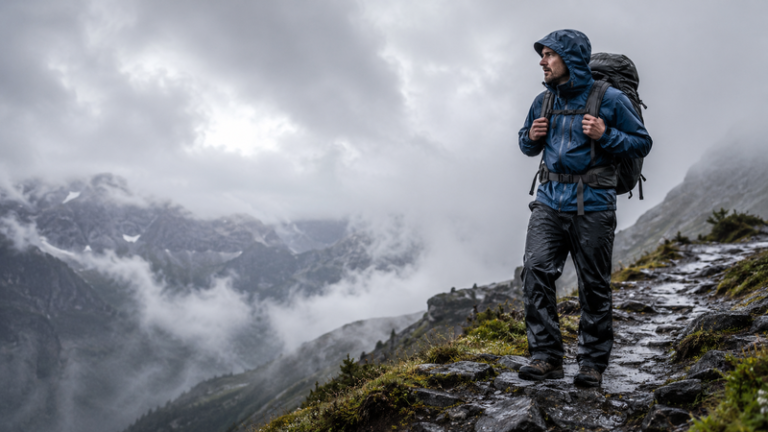
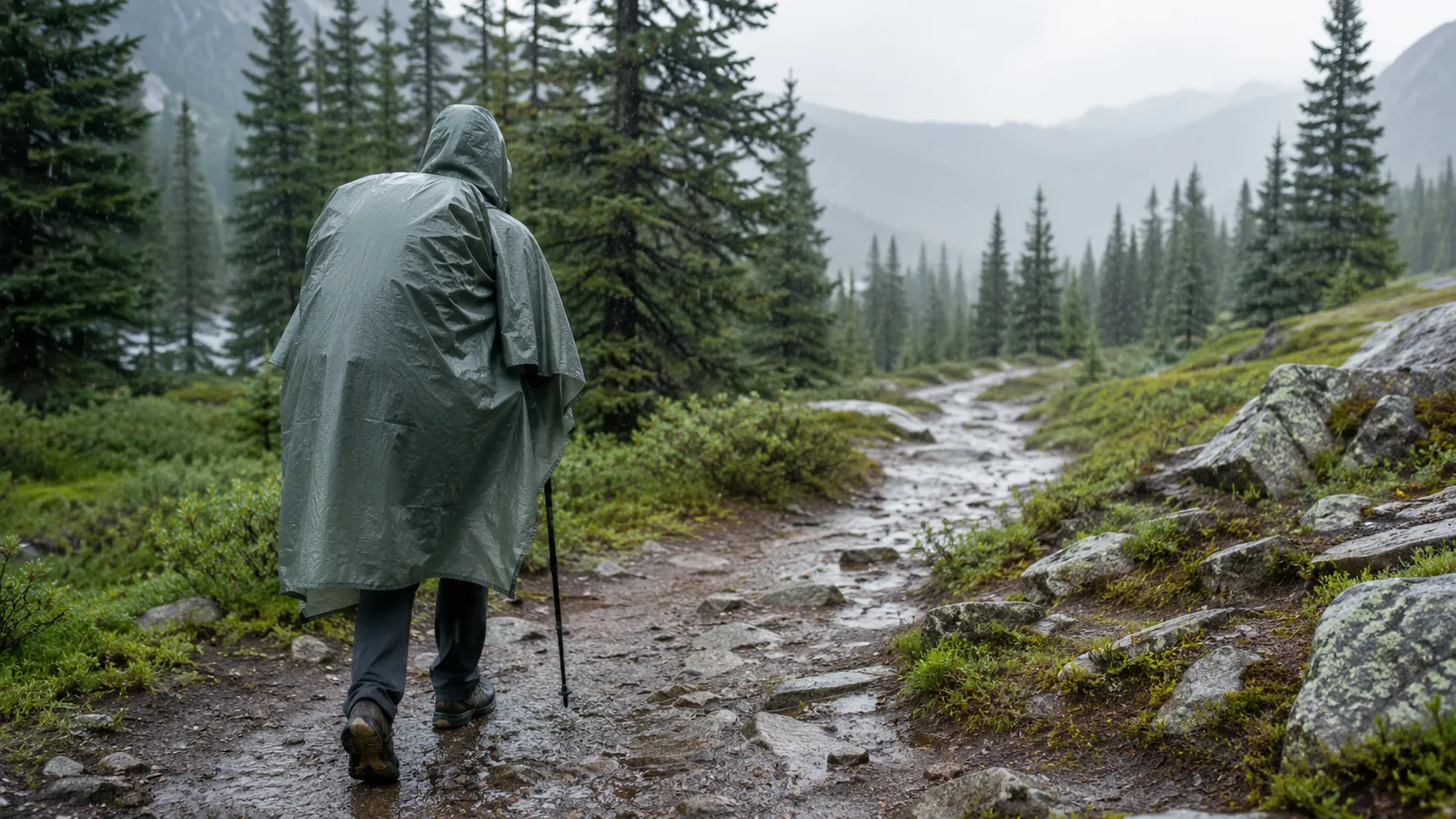
A backpacking rain poncho makes the most sense when you value ventilation, pack coverage, and simple deployment more than a close, wind-stable fit. The strongest options cover both you and your backpack, and some can also serve as a tarp, groundsheet, or emergency shelter.
That versatility comes with a real tradeoff: loose poncho fabric can flap in wind, and open-sided designs leave less controlled coverage around the arms and lower legs than a rain jacket-and-pants system. For warm, humid trails and maintained routes, that can be a good exchange. For cold, exposed, brushy terrain, a conventional shell is often the safer choice.
If your route is exposed to sustained wind, cold rain, dense brush, or technical scrambling, a fitted waterproof jacket offers better control and protection. Ponchos are strongest where airflow, fast pack coverage, and low carried weight matter more.
The best rain poncho for most backpackers
Sea to Summit Ultra-Sil Nano Tarp Poncho is our Best Overall pick because its current 6.5-ounce manufacturer-listed weight, large-pack coverage, taped seams, and shelter conversion give backpackers a rare combination of low weight and real multi-use value. The main compromise is wind: Sea to Summit explicitly warns that tarp ponchos are not designed for very windy conditions.
If cost matters more than multi-use versatility, the Frogg Toggs Ultra-Lite2 Rain Poncho is the better budget choice. If you want dedicated sleeves and more controlled arm coverage, choose the Snugpak Enhanced Patrol Poncho instead.
Quick Picks
Sea to Summit Ultra-Sil Nano Tarp Poncho
Best balance of low carried weight, backpack coverage, and tarp/groundsheet versatility.
Frogg Toggs Ultra-Lite2 Rain Poncho
Simple 9-ounce storm insurance when low cost and packability matter more than durability.
Onewind Hooded Rain Poncho
A roomy 20D multi-use design for hikers who want a poncho, pack cover, groundsheet, and minimalist tarp in one.
Snugpak Enhanced Patrol Poncho
Dedicated sleeves, thumb loops, and a long smock cut for hikers who dislike exposed arms and loose side openings.
Helikon-Tex U.S. Model Poncho
A heavier ripstop option for bushcraft, camp shelter use, and hikers who prioritize durability over ultralight weight.
Quick Comparison: Best Rain Ponchos for Backpacking
Weights below are current manufacturer-listed values for the named configuration. A lighter poncho is not automatically better: material, cut, wind control, backpack coverage, and multi-use features change what each model is good at.
| Rain poncho | Award | Listed weight | Design | Pack coverage | Multi-use | Best for | Amazon |
|---|---|---|---|---|---|---|---|
| Sea to Summit Ultra-Sil Nano Tarp Poncho | Best Overall | 6.5 oz / 185 g | 15D tarp poncho | Large backpack | Tarp, groundsheet, pack cover | Ultralight backpacking and multi-use kits | Check availability on Amazon |
| Frogg Toggs Ultra-Lite2 Rain Poncho | Best Budget | 9 oz | Open poncho with side snaps | Works over a backpack | Rain layer | Low-cost emergency rain protection | Check availability on Amazon |
| Onewind Hooded Rain Poncho | Best Tarp-Poncho Value | 8.6 oz / 245 g | 20D coated ripstop tarp poncho | Designed to cover a backpack | Tarp, groundsheet, emergency shelter | Budget multi-use backpacking systems | Check availability on Amazon |
| Snugpak Enhanced Patrol Poncho | Best Sleeved Design | 13 oz / 360 g | Waterproof smock with dedicated sleeves | Designed for user + backpack | Emergency bivy | Arm coverage, trekking poles, cooler weather | Check availability on Amazon |
| Helikon-Tex U.S. Model Poncho | Best Rugged Crossover | 16.5 oz / 469 g | Ripstop polyester military-style poncho | Medium-sized backpack | Canopy / improvised shelter | Bushcraft, camp use, durability-first kits | Check availability on Amazon |
Sea to Summit Ultra-Sil Nano Tarp Poncho
6.5 oz / 185 g
15D tarp poncho
Large backpack
Ultralight multi-use kits
Frogg Toggs Ultra-Lite2 Rain Poncho
9 oz
Open poncho + snaps
Over-pack use
Budget storm insurance
Onewind Hooded Rain Poncho
8.6 oz / 245 g
20D coated ripstop
Tarp + groundsheet
Value-focused multi-use kits
Snugpak Enhanced Patrol Poncho
13 oz / 360 g
Smock + dedicated sleeves
User + backpack
More controlled arm coverage
Helikon-Tex U.S. Model Poncho
16.5 oz / 469 g
Ripstop military-style poncho
Canopy / shelter
Rugged camp and bushcraft use
Our 5 Rain Poncho Picks for Backpacking
Sea to Summit Ultra-Sil Nano Tarp Poncho
The strongest all-around choice for hikers who want one ultralight piece to cover themselves, their pack, and a minimalist shelter role.
Sea to Summit’s current U.S. tarp-poncho is unusually complete for its weight. The 15D fabric is double stitched and tape sealed, the cut accommodates a large backpack, and guy attachment points let it convert from rainwear into a basic shelter. A drawcord can also raise the rear hem when you are not carrying a pack.
That makes it more than an emergency sheet of fabric. For hikers who already think in multi-use systems, it can replace a separate pack cover and serve groundsheet or tarp duty when conditions are appropriate. The tradeoff is that the same broad, light fabric that creates ventilation and shelter coverage is not especially controlled in wind.
Pros
- Very low listed weight for a full tarp-poncho
- Covers a large backpack
- Taped waterproof seams
- Converts to tarp or groundsheet duty
Cons
- Manufacturer specifically warns against very windy use without a belt
- 15D fabric gives less abrasion margin than heavier rugged ponchos
- Costs more than basic emergency-style ponchos
Frogg Toggs Ultra-Lite2 Rain Poncho
A light, inexpensive rain layer that makes sense as packable storm insurance—provided you accept lower abrasion resistance and less wind control.
The Ultra-Lite2 does not try to be a tarp, bivy, or technical shell. That simplicity is why it belongs here. Frogg Toggs lists the adult poncho at 9 ounces with an adjustable attached hood, side snaps, and an included stuff sack. It is easy to keep in a pack for trips where rain gear may spend most of the day unused.
Its weak point is not complicated: this is budget ultralight rainwear, not a brush-busting outer layer. The open cut ventilates well and can drape over a backpack, but pack bulk reduces how far the poncho hangs down and the lightweight material deserves more care around branches and sharp surfaces.
Pros
- 9-ounce manufacturer-listed weight
- Very simple to deploy over clothing and a pack
- Open cut provides strong airflow
- Good role separation as a low-cost emergency layer
Cons
- Lower abrasion margin than woven ripstop options
- Side snaps and loose fabric are less controlled in wind
- No built-in tarp or shelter tie-out system
Onewind Hooded Rain Poncho
A strong value choice when you specifically want a roomy poncho that can also become a small tarp, groundsheet, or emergency shelter.
The medium Onewind sits in a useful middle ground. The current brand page lists a 98-by-56-inch cut at 8.6 ounces, with a cord-adjustable hood, side fasteners, and a coated 20D ripstop fabric. It is intended to cover a backpack and can be pitched as a tarp or laid down as a groundsheet.
That does not make it a substitute for a full-size storm tarp. A 56-inch-wide shelter is minimalist by definition, especially for taller hikers or wind-driven rain. Think of the shelter mode as a way to simplify a fair-weather or emergency system—not permission to leave a proven primary shelter at home on a consequential trip.
Pros
- Useful balance of weight, dimensions, and multi-use function
- Designed to cover a backpack
- Can serve as tarp, groundsheet, or emergency shelter
- More durable woven construction than disposable-style ponchos
Cons
- 56-inch shelter width is narrow for serious bad-weather coverage
- Open poncho cut remains vulnerable to wind and flapping
- Less polished hood and fit control than a fitted rain shell
Snugpak Enhanced Patrol Poncho
The pick for hikers who like poncho ventilation and backpack coverage but want actual sleeves, thumb loops, and a more garment-like upper body.
The Enhanced Patrol Poncho is closer to an oversized waterproof smock than a rectangular tarp with a head hole. Snugpak’s U.S. version uses Paratex Dry nylon with fully taped seams, an adjustable hood, thumb loops, a front map pocket, and dedicated sleeves. It is cut to go over the wearer and a backpack.
That design is much easier to understand for hikers who use trekking poles or dislike bare forearms under an open poncho. The cost is weight and reduced shelter versatility. Although Snugpak says the generous cut can work as an emergency bivy, this is not the flat, tie-out-heavy tarp design of the Sea to Summit or Onewind.
Pros
- Dedicated sleeves improve arm coverage
- Designed to fit over a backpack
- Fully taped waterproof construction
- Front map pocket and adjustable hood add practical control
Cons
- Roughly twice the weight of the Sea to Summit pick
- Loose body can still billow in wind
- One-size smock fit will not suit every body/pack combination equally
Helikon-Tex U.S. Model Poncho
A durable military-style choice for backpackers who also want bushcraft and camp-shelter utility and do not mind carrying about a pound.
Helikon-Tex uses a 72 g/m² ripstop polyester fabric and lists the U.S. Model Poncho at 469 grams. The sides use snaps that can form sleeve-like openings, and two ponchos can be joined to create a larger canopy. The cut is intended to go over clothing and a medium-sized backpack.
For backpacking, its role is straightforward: choose it when durability and camp versatility matter more than ounces. It weighs roughly 10 ounces more than the Sea to Summit, so it is difficult to justify in a pure ultralight kit. For mixed hiking, bushcraft, fishing, vehicle kits, and rougher camp use, that extra fabric can be a reasonable trade.
Pros
- Ripstop polyester prioritizes durability
- Side snaps allow more controlled sleeve openings
- Can be combined or rigged for improvised shelter use
- Compact packed dimensions for a rugged poncho
Cons
- Too heavy for most ultralight backpacking lists
- Manufacturer specifies medium-backpack coverage, not unlimited pack volume
- Military-style rectangular cut is bulkier than a fitted shell
How to Choose the Right Backpacking Poncho
1. Start with wind exposure, not waterproof marketing
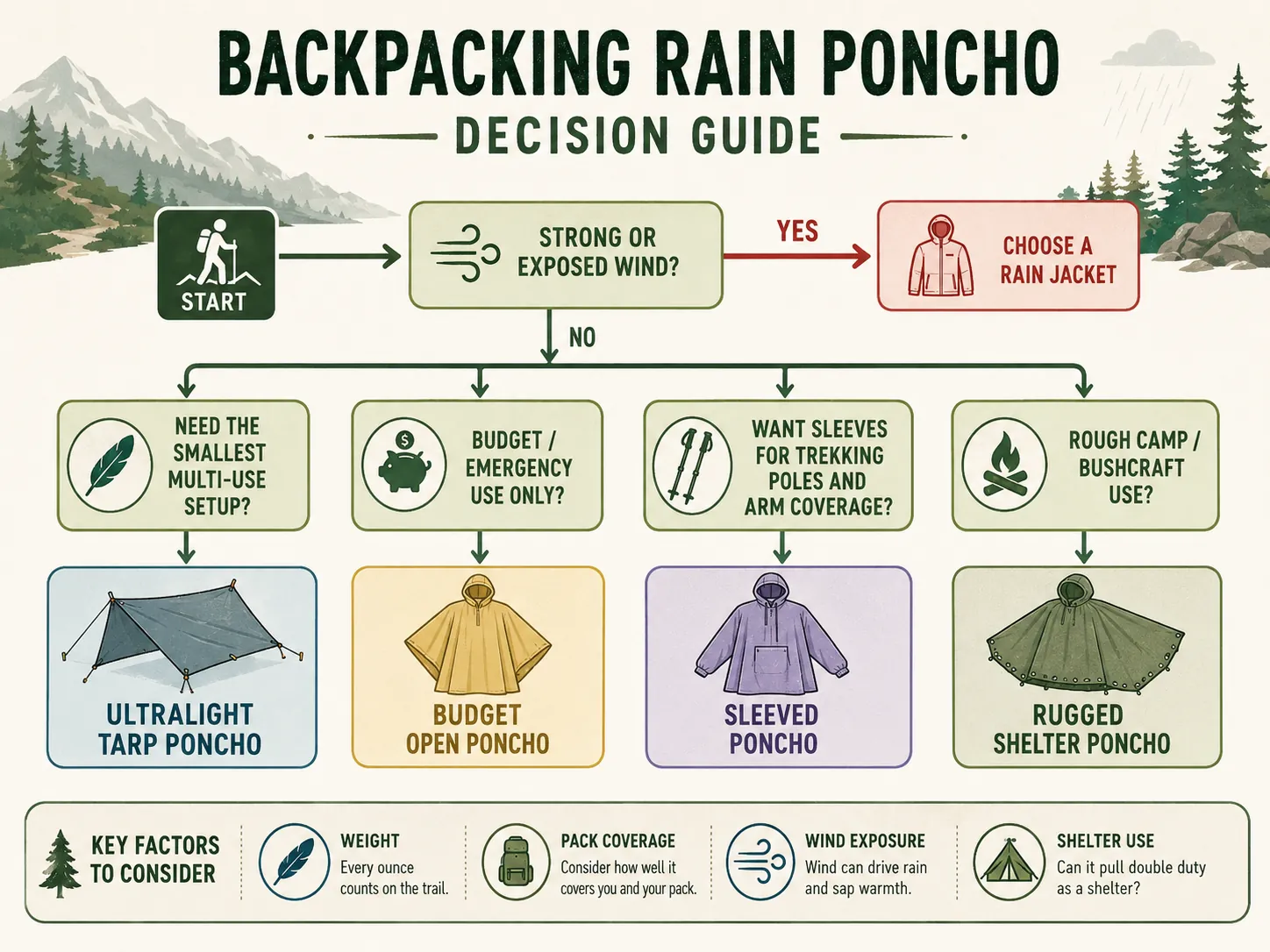
A poncho can keep rain off while still being the wrong tool for the route. Broad open fabric gives you excellent airflow, but it also gives wind something to grab. If your normal hiking involves exposed ridges, alpine passes, cold coastal weather, or regular storms with strong gusts, prioritize a backpacking rain jacket instead.
2. Make sure the poncho still covers you with a loaded pack
Backpack coverage is one of the main reasons to choose a poncho, but a full pack changes the geometry. It lifts the rear hem, can reduce arm coverage, and may expose more of your legs. Look at the actual dimensions and intended pack fit rather than assuming every “one size” poncho behaves the same.
3. Decide between open sides and dedicated sleeves
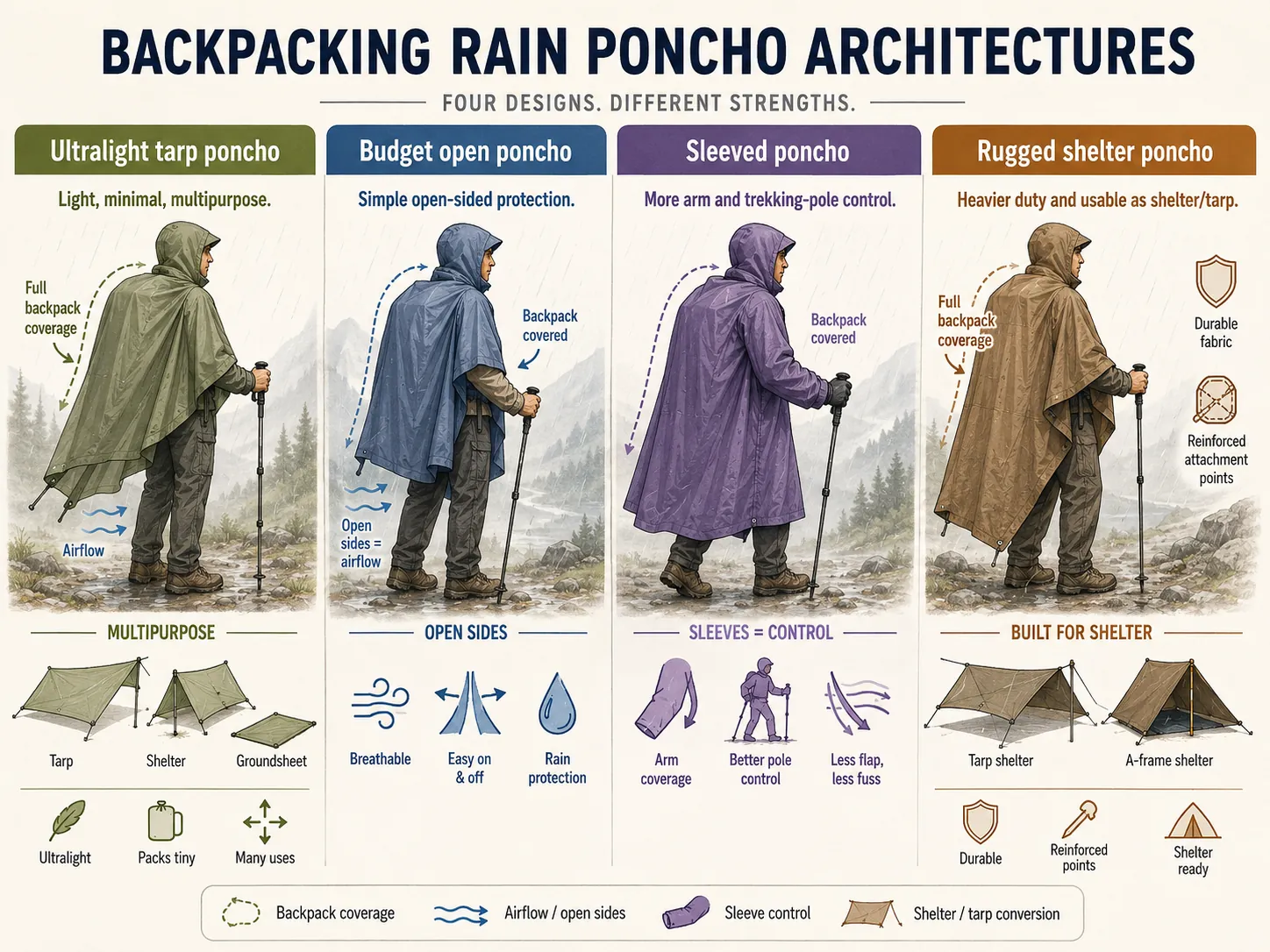
Classic ponchos maximize ventilation and can be thrown over a pack quickly. Sleeved designs such as the Snugpak give up some simplicity and weight savings in exchange for better arm coverage and a more controlled upper-body fit. This matters if you hike with trekking poles, use your hands constantly, or dislike wet sleeves underneath an open poncho.
4. Match weight to how hard you are on gear
The picks in this guide range from 6.5 ounces to about 16.5 ounces. The light end makes sense for maintained trails and ounce-conscious kits. The heavy end buys thicker or more rugged construction and often fits mixed backpacking/bushcraft use better. Do not buy a 15D poncho for thorny off-trail travel and then blame the category when it snags.
5. Treat tarp mode realistically
A poncho-tarp can be excellent information gain for your gear list because one item does several jobs. But shelter dimensions still matter. A roughly five-foot-wide poncho is a minimalist tarp, not a roomy storm shelter. Use tarp mode as part of a deliberate system, and do not replace a proven primary shelter on high-consequence trips just because a product has tie-outs.
6. Protect critical gear even if the poncho covers your pack
Pack coverage reduces direct rain exposure, but it is not the same as a waterproof internal system. Keep insulation, electronics, and sleep clothing inside a liner or dry storage. Our guide to ultralight pack liners and dry storage explains why the liner remains useful even when the outside of the pack is covered.
Where a Backpacking Poncho Makes Sense
Hot, humid forest hiking: This is where the open structure earns its keep. Airflow can be more useful than the close fit of a waterproof-breathable jacket when temperatures are high and exertion is steady. Sea to Summit and Frogg Toggs make the most sense here.
Budget emergency protection: If rain gear is usually carried but rarely worn, the Frogg Toggs Ultra-Lite2 gives you useful coverage without dedicating much pack weight or money to the category.
Multi-use minimalist systems: Sea to Summit and Onewind are the better choices when the same fabric also needs to work as a pack cover, groundsheet, or small tarp.
Trekking poles and cooler weather: Snugpak’s dedicated sleeves make more sense when you want your arms covered and your hands free without managing a broad open side panel.
Bushcraft and mixed camp use: Helikon-Tex earns its place when the poncho may spend as much time as a canopy, ground cover, or rugged camp layer as it does on a fast-moving backpacking trail.
Exposed cold-weather routes: This is the scenario where we would usually skip the category. A fitted shell plus backpacking rain pants gives more predictable wind and lower-body protection.
Maintenance and Care: Keep the Waterproof Layer Working
Do not apply one universal care routine to every poncho. Fabrics range from nonwoven polypropylene to silicone-coated ultralight ripstop and heavier PU-coated nylon or polyester, so manufacturer instructions take priority.
- Dry it before storage. Do not leave a wet poncho compressed in its stuff sack.
- Inspect high-stress points. Check side snaps, hood seams, tie-outs, and taped seams before a trip.
- Use material-compatible repairs. A patch that works on a conventional woven shell may not bond the same way to silicone-coated fabric or nonwoven polypropylene.
- Restore surface repellency only when the manufacturer allows it. Snugpak, for example, notes that the waterproof PU layer does not require treatment, while the outer DWR can be renewed when water stops beading.
- Keep shelter abrasion in mind. If you use a poncho as a groundsheet or tarp, inspect it before relying on it later as rainwear.
Poncho vs. Rain Jacket: Which Is Better for Backpacking?
Choose a poncho when warm-weather ventilation, immediate backpack coverage, and multi-use simplicity matter most. It is especially attractive on maintained trails where brush and sustained wind are limited.
Choose a rain jacket when you expect wind, cold rain, technical terrain, dense vegetation, or long periods of active wear. A fitted shell controls fabric better, layers more predictably, and protects the arms without relying on how the poncho drapes around a pack.
The decision is not “which one is more waterproof?” Both categories can block rain. The meaningful question is which system manages your weather, terrain, exertion, and carried gear with fewer compromises. If you are leaning toward a shell, compare our best rain jackets for backpacking.
Build a Rain System, Not Just a Poncho
A poncho solves upper-body and pack coverage, but it does not automatically protect everything else. A more complete wet-weather system can stay simple:
- Inside the pack: use a pack liner or dry bag for insulation, sleep clothing, and electronics.
- Lower body: accept wet quick-dry legs in warm weather, or add rain pants when temperature and exposure make that uncomfortable or unsafe.
- Feet: footwear strategy matters more than trying to create a fully sealed body. In persistently wet conditions, our waterproof hiking socks guide covers another option.
- Wind: a simple belt or compatible strap can help stabilize a classic poncho, but it does not turn an open tarp-poncho into a fitted hardshell.
Bottom Line
For most backpackers who specifically want a poncho, the Sea to Summit Ultra-Sil Nano Tarp Poncho is the best overall balance of weight, pack coverage, and multi-use function. The Frogg Toggs Ultra-Lite2 is the better budget option, while the Snugpak Enhanced Patrol Poncho makes more sense if dedicated sleeves matter more than minimum weight.
The important decision comes before the brand: if your trip is windy, cold, brushy, or highly exposed, a rain jacket may be the better category. If the route is warm, humid, and backpacking-focused, a good poncho can simplify both rain protection and pack coverage in one piece.
How We Chose These Rain Ponchos
We started with the current backpacking-poncho market and removed products that were stale, category-mismatched, difficult to verify, or redundant. That includes the Montbell Versalite from the previous version of this page: it is a rain jacket, not a poncho.
Specifications and Amazon variant mappings were rechecked on August 23, 2026. Marketplace sellers and inventory can change, so the buttons intentionally say “Check availability on Amazon” rather than publishing a static price or stock claim.
Frequently Asked Questions
What is the best rain poncho for backpacking?
For most backpackers who want a true poncho, the Sea to Summit Ultra-Sil Nano Tarp Poncho is our Best Overall pick because it combines a 6.5-ounce manufacturer-listed weight with large-pack coverage and tarp/groundsheet versatility. Choose the Frogg Toggs Ultra-Lite2 if budget matters most, or the Snugpak Enhanced Patrol Poncho if dedicated sleeves are more important than minimum weight.
Are rain ponchos better than rain jackets for backpacking?
Not universally. Ponchos are excellent for ventilation, quick backpack coverage, and multi-use systems in warm or humid conditions. Rain jackets are usually better in strong wind, cold rain, dense brush, and technical terrain because the fitted design controls fabric and coverage more predictably.
Will a rain poncho keep my backpack dry?
A poncho designed with enough rear volume can cover both you and your backpack, but pack size changes how the fabric drapes and can shorten lower-body coverage. Critical insulation and electronics should still ride inside a pack liner or dry storage rather than relying only on the outer poncho.
Are backpacking ponchos good in wind?
Open ponchos are generally weaker in wind than fitted rain jackets. Side snaps, sleeves, and a belt or strap can reduce flapping, but they do not eliminate it. Sea to Summit specifically states that its tarp poncho is not designed for very windy conditions and recommends a belt in wind.
Can a rain poncho double as a tarp?
Only models designed for that job should be treated as tarp-ponchos. Sea to Summit and Onewind include shelter functions, while Helikon-Tex can be rigged as an improvised canopy. Even then, poncho dimensions are usually smaller than a dedicated tarp, so shelter mode is best understood as minimalist or emergency coverage.
How much should a backpacking rain poncho weigh?
There is no single ideal number. The picks here range from 6.5 ounces for an ultralight tarp poncho to about 16.5 ounces for a rugged military-style design. Choose the light end for maintained trails and low carried weight; accept more weight when durability, sleeves, or camp-shelter use matters more.