
Gear & Home is reader-supported. As an Amazon Associate I earn from qualifying purchases. When you buy through links on our site, we may earn an affiliate commission, at no extra cost to you. Learn more.
To re-waterproof most rain jackets, start by cleaning the shell, then dry it and use only the heat your care label allows to reactivate the durable water repellent finish. Test the face fabric with clean water. If it still darkens and absorbs water instead of beading, apply a compatible DWR treatment. If water is entering through a tear, failed seam tape or delaminating fabric, reproofing will not repair that damage.
How to re-waterproof a rain jacket in the right order
- Inspect the jacket and read its care label. Look for tears, peeling laminate and loose seam tape before treating the DWR.
- Wash the shell correctly. Dirt, body oils, sunscreen and laundry residue can reduce water beading and breathability.
- Dry it as directed. If the label permits gentle heat, it can help reactivate an existing DWR finish on many waterproof shells.
- Water-test the clean jacket. Beading means the finish is still working. Dark, saturated face fabric means it may need fresh DWR.
- Reapply a compatible treatment only if needed. Follow the aftercare product instructions and the jacket label, then let the treatment dry or cure as specified.
First, decide whether the jacket is wetting out or actually leaking
A worn DWR finish and a true waterproofing failure can feel similar from inside the jacket. A saturated face fabric also reduces breathability, so sweat and condensation can make the interior feel damp. Before buying a reproofing treatment, clean the shell and look for where the moisture appears.
| What you see | Most likely issue | What to do next |
|---|---|---|
| Water stops beading and large areas of face fabric turn dark | Worn or contaminated DWR | Wash, dry as directed, water-test, then reapply DWR if beading does not return |
| Jacket feels clammy inside while the outer fabric is saturated | Wet-out plus reduced breathability or condensation | Restore surface repellency first, then reassess in rain |
| Moisture appears repeatedly at one seam, puncture or abrasion | Possible physical leak | Inspect seam tape and fabric; repair the damage rather than relying on DWR |
| Interior coating or laminate is visibly peeling, bubbling or flaking | Material failure or delamination | Check the manufacturer’s repair or warranty options; a DWR spray cannot rebuild the laminate |
Large areas darken and stop beading
Wash and dry correctly first. Reapply DWR only if the clean jacket still wets out.
Water appears at one seam or damaged spot
Inspect the fabric and seam tape. DWR treatment cannot seal a tear or failed seam.
Peeling, bubbling or flaking laminate
Contact the manufacturer about repair or replacement rather than adding more surface treatment.
How to Re-Waterproof a Rain Jacket Step by Step
1. Read the care label before you add detergent, heat or DWR
Start with the instructions sewn into the exact jacket you own and, when available, the current care page from the manufacturer. Waterproof shells can differ in membrane construction, face fabric, printed liners, seam adhesives and trim. A drying temperature that is appropriate for one shell can be wrong for another.
Empty the pockets and inspect high-wear zones such as the shoulders, cuffs, hem and areas that sit under backpack straps. If you see a hole, separated seam tape or obvious delamination, deal with that problem before treating the face fabric.
2. Wash the jacket before deciding the DWR is gone
Cleaning is not a cosmetic extra. Dirt, skin oils, sunscreen and laundry residue can interfere with water beading. Washing can also reveal whether the existing DWR simply needed cleaning and reactivation rather than a new coating.
Follow the jacket label for cycle, temperature and detergent type. Avoid adding fabric softener, bleach, stain remover or other laundry additives unless the manufacturer specifically allows them. If you want a dedicated technical-outerwear cleaner, Nikwax Tech Wash is one current option intended for waterproof outerwear.
3. Dry the jacket and reactivate the existing DWR when permitted
Many waterproof-shell makers use gentle heat as part of DWR maintenance. GORE-TEX, for example, currently advises washing and drying, then using heat according to its care instructions to reactivate the finish. That does not mean every rain jacket should be put in a hot dryer or ironed.
Use only the drying and heat method allowed by your jacket’s label. If the label says no tumble drying or no ironing, do not override it because a different brand recommends heat. Some aftermarket DWR products also develop without heat.
4. Do a simple water-beading test
Once the clean jacket is dry, place or spray clean water onto several areas of the face fabric. Check the shoulders, chest and sleeves, not just one protected spot.
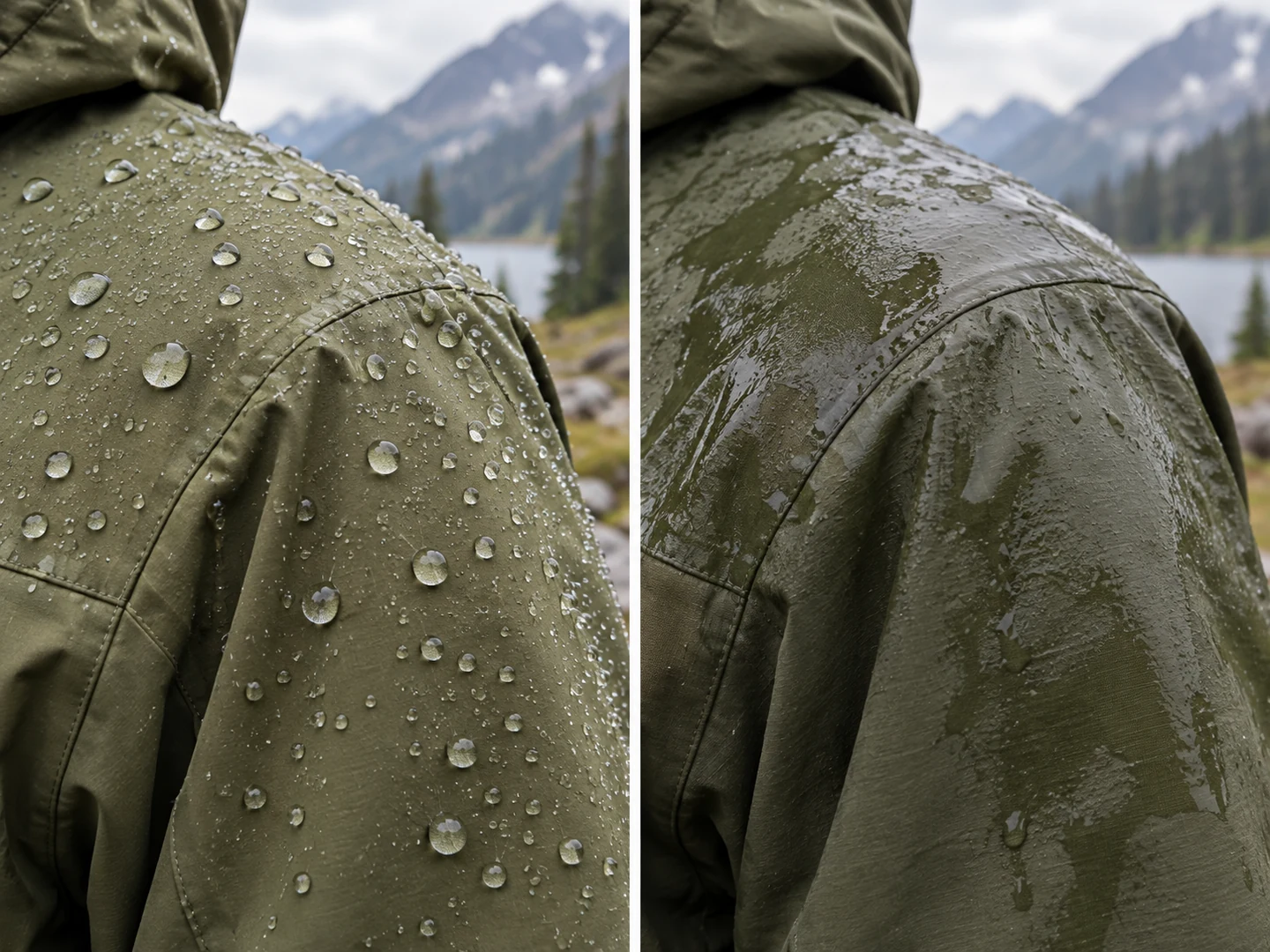
- DWR is working: droplets stay rounded, bead and move off the fabric easily.
- DWR likely needs renewal: water spreads into the textile, the face fabric becomes darker and the wet area keeps expanding.
If beading came back after washing and permitted heat, stop there. Adding more chemistry when the existing finish is working gives you little benefit.
5. Apply a compatible DWR treatment if the clean shell still wets out
Choose a treatment intended for breathable waterproof clothing and follow its own directions. Spray-on products make it easy to concentrate treatment on the outer face and high-abrasion areas. Wash-in products can provide broad coverage on garments where the manufacturer and treatment maker consider them appropriate.
Two spray-on options that fit this job are Nikwax TX.Direct Spray-On and Grangers Performance Repel Plus. Nikwax directs users to apply TX.Direct Spray-On to a clean, wet garment and says the treatment can develop on air drying. Grangers likewise specifies application to a freshly cleaned, damp garment and says heat activation is not required. In both cases, the jacket’s care label still governs how the garment itself may be dried.
6. Let the treatment dry or cure exactly as directed
More product is not automatically better. Apply the amount and coverage recommended by the DWR maker, wipe away excess when directed, and follow the stated drying method. Uneven overspray or excess treatment can leave visible residue without solving an actual membrane or seam problem.
7. Water-test again before trusting the jacket in a long storm
Repeat the beading test after the treatment has dried. The goal is not to create an invisible force field. You are looking for water to bead and roll rather than immediately spreading into the face fabric. If surface repellency has returned but water still enters at a localized point, the next step is repair, not another coat of DWR.
Useful Products for Cleaning and Restoring DWR
You do not need three different chemicals to maintain one jacket. The practical sequence is cleaner first, then one compatible DWR product only if the cleaned shell still wets out. These Amazon listings are current US variants checked for this guide.
| Product | Role | When it makes sense | Where to check |
|---|---|---|---|
| Nikwax Tech Wash, 10 fl oz | Technical cleaner | Before reproofing when you want a cleaner made for waterproof outerwear | Check availability on Amazon |
| Nikwax TX.Direct Spray-On, 300 ml | Spray-on DWR renewal | Targeted treatment on a clean wet shell, especially useful when you want to treat the outer face without treating a wicking liner | Check availability on Amazon |
| Grangers Performance Repel Plus, 275 ml | Alternative spray-on DWR | A clean-damp-garment spray option that does not require heat activation | Check availability on Amazon |
Nikwax Tech Wash, 10 fl oz
Use before reproofing when the jacket label and your care routine call for a technical cleaner.
Nikwax TX.Direct Spray-On, 300 ml
Targeted DWR treatment for a clean wet breathable waterproof shell.
Grangers Performance Repel Plus, 275 ml
Spray-on DWR for a freshly cleaned damp garment, with no heat activation required by the treatment.
Spray-On vs Wash-In DWR: Which Should You Use?
Neither format is universally better for every jacket. The decision depends on the garment construction and the treatment maker’s instructions.
- Spray-on: useful when you want to treat the face fabric directly, add more product to abrasion zones or avoid treating an internal wicking liner. It does require even application.
- Wash-in: useful when the garment and product instructions support it and broad, consistent coverage is desirable. It treats whatever surfaces the solution reaches, which is not ideal for every lining or garment design.
If your jacket maker specifies one method, use that method. For an unknown shell, do not assume a wash-in treatment is automatically safe just because the membrane itself is waterproof.
Common Rain Jacket Reproofing Mistakes
Applying DWR to a dirty jacket
Dirt and oil are part of the problem, and aftercare treatments are generally designed to go onto a clean garment. Washing first also prevents you from spending money on a new finish when cleaning and permitted heat might have restored the existing one.
Using too much heat
Heat can help reactivate some DWR finishes, but excessive heat can damage fabrics, seam adhesives, prints and trims. The correct instruction is not “put every rain jacket in a hot dryer.” It is “follow the exact care label.”
Trying to spray away a tear or failed seam
DWR changes surface repellency. It does not bridge a puncture, replace detached seam tape or reconstruct a delaminated waterproof layer. Localized water entry needs a physical repair or manufacturer service.
Reproofing on a calendar instead of testing the jacket
There is no useful universal rule such as “reproof every five washes.” Wear, pack friction, dirt, oils, climate, detergent exposure and the original DWR chemistry all change the maintenance interval. Test water beading and treat when performance shows you it is needed.
Assuming a soaked outer fabric always means the membrane failed
A jacket can wet out on the surface while the waterproof membrane is still doing its job. The saturated shell may feel colder and less breathable, which can create interior moisture from condensation. Diagnose before replacing the jacket.
What If the Jacket Still Leaks After Reproofing?
Stop adding DWR and locate the water entry point. Reproofing is unlikely to solve the problem if any of these are present:
- a puncture, cut or worn-through abrasion;
- seam tape lifting or separating from the fabric;
- peeling, bubbling or flaking laminate or coating;
- a zipper, pocket or closure area that repeatedly admits water;
- localized leakage that continues after the face fabric is clean and beading normally.
Small fabric damage may be patchable with the repair method approved for the garment. Seam-tape and laminate failures can require professional or manufacturer repair. If the shell is old enough that large areas are delaminating, replacement can be more realistic than repeatedly treating the exterior.
Can You Re-Waterproof a GORE-TEX Jacket?
Yes, but the same distinction matters. GORE-TEX states that its DWR is an outer-face treatment and is not permanent. When water stops beading, current GORE guidance is to wash and dry the garment, use care-approved heat to reactivate the DWR, and apply a pump-spray or wash-in treatment if repellency cannot be restored.
The membrane can remain waterproof even when the outer fabric wets out. That is why a GORE-TEX shell that looks soaked is not automatically “dead.” Check the specific garment manufacturer’s label because the jacket maker controls the complete garment, including fabrics, seam construction and trim.
How Often Should You Restore DWR?
Use performance, not a fixed schedule. Wash the jacket when it is dirty or its care instructions call for cleaning, and check DWR when water no longer beads reliably. High-friction areas under backpack straps and around cuffs can lose repellency before protected panels do.
Current GORE-TEX guidance also notes that newer PFAS-free DWR finishes generally need more regular maintenance because oils can affect them more readily. That makes routine cleaning and water testing more useful than waiting until the entire jacket is saturated in every shower.
How We Built This Guide
Gear & Home does not present this as laboratory performance testing. We checked current care guidance from waterproof-fabric and aftercare manufacturers, current Amazon US product listings, recurring owner troubleshooting discussions and the live US search results for re-waterproofing a rain jacket.
The strongest recurring pattern is consistent across source types: clean first, use only garment-approved drying or heat, test water beading, and add new DWR only when the clean face fabric still wets out. We also separated DWR wear from true physical leakage because those problems need different fixes.
Frequently Asked Questions
Can you really re-waterproof a rain jacket?
You can restore the water-repellent finish on many rain jackets. In most cases, that means cleaning the shell, reactivating its existing DWR with care-label-approved drying or heat, then applying a compatible DWR treatment if water still soaks into the face fabric. This does not repair a torn membrane or failed seam.
Does DWR make a rain jacket waterproof?
DWR helps the outer fabric repel water and keep beading, but it is not normally the waterproof membrane itself. A jacket can lose DWR and still keep rain from passing through the membrane, although the saturated face fabric can feel cold and reduce breathability.
Do I need to wash a rain jacket before applying DWR?
Yes, as a general process. Dirt, body oils and residue can reduce water beading, and current aftercare makers commonly direct users to apply treatment to a clean garment. Washing and correct drying may also restore the existing finish so you do not need new DWR yet.
Is spray-on or wash-in DWR better?
It depends on the jacket. Spray-on treatment lets you target the outer face and abrasion areas and can avoid treating an internal wicking liner. Wash-in can provide broad coverage when both the garment and treatment instructions support it. Follow the jacket maker’s care guidance first.
Can I put a waterproof jacket in the dryer to reactivate DWR?
Only if the care label permits it. Gentle heat is part of the current care process for many waterproof shells, including many GORE-TEX garments, but drying rules vary by jacket. Do not copy another brand’s temperature or ironing instruction onto your shell.
How do I know if DWR is worn out?
Test a clean jacket with water. Working DWR makes droplets bead and move off the face fabric. If water spreads, the textile darkens and the wet area expands, the finish may need reactivation or reapplication.
Why is my rain jacket still leaking after DWR treatment?
Localized water entry can indicate a tear, abrasion, failed seam tape, zipper issue or laminate damage. DWR only changes surface repellency, so those failures need repair or manufacturer service rather than another layer of spray.