
Gear & Home is reader-supported. As an Amazon Associate I earn from qualifying purchases. When you buy through links on our site, we may earn an affiliate commission, at no extra cost to you. Learn more.
A 2.5-layer rain jacket is usually the smarter buy when low weight, small packed size and price matter most. A 3-layer shell is usually the better choice for frequent wear, sustained wet weather and repeated use under a backpack. The layer count describes how the waterproof system is protected, not a universal waterproofness score.
Choose 2.5L to carry it. Choose 3L to wear it.
Buy a 2.5-layer jacket if it will spend most of the trip in your pack and come out for passing showers, travel days or occasional bad weather. The construction removes a full fabric backer, which generally saves weight, bulk and money.
Buy a 3-layer jacket if rain is part of the plan rather than a surprise. A bonded inner backer protects the membrane more completely and usually improves durability and long-wear comfort, especially with pack straps and repeated use.
Do not choose by layer count alone. Membrane or coating technology, face fabric, seam sealing, hood design, ventilation, fit and DWR condition can matter as much as the number printed after the “L.”
2.5-Layer vs 3-Layer Rain Jackets at a Glance
| Decision factor | 2.5-layer | 3-layer |
|---|---|---|
| Inner protection | Thin printed or sprayed protective finish | Full fabric backer bonded to the membrane |
| Typical advantage | Lower weight and smaller packed size | Durability and long-wear comfort |
| Typical drawback | Can feel clammy and has less abrasion margin | Usually costs more and may be heavier or bulkier |
| Best use | Emergency shell, day hiking, travel, occasional backpacking rain | Frequent hiking, sustained rain, rougher use, repeated pack wear |
| Waterproofness | Can be fully waterproof | Can be fully waterproof |
| Breathability | Varies by membrane, coating and venting | Varies by membrane and venting; premium options often perform well |
| Price tendency | Usually lower | Usually higher |
| Simple rule | Best when you mostly carry it | Best when you expect to wear it for hours |
Light, packable, value-focused
Protective print or finish
Backup shell and occasional rain
Weight and packed size
Clammy feel and lower durability
Durable, comfortable, frequent-use
Bonded fabric backer
Sustained rain and repeated wear
Durability and long-wear comfort
Price and often more weight
What 2.5 Layers and 3 Layers Actually Mean
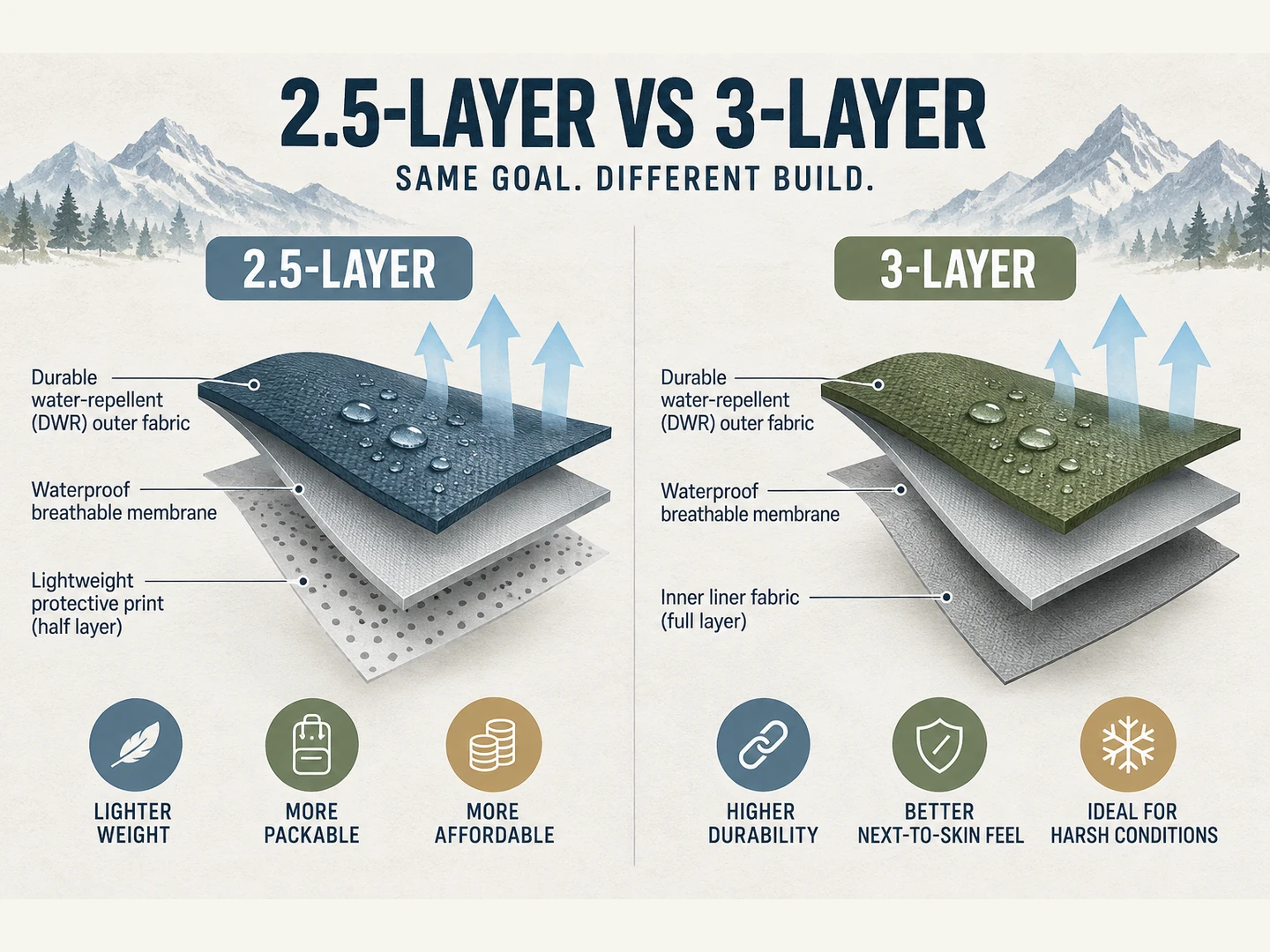
Both constructions start with an outer face fabric and a waterproof/breathable system underneath it. The difference is mainly what protects that waterproof layer from abrasion, skin oils, dirt and repeated flexing on the inside.
How a 2.5-layer jacket is built
A 2.5L shell uses a face fabric, a waterproof membrane or coating, and then a very thin protective print or finish on the inside. That printed surface is the “half layer.” It is not a loose liner and it is not a full fabric backer.
Removing a full inner fabric layer is why 2.5L shells can be impressively light and compact. It is also why the inside can feel more like a coated surface against damp skin. The protective print has less material between the waterproof layer and friction from clothing, pack straps and repeated use.
How a 3-layer jacket is built
A 3L shell bonds three components into one laminate: the outer face fabric, the waterproof/breathable membrane and a full inner backer. That backer protects the membrane while creating a more fabric-like surface inside the jacket.
The result is usually a tougher shell that is better suited to regular wet-weather use. Modern 3L jackets can still be fairly light, so “three layers” does not automatically mean a heavy mountaineering shell. The trade-off is usually a higher purchase price and, compared with minimalist 2.5L designs, more material.
Is 3-Layer More Waterproof Than 2.5-Layer?
Not automatically. Layer count is a construction description, not a standardized waterproof rating. A well-built 2.5L jacket can be fully waterproof, and a 3L jacket can still perform poorly for you if the fit, hood, zippers, seam construction or maintenance are wrong for the conditions.
What 3L construction usually buys is more protection for the membrane and more confidence during repeated use. That matters on long wet trips because the shell is exposed to pack-strap pressure, dirt, sweat and abrasion for hours at a time. It does not mean that every 3L laminate has a higher hydrostatic-head rating than every 2.5L fabric.
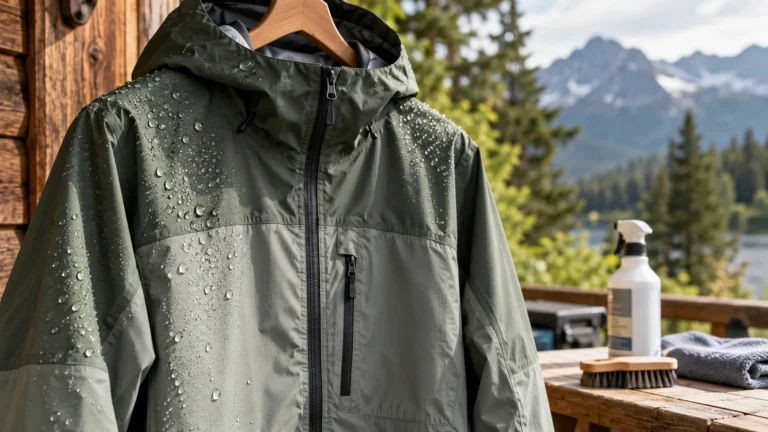
When the face fabric stops beading water, it can become saturated and feel cold or clammy even while the waterproof layer is still blocking rain. Cleaning and restoring the DWR according to the jacket maker’s instructions can improve comfort and vapor transfer.
Which Is More Breathable?
There is no safe rule that says every 3L jacket breathes better than every 2.5L jacket. Breathability depends on the exact membrane or coating, humidity, temperature, activity level and how much mechanical ventilation the jacket provides.
In practice, 3L shells often feel better during long wear because the inner backer keeps the membrane surface off your skin. A 2.5L shell can feel clammy sooner, even when its waterproof/breathable system is still functioning normally. That difference in feel is one reason hikers sometimes interpret a 3L shell as “more breathable.”
For high-output hiking, features such as pit zips or long side vents can be more useful than a small difference in lab breathability numbers. No waterproof/breathable fabric moves moisture as quickly as opening a real vent.
Who Should Buy a 2.5-Layer Rain Jacket?
A 2.5L shell makes the most sense when carried weight matters more than wear time. If your rain jacket is insurance for a mostly dry trip, paying extra and carrying more material for durability you rarely use may not improve the trip.
It is also a sensible entry point for someone who needs a real waterproof shell but does not yet know whether they will become a frequent wet-weather hiker. You can still get taped seams, an adjustable hood and useful vents in a 2.5L design.
The compromise is cumulative wear. A lighter inner protective finish generally has less abrasion margin than a bonded fabric backer. That does not make 2.5L disposable, but it does mean it is a less natural match for constant pack friction, brush and daily storm use.
Who Should Buy a 3-Layer Rain Jacket?
A 3L shell is easiest to justify when you know you will actually wear it. The full backer is designed to protect the waterproof membrane through repeated contact with clothing, sweat and gear. It also tends to feel less plasticky against the body.
This is the safer default for wet-weather backpacking because backpacks create exactly the kind of repeated shoulder and back friction that tests a lightweight shell. It is also a better fit for people who want one rain jacket to serve hiking, travel and regular outdoor use rather than living at the bottom of a pack.
Still, do not pay for 3L construction while ignoring the rest of the design. A durable laminate with poor ventilation, an awkward hood or a fit that binds under your pack can be the wrong jacket for you.
Two Real-World Examples You Can Check on Amazon
These are not ranked winners for this article. They are current examples that make the construction trade-off easier to see: one established 2.5L shell and one current 3L shell. If you want a full product shortlist instead, see our best rain jackets for backpacking.
Marmot PreCip Eco
A packable, lower-cost 2.5L shell that illustrates why this construction remains useful for occasional rain and backpack carry.
The PreCip Eco is the kind of jacket 2.5L construction does well: light enough to keep in a daypack, simple enough for travel, and equipped with pit zips so you can vent heat mechanically. Marmot lists the current men’s model at 11 ounces and says it stuffs into its own pocket.
Its role is more important than its brand name. Choose a jacket like this when you want dependable rain insurance without building your whole clothing system around frequent storms. If you expect repeated all-day use under a loaded pack, a 3L shell is the more conservative durability choice.
Outdoor Research Foray 3L
A current three-layer shell that pairs a bonded 40D AscentShell Dry fabric with unusually large TorsoFlo side vents.
The Foray 3L shows why a three-layer shell can make more sense for prolonged wet-weather use. The bonded backer protects the membrane, while the long side zips provide a direct way to dump heat when the waterproof fabric alone cannot keep up with exertion.
It is not an ultralight answer, and that is the point. If you expect to wear a shell for hours rather than merely carry it, the extra structure and ventilation can matter more than the smallest possible packed size.
Availability note: Outdoor Research currently states that this Foray 3L contains PFAS and cannot be shipped to California, New York or Colorado. Amazon availability can also vary by size, color and destination.
A Better Buying Rule Than “3L Is Better”
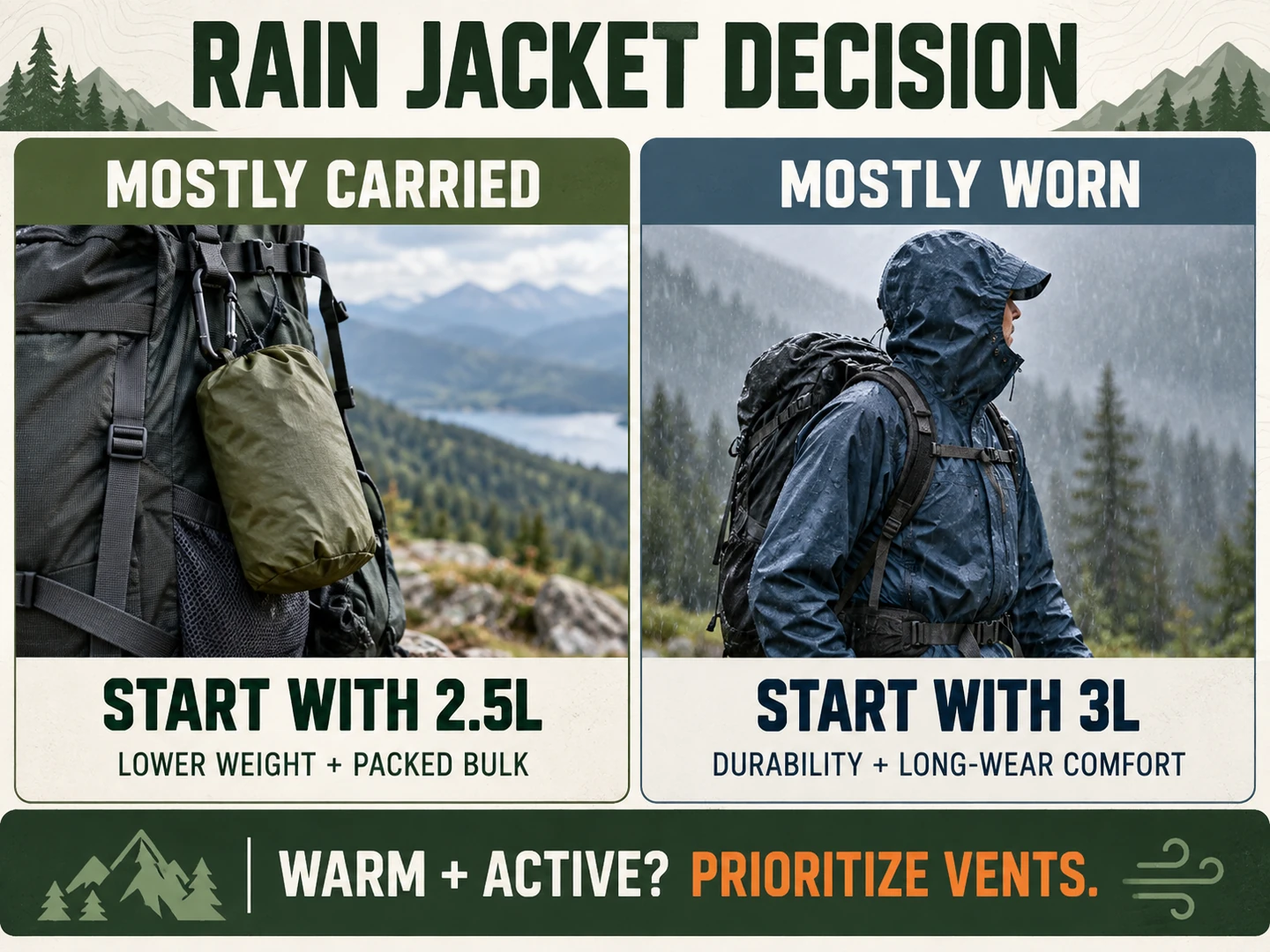
Start with the job the shell must do, then use layer construction as one filter.
| Your scenario | Better starting point | Why |
|---|---|---|
| Mostly dry trips, rain jacket stays packed | 2.5L | Lower carried weight and packed bulk matter every mile |
| Day hiking and travel with occasional showers | 2.5L | Good balance of protection, packability and cost |
| Frequent backpacking in a wet climate | 3L | More membrane protection under shoulder and back friction |
| Long periods wearing the shell | 3L | Backer and overall construction usually improve long-wear comfort |
| High-output hiking in warm rain | Either, with strong vents | Pit zips and side vents may matter more than layer count |
| Tight budget | 2.5L first | More options at lower prices without giving up full waterproof construction |
| One shell for years of frequent use | 3L first | Durability is usually the stronger reason to pay more |
Start with 2.5L
Best when rain protection is insurance and pack weight matters all day.
Start with 3L
Best when durability, sustained wear and repeated backpack friction matter.
Prioritize vents
A well-placed pit zip or side vent can beat a small fabric-spec advantage.
What to Check Before You Buy Either Type
- Face fabric: layer count does not tell you how abrasion-resistant the outer textile is. Fabric weight and denier help explain how rugged or delicate a shell may feel.
- Seam sealing: a waterproof fabric is not enough if critical seams are not sealed appropriately.
- Ventilation: pit zips, side zips and pocket venting can make a large difference when hiking uphill.
- Hood control: look for adjustment that keeps the brim stable without blocking peripheral vision.
- Pack compatibility: check whether hand pockets remain usable under a hipbelt and whether shoulder fabric is appropriate for your load.
- Fit and layering room: a shell that is too tight can restrict movement; one that is too loose can flap and let water reach openings.
- DWR and care instructions: all waterproof shells need maintenance. A saturated face fabric can feel like failure even when the membrane is intact.
If your real question is which specific shell to buy, move from construction theory to our rain jacket comparison. If you are considering a looser, more ventilated alternative for warm trails, compare the best backpacking rain ponchos.
How We Built This Comparison
FAQ
Is a 3-layer rain jacket always more waterproof than a 2.5-layer jacket?
No. Layer count describes construction, especially how the waterproof membrane or coating is protected. Absolute waterproof performance depends on the exact membrane or coating, face fabric, seams, design and condition of the jacket.
Is 3-layer always more breathable?
No. Breathability varies by fabric technology, conditions and ventilation. Three-layer shells often feel more comfortable during long wear because of the bonded backer, but a well-vented 2.5L jacket can be the better choice for a specific high-output use case.
Is a 2.5-layer jacket good enough for backpacking?
Yes, especially when the shell is mostly carried as backup protection and low weight matters. For frequent backpacking in sustained rain, repeated shoulder-strap friction and long wear make 3L construction the more conservative choice.
Why can a 2.5-layer jacket feel clammy inside?
The “half layer” is only a thin protective print or finish rather than a full fabric backer. Moisture and the coated inner surface can therefore feel closer to your skin, especially in humid conditions or during hard exercise.
What is the half layer in a 2.5-layer rain jacket?
It is a very thin protective print, sheen or coating applied over the waterproof layer on the inside. It protects the membrane or coating without adding a full bonded fabric backer.
Should I buy 2.5L or 3L for hiking in warm rain?
Start by looking at ventilation. In warm, humid conditions, pit zips or long side vents can be more important than layer count alone. Choose 2.5L when packability is central; choose 3L when you also need repeated-use durability and long-wear comfort.