
Gear & Home is reader-supported. As an Amazon Associate I earn from qualifying purchases. When you buy through links on our site, we may earn an affiliate commission, at no extra cost to you. Learn more.
You do not need rain pants for every backpacking trip. They earn their place when wet legs could become a cold, wind and exposure problem, or when you expect hours of rain, wet brush, sleet or a long stretch with no easy bailout. In warm, sheltered conditions where your hiking clothes dry quickly, rain pants can be optional rather than essential.
The useful question is not simply, “Will it rain?” It is, “What happens if my lower body stays wet for the next few hours?” A warm summer shower on a wooded trail is very different from 45 F rain on an exposed ridge. Your answer should change with temperature, wind, duration, terrain, clothing and how quickly you can get somewhere safe.
Do you need rain pants for backpacking?
Bring rain pants when cold rain, wind, exposed terrain or sustained wet conditions could leave you chilled for hours. They are especially useful in shoulder season, alpine weather, wet brush, sleet and trips where turning around does not quickly get you to warmth.
You can often skip them on warm, low-risk trips if you are comfortable hiking in quick-dry shorts or pants, have a dry clothing system for camp and sleep, and can change plans easily if conditions deteriorate.
Even a waterproof shell can feel damp inside when you hike hard because sweat and condensation have to go somewhere. The point is to reduce direct rain and wind exposure, slow heat loss and give you more control over your clothing system. If your only goal is zero moisture inside the pants, no waterproof shell can promise that during sustained effort.
Why this is more than a comfort question
Cold rain changes the decision because wet clothing and wind can increase heat loss. The National Park Service notes that hypothermia can occur in roughly 30 to 60 F conditions, particularly when wind and rain are involved. Its guidance also emphasizes adding rainwear and warm layers before you become soaked and chilled, while avoiding unnecessary sweating through ventilation and layer changes.
That does not mean 59 F automatically requires rain pants. Temperature is only one input. A fit hiker moving quickly in a protected forest has a different heat balance from someone standing at a windy pass, dealing with an injury, moving slowly with a heavy pack or spending hours in driving rain.
The practical takeaway is simple: the smaller your safety margin, the more valuable a waterproof lower-body layer becomes. If the forecast, route and season leave little room for error, a few extra ounces can be easier to justify.
Safety reference: National Park Service hypothermia guidance.
When rain pants are worth carrying
Wet weather plus low temperatures
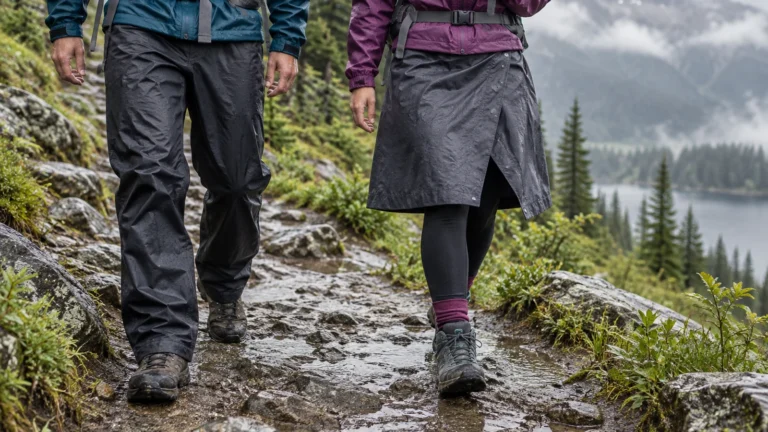
If rain is likely to arrive with cool air, your lower body can become part of the heat-loss problem. Waterproof over-pants add a wind-blocking shell and reduce direct wetting.
Windy ridges and alpine terrain
On exposed terrain, the wind-protection value can matter as much as the waterproof fabric. There may also be fewer sheltered places to stop and change layers.
Hours of rain instead of a passing shower
A short storm may be easy to wait out. A forecast for sustained rain, repeated squalls or a full wet day makes a dedicated shell more useful.
Brush, grass and overgrown trail
Even after rain stops, soaked vegetation can keep loading water onto your legs. Rain pants can be more useful here than the sky forecast suggests.
Sleet, wet snow and shoulder season
Cold precipitation raises the stakes and can saturate ordinary hiking pants quickly. A shell layer gives you another way to manage the system.
Remote routes and slow exits
If reaching a road, shelter or warm vehicle would take hours, the clothing you carry needs to cover a wider range of conditions.
When you can probably skip rain pants
Skipping rain pants can be a rational choice when the consequences of wet legs are low and your clothing dries quickly. Common examples include:
- Warm summer rain: you expect temperatures to stay comfortably warm even while wet and moving.
- Short, sheltered routes: the trail stays below treeline and you can bail out or shorten the day quickly.
- Dry climates with brief storms: rain is usually short-lived, and sun, low humidity or wind can dry hiking clothes soon after.
- Quick-dry shorts or thin hiking pants: you have deliberately chosen clothing that remains comfortable enough when wet and dries fast.
- A strong dry-camp system: your insulation and sleep clothing remain protected in a waterproof pack liner or dry bag, so wet hiking clothes never become your only warm option.
The last point matters. “I am willing to hike wet” is very different from “all my clothes can get wet.” If you skip shell pants, protect the layers that must stay dry for stops and sleep.
Rain pants alternatives: what actually changes?
There is no universal substitute because each option solves a different part of the problem.
| Option | What it does well | Main limitation | Best fit |
|---|---|---|---|
| Quick-dry shorts | Maximum ventilation and very little water retention | No wind or lower-leg protection | Warm rain and high-output hiking |
| Quick-dry hiking pants | Sun, brush and bug protection with reasonable drying | Can become cold and saturated in sustained rain | Warm or moderate conditions |
| Rain skirt or kilt | Excellent ventilation and fast on/off | Less lower-leg and wind coverage | Warm, humid rain and hikers who dislike shell-pant condensation |
| Wind pants | Very light wind protection and a little warmth | Not a substitute for waterproof pants in sustained rain | Dry, windy trips with only low rain risk |
| Poncho | Ventilation plus torso and pack coverage | Leg coverage varies and exposed wind can be awkward | Warm rain, forest travel and hikers who prefer a single broad shell |
Quick-dry shorts
Very breathable and fast-drying, but with no meaningful wind protection.
Quick-dry hiking pants
Useful for sun and brush, but still vulnerable to long cold rain.
Rain skirt or kilt
Easy to vent and deploy, with less lower-leg coverage.
Wind pants
Excellent weight-to-warmth value in dry wind, but not a sustained-rain shell.
Poncho
Can cover torso and pack while ventilating well, but performance in wind depends on design and terrain.
If fast-drying clothing is part of your no-shell strategy, see our quick-dry hiking pants guide. If a poncho sounds closer to your hiking style, our backpacking rain poncho guide compares current options and the trade-offs in wind, coverage and pack access.
A five-question rain pants checklist
Run through these questions before packing. This is not a medical threshold or a rigid scoring system. It is a quick way to expose when several small risks are stacking up.
- Could temperatures be cool enough that staying wet for hours would be a problem? Pay more attention when rain and wind arrive together.
- Is sustained rain, sleet, wet snow or soaked vegetation likely? Duration and repeated wetting matter more than a tiny chance of a brief shower.
- Will you spend meaningful time above treeline, on exposed ridges or in strong wind?
- Would an injury, navigation delay or slow hiking partner make the exit much longer?
- Do you already have another lower-body system that covers the same conditions? A rain skirt may cover warm rain well, but wind pants alone do not replace a waterproof shell in a cold all-day storm.
If several answers point toward cold, wet and exposed, pack the rain pants
If nearly every answer points toward warm, sheltered, short and easy-to-bail conditions, skipping them is reasonable. When the forecast sits in the middle, consider how much your specific pair weighs. A light shell that spends most of the trip in your pack can be cheap insurance on a route where the downside of being wrong is high.
If you decide to carry rain pants, match the pair to the job
This is not a product roundup. These two examples simply show how different rain-pant roles affect the decision.
Outdoor Research Men’s Helium UL Pant
Outdoor Research lists the Helium UL Pant at 5.75 oz / 163 g, with a 15D ripstop shell, 2.75-layer waterproof construction, ankle zippers and a back pocket that doubles as a stuff sack. It makes the most sense when rain pants will spend much of the trip packed and low carried weight is the priority.
Columbia Men’s Rebel Roamer II Pant
Columbia uses a fully seam-sealed waterproof-breathable shell with an elastic drawcord waist and adjustable cuffs. The brand also recommends sizing up if you plan to wear the pants over everyday trousers. This is the more conventional over-pant approach when simplicity and coverage matter more than chasing the lowest possible pack weight.
For a full comparison of lightweight, full-zip and budget options, use our best rain pants for backpacking guide. That page is where we handle product-to-product buying decisions; this page stays focused on whether you need the category at all.
How to get more value from rain pants
- Put them on before you are soaked and cold. Waiting until your hiking pants are saturated gives the shell less useful work to do.
- Vent before you overheat. Slow your pace, open compatible zippers and adjust upper-body layers. Waterproof-breathable fabric still has limits during hard climbing.
- Test the on/off routine at home. If the cuffs or ankle zips will not pass over your footwear easily, know that before the storm arrives.
- Keep sleep clothing protected separately. A dry base layer or sleep system is a different safety layer from the waterproof shell you hike in.
- Do not assume rain pants solve wet feet. Water can still run into footwear from above, and waterproof footwear can also trap sweat.
Upper- and lower-body shells also need to work as one system. If your jacket is the weak link, see our backpacking rain jacket guide.
Bottom line
Rain pants are not mandatory backpacking equipment for every climate and every trip. They are a risk-management layer. Their value rises quickly as conditions become colder, windier, wetter, more exposed and harder to escape.
For a warm weekend below treeline with brief showers, quick-dry clothing may be enough. For a remote shoulder-season route with cold rain and ridge exposure, waterproof pants are much easier to justify. Make the choice from the consequences of being wet, not from a universal packing list.
Frequently asked questions
Are rain pants necessary for backpacking?
No. Rain pants are not necessary on every trip. They become much more useful when you expect cold rain, strong wind, prolonged wet conditions, exposed terrain or a long time between reliable shelter and bailout options.
What temperature makes rain pants worth carrying?
There is no single cutoff. Temperature interacts with wind, rain duration, exertion, clothing and exposure. National Park Service guidance notes that hypothermia can occur in roughly 30 to 60 F conditions, especially with wind and rain, so cool wet forecasts deserve more caution than the air temperature alone suggests.
Can hiking pants replace rain pants?
Quick-dry hiking pants can be enough in warm conditions or brief showers, but most are not a substitute for a waterproof shell in sustained cold rain. They can become saturated and provide much less wind protection once wet.
Are rain skirts better than rain pants?
Rain skirts can be better for ventilation, fast deployment and warm humid rain. Rain pants provide more lower-leg coverage and usually better wind protection. The better option depends on weather, exposure, vegetation and how much airflow you want.
Do waterproof rain pants keep you completely dry?
Not necessarily. They block external rain, but sweat and condensation can still make the inside damp during hard hiking. Pace, ventilation and layering remain important even with waterproof-breathable fabric.
Should rain pants go over hiking pants?
Usually yes when they are being used as a shell. Make sure the fit allows normal stride and knee movement without excessive fabric, and check that you can get them on over your footwear or remove shoes safely if the design requires it.