
Gear & Home is reader-supported. As an Amazon Associate I earn from qualifying purchases. When you buy through links on our site, we may earn an affiliate commission, at no extra cost to you. Learn more.
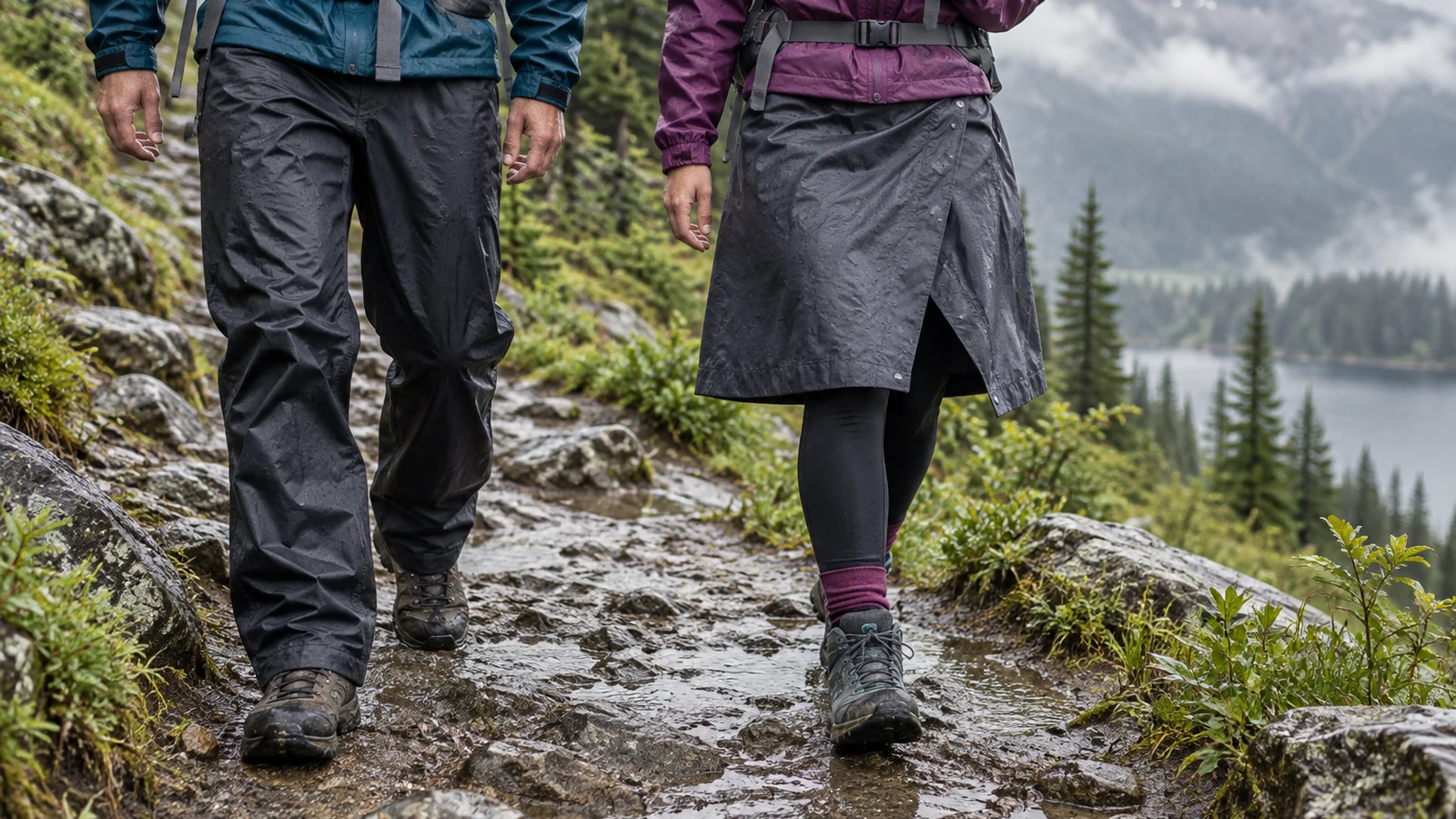
Rain pants and a rain skirt, often called a rain kilt, solve the same hiking problem in very different ways. Rain pants maximize coverage, wind protection, and protection from brush. A rain skirt trades some lower-leg coverage for airflow, low bulk, and fast on-off use.
If you want one lower-body rain layer that can handle the widest range of conditions, rain pants are the safer default. If most of your wet-weather hiking is warm, humid, and on maintained trails, a rain skirt can be the more comfortable system because it vents far better and can be wrapped on without threading your feet through pant legs.
Choose rain pants for protection, choose a rain skirt for ventilation
Pick rain pants for cold rain, strong wind, exposed ridges, shoulder-season trips, wet brush, mud, and any route where you want full-leg coverage.
Pick a rain skirt for warm or humid rain, maintained trails, hiking in shorts, repeated short showers, and trips where airflow and quick deployment matter more than dry calves.
If you are unsure what the forecast or terrain will do, pants are the more versatile choice. A skirt is best treated as a deliberate warm-weather system rather than a universal substitute for rain pants.
Rain Pants vs Rain Skirt: Quick Decision Table
| Decision factor | Rain pants | Rain skirt | Better fit |
|---|---|---|---|
| Cold rain | Full-leg coverage and a more sealed lower-body system | Lower legs remain exposed unless paired with other layers | Rain pants |
| Strong wind | Fitted legs control fabric and block wind more predictably | Wrap overlap can flap or open, depending on design and wind angle | Rain pants |
| Warm, humid rain | Can trap more heat and moisture during hard hiking | Excellent airflow around the legs | Rain skirt |
| Fast on-off use | May require more balance and footwear clearance | Wraps around the waist without stepping through pant legs | Rain skirt |
| Wet brush | Covers thighs, knees, and lower legs | Calves stay exposed and the wrap can catch vegetation | Rain pants |
| Shorts and trail runners | Works, but adds a full layer over bare legs | Pairs naturally with a warm-weather, quick-dry clothing system | Rain skirt |
| Mud and splash | More lower-leg protection | Water and trail splash can still soak calves and socks | Rain pants |
| Low carried bulk | Ultralight models exist, but use more material and hardware | Simple wrap construction is usually lighter and smaller | Rain skirt |
Rain pants
Full-leg coverage is the more conservative choice when staying warm matters.
Rain pants
Fitted legs control fabric more predictably than an open wrap.
Rain skirt
Open lower legs create much more airflow during high-output hiking.
Rain skirt
A wrap can go on without threading muddy shoes or boots through pant legs.
Rain pants
Full coverage protects more of the leg from soaked vegetation and trail grime.
Rain skirt
It fits naturally into a warm-weather system where exposed calves can simply get wet.
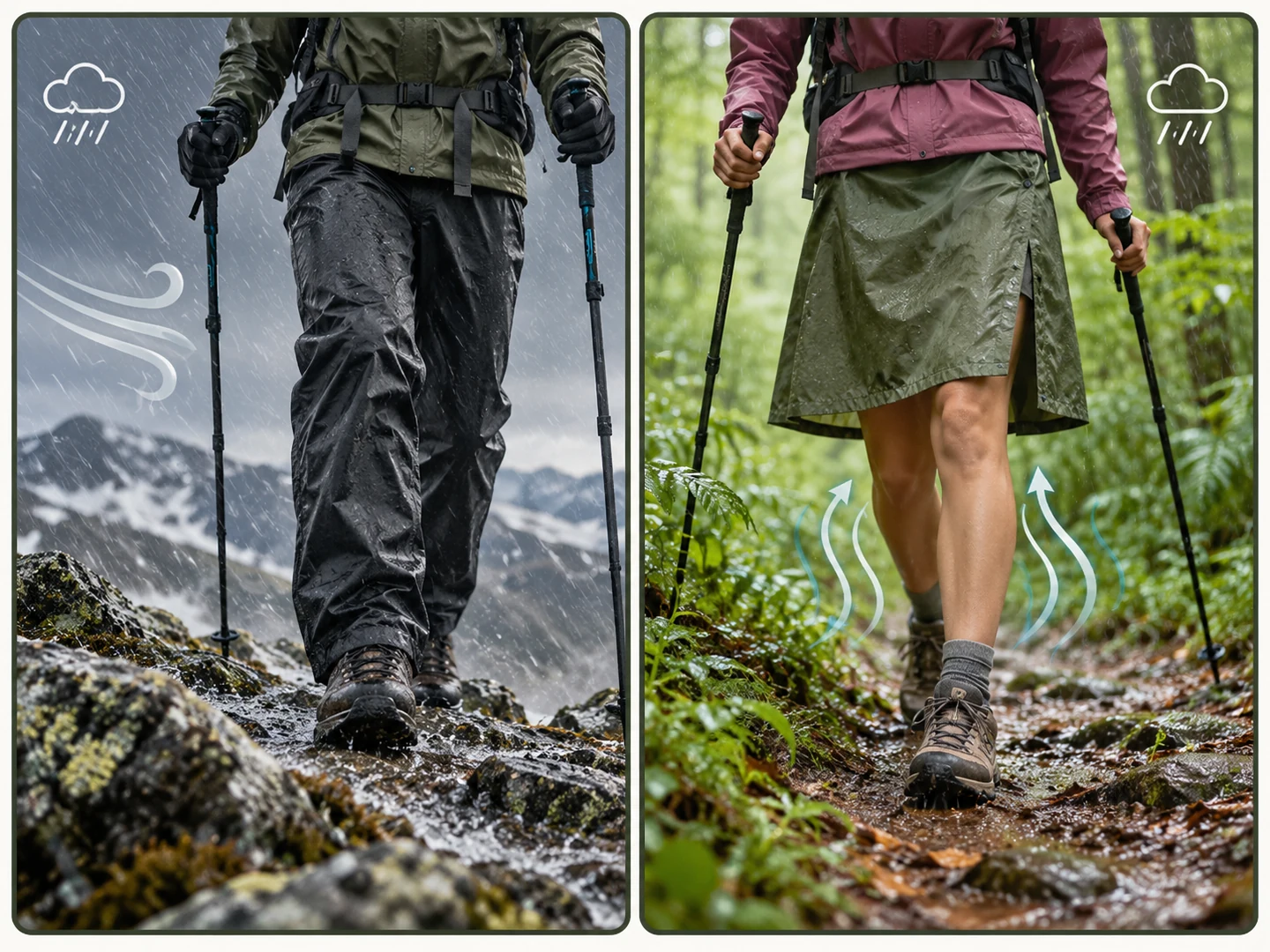
The Differences That Actually Matter on Trail
1. Coverage: pants protect the whole leg, a skirt protects a zone
Rain pants create continuous coverage from waist to ankle, with the exact seal depending on cuffs, zippers, footwear, and how the pants fit. That matters when rain is blowing sideways, vegetation is saturated, or the trail is throwing mud and water at your lower legs.
A rain skirt usually protects the waist, seat, thighs, and some portion of the knees. The lower legs remain open. That is not necessarily a flaw. In warm weather, many hikers are comfortable letting calves get wet because bare skin or thin socks dry faster than a fully enclosed layer. The trade-off becomes less attractive as temperatures fall or exposure rises.
2. Ventilation: this is where the skirt has its clearest advantage
Waterproof pants can keep rain out while still leaving you damp from perspiration. Fabric breathability helps, but it cannot create the same airflow as an open garment. On a humid climb, a rain skirt lets warm air escape around the hem and avoids wrapping waterproof fabric around the lower legs.
That is why skirts make the most sense as part of a whole clothing system: lightweight shorts or quick-dry pants underneath, breathable footwear, and a route where wet lower legs are acceptable.
3. Wind: full pants are easier to trust
Wind changes the comparison quickly. A skirt depends on overlap, closure design, length, and how much free fabric can move. A well-designed wrap can handle ordinary trail wind, but it is still more exposed to lifting, flapping, and wind-driven rain than fitted pants.
On alpine ridges, open coast, treeless plateaus, or any route where strong gusts are part of the plan rather than a surprise, rain pants are the more predictable system.
4. Putting them on: skirts avoid the boot problem
The practical annoyance with rain pants is often not hiking in them. It is putting them on after the rain has already started. Wide cuffs and ankle zippers help, but you may still need to stop, balance on one foot, manage trekking poles, and keep muddy footwear from dragging across the inside of the shell.
A rain skirt wraps around the waist. That can make it much faster for stop-start summer storms, especially if you are wearing a pack and do not want a long clothing change beside the trail.
5. Brush, abrasion, and scrambling favor pants
A skirt leaves more skin or base-layer fabric exposed and has a free hem that can meet branches, rocks, and brush. On maintained singletrack this may be irrelevant. On overgrown trails, bushy approaches, rough scrambling, or muddy off-trail travel, pants offer a cleaner protective barrier.
Choose Rain Pants If These Conditions Sound Familiar
Rain pants make more sense when
- You expect cold or sustained rain.
- Your route includes exposed ridges or regular strong wind.
- You hike through wet brush, mud, or snow patches.
- You tend to get cold easily when your legs are wet.
- You want one lower-body shell for several seasons.
- Your trip has little margin for waiting out bad weather.
Rain pants are less attractive when
- The weather is warm and humid.
- You run hot on climbs.
- Showers are brief and frequent.
- You dislike stopping to pull shell pants over footwear.
- You mainly hike maintained summer trails in shorts.
If this side of the decision fits you, the separate best rain pants for backpacking guide compares actual models by weight, boot access, durability, and use case. Keeping product selection there prevents this comparison page from duplicating the roundup.
Choose a Rain Skirt If Ventilation Is the Main Problem
A rain skirt makes more sense when
- You hike mostly in warm or humid conditions.
- You wear shorts or light quick-dry layers.
- You want a lower-body layer that wraps on quickly.
- You prioritize airflow over dry calves.
- Your trails are maintained rather than brushy.
- You are building a minimalist summer rain system.
A rain skirt is less attractive when
- Wind-driven rain is common.
- You need complete lower-leg protection.
- You expect cold, long-duration storms.
- Your trail is overgrown or abrasive.
- You want one garment to cover the widest range of seasons.
A skirt also makes sense when your rain philosophy is not “stay completely dry,” but “keep the most important clothing reasonably protected while managing heat.” That approach can work very well in warm weather. It is a poor match for conditions where getting wet quickly becomes a thermal problem.
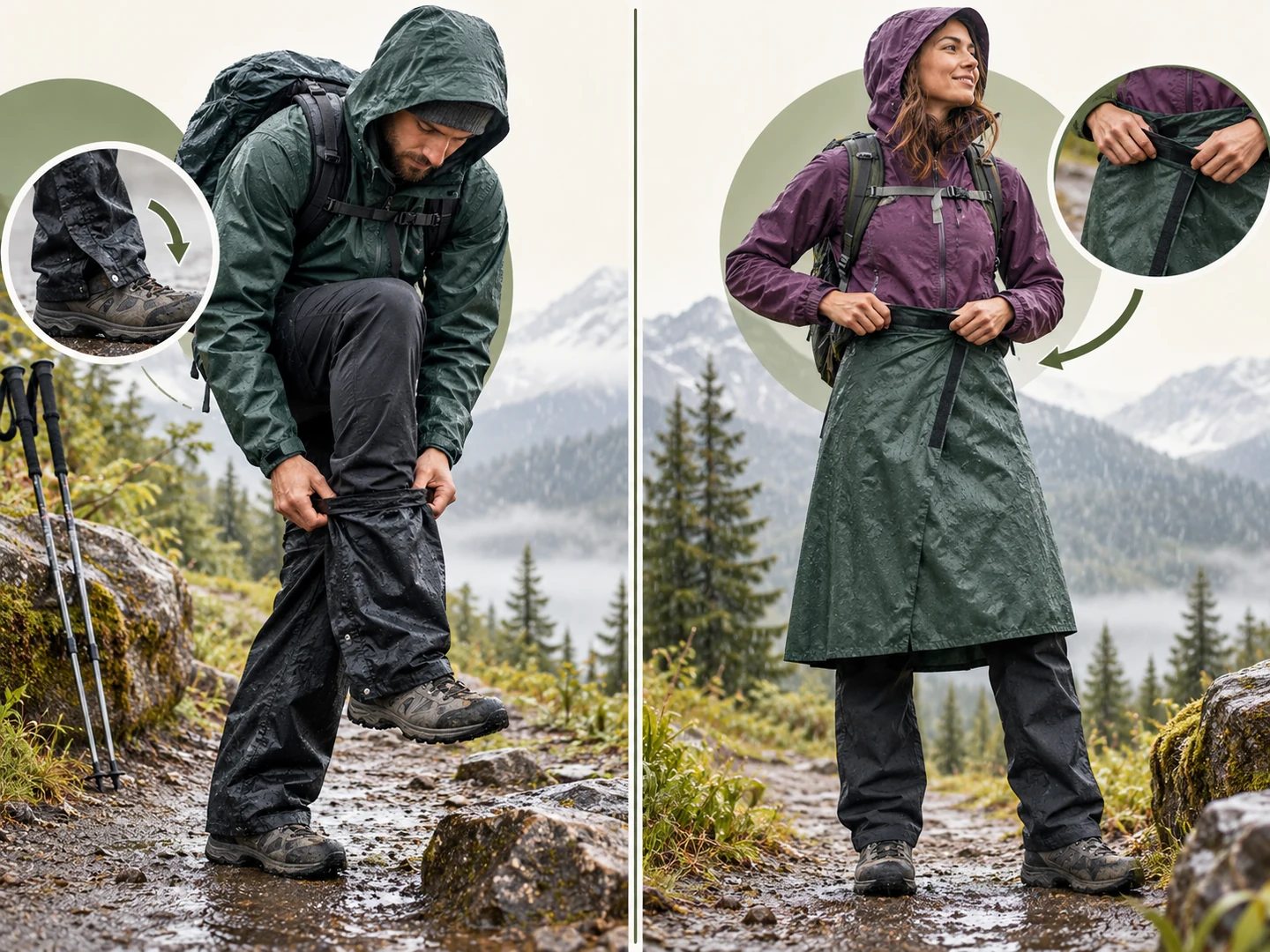
Six Hiking Scenarios: What to Pack
Warm summer thru-hike on maintained trail: rain skirt
High humidity, long climbs, light clothing, and frequent warm showers play to the skirt’s strengths. You keep airflow around the legs and can put the wrap on quickly when rain starts.
Cold shoulder-season backpacking trip: rain pants
When a wet leg means more heat loss and the forecast can stay bad for hours, full coverage is worth the extra fabric and clothing-change hassle.
Exposed alpine route with gusty weather: rain pants
Wind stability matters more than ventilation here. Fitted shell pants give wind less fabric to catch and provide predictable coverage when rain changes direction.
Hot trail with short afternoon thunderstorms: rain skirt
If storms arrive hard and leave quickly, a wrap-style layer can be easier to deploy and remove repeatedly. Pair it with a reliable upper-body shell and a dry pack strategy.
Overgrown forest after a night of rain: rain pants
Wet foliage can soak your legs even after the sky clears. Pants give much better coverage from brush, splash, and trail grime.
Easy summer day hike with a stable warm forecast: maybe neither
If temperatures are warm, the route is short, and the consequences of wet legs are low, quick-dry hiking clothing may be enough. You still need an upper-body weather plan, and conditions can change faster in exposed terrain.
Can Gaiters Make a Rain Skirt More Like Rain Pants?
Partly. A rain skirt plus waterproof or water-resistant gaiters can close some of the coverage gap at the calves and keep debris out of footwear. The combination may work well for hikers who want skirt ventilation around the thighs but more protection below the knee.
It is still not the same as one continuous pair of rain pants. There can be gaps between the skirt hem and gaiters, and wind-driven water can find them. Think of gaiters as a modular compromise, not a way to turn a skirt into full pants.
Two Amazon Examples of the Two Systems
These are not “winners” in a hidden roundup. They are concrete examples of what the two designs look like in current listings, with Amazon links included for readers who are already leaning one way.
Outdoor Research Men’s Helium UL Pant
Current manufacturer specs list a 5.75 oz waterproof and windproof shell with ankle zippers. It shows what an ultralight full-coverage pant can look like without moving into a heavy three-season shell.
onewind Rain Skirt
The current Amazon listing uses a wrap-style half-poncho design and specifically emphasizes ventilation plus the ability to put it on without removing your pack. That is the basic appeal of the category.
Alternatives to Both
Quick-dry hiking pants with no waterproof bottom
In genuinely warm conditions, some hikers accept wet legs and focus on keeping the torso, insulation, and pack contents protected. This removes the heat buildup of rain pants and the extra garment of a skirt. It is a conditions-dependent choice, not a general recommendation for cold or exposed weather.
A poncho-centered rain system
A long poncho can cover part of the thighs while also protecting the torso and often the backpack. It still has wind and lower-leg trade-offs. If that system interests you, see our backpacking rain poncho guide.
An ultralight jacket plus rain kilt system
For a more complete warm-weather setup, our ultralight rain systems for summer thunderstorms guide shows how a rain kilt can fit into a whole lightweight system rather than being evaluated in isolation.
How We Compared Rain Pants and Rain Skirts
The useful comparison is not which garment is “more waterproof.” Both can use waterproof fabrics. The decision comes from how much of the leg is covered and how the garment manages wind, heat, movement, and terrain.
Coverage, wind exposure, and how long you may need to remain in the layer.
How much open airflow the system allows while climbing in humid weather.
Maintained trail versus brush, mud, scrambling, and abrasion.
How easy the garment is to put on and remove with footwear and a loaded pack.
Bottom Line
Rain pants win on protection and versatility. They are the better default when the trip is cold, windy, exposed, brushy, or unpredictable.
A rain skirt wins on ventilation and simplicity. It is a smart specialized choice for warm, humid hiking where wet calves are acceptable and you want a layer that can go on quickly without wrestling with footwear.
If you are buying one lower-body rain layer for a broad range of trips, start with pants. If you already know that overheating inside rain pants is your recurring problem and your routes are mostly warm and maintained, a skirt is a legitimate alternative rather than a novelty.
FAQ
Can a rain skirt replace rain pants for hiking?
Yes, but only for the right conditions. A rain skirt can replace pants on warm, humid, maintained trails where ventilation matters more than full lower-leg coverage. Rain pants remain the safer choice for cold rain, strong wind, wet brush, and exposed terrain.
Do rain skirts keep your legs dry?
They keep the area covered by the skirt much drier, but they leave the lower legs exposed. Calves, socks, and footwear can still get wet from rain, splash, vegetation, and runoff.
Are rain skirts good in strong wind?
They are less predictable than fitted rain pants. Performance depends on the skirt’s overlap, closure, length, and the wind angle. For exposed routes with regular strong gusts, rain pants are the better choice.
Are rain pants too hot for summer hiking?
They can be during hard hiking in warm, humid weather. Even breathable waterproof fabric reduces airflow compared with bare legs or an open skirt. Venting features and lighter fabrics help, but a skirt still has the ventilation advantage.
Can you wear a rain skirt over hiking pants?
Yes. A rain skirt can protect the seat and thighs of lightweight hiking pants while leaving the lower legs open. The system makes the most sense when the pants underneath dry quickly and the weather is not cold enough to require full coverage.
Is a rain skirt good for thru-hiking?
It can be, especially on warm routes where low carried bulk, ventilation, and fast deployment matter. It is less suitable as the only lower-body shell when a route regularly combines cold rain, strong wind, or long exposed sections.