
Gear & Home is reader-supported. As an Amazon Associate I earn from qualifying purchases. When you buy through links on our site, we may earn an affiliate commission, at no extra cost to you. Learn more.
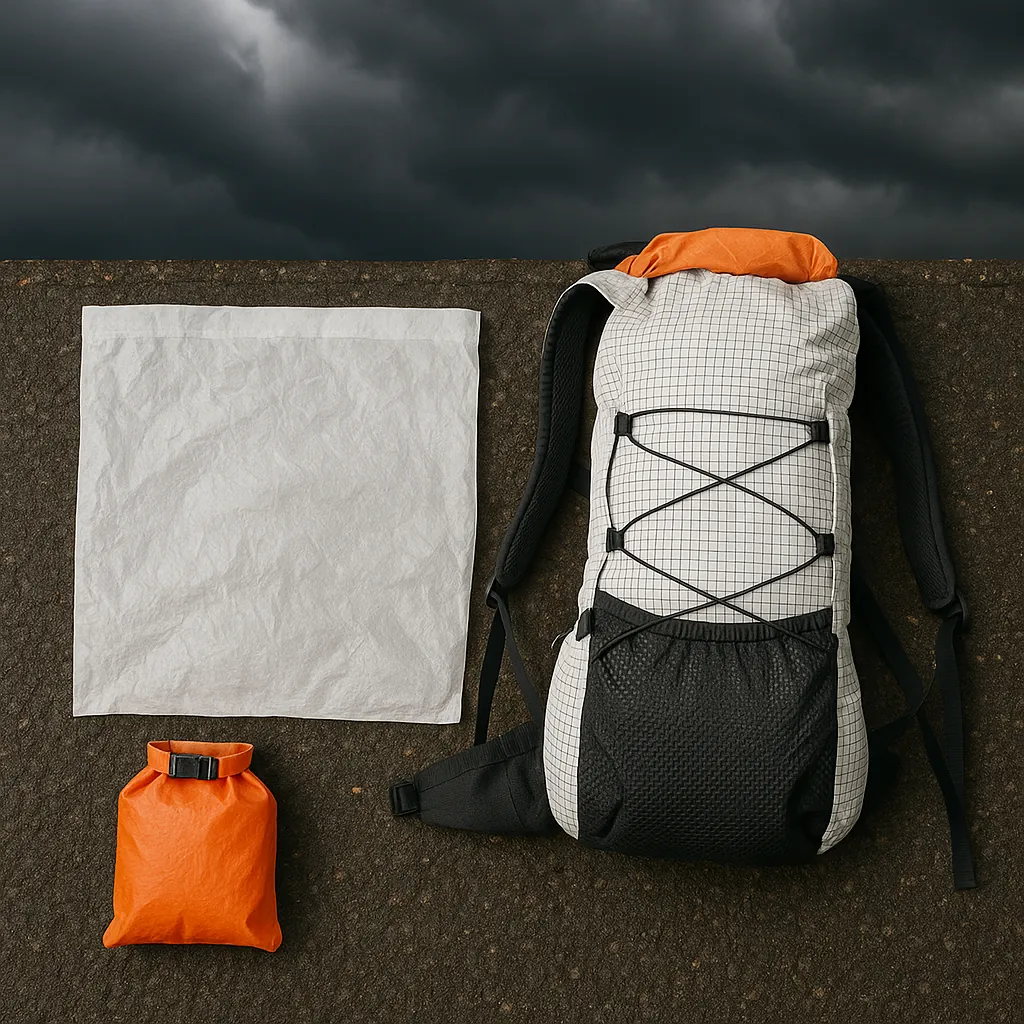
Keep insulation and electronics dry through fast summer downpours without lugging a heavy cover. This guide shows simple liner-and-bag combos that weigh under three ounces and cost under thirty dollars—ideal for hot, humid trips where ventilation matters more than bulk.
Who it’s for: warm-to-hot, thunderstorm-prone routes; hikers who want reliable dryness with minimal weight.
Who it’s not for: long cold rain or snow—use burlier, multi-layer protection there.
Quick Picks (3 systems under budget)
| System | Components | Total weight | Typical cost | Why it works |
|---|---|---|---|---|
| A — Nylofume liner + phone bag | 40–50 L Nylofume pack liner (roll-top twist) + small zip bag for phone/ID | ≈ 1.2–1.6 oz | ≈ $ | Lightest reliable setup: your quilt/clothes ride inside the liner; electronics in a tiny zip bag. |
| B — Trash-compactor liner (2 mil) + phone bag | 20–30 gal compactor bag (stout) + small zip bag for electronics | ≈ 2.0–2.8 oz | ≈ $ | More abrasion-resistant than Nylofume; great for rough packing, still ultralight. |
| C — DCF dry bag (sleep kit) + ultralight liner | 5–8 L roll-top DCF bag for quilt/clothes + thin 40 L liner for pack | ≈ 2.4–3.0 oz | ≈ $$ | Double security for insulation with minimal bulk; pack liner keeps the rest organized and dry. |
Weights and prices are typical for common US gear; sizes and materials vary slightly by brand and pack volume.
How to pack (fast workflow)
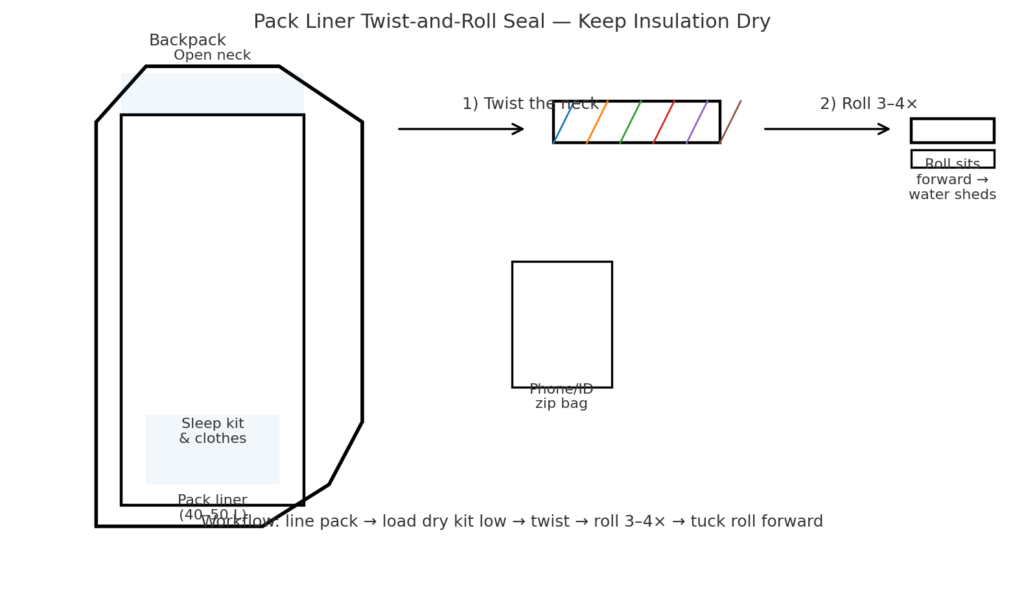
- Line the pack: Drop in the liner, push corners into the pack’s bottom and sides.
- Load the dry stuff low: sleep kit and spare clothes go first, inside the liner; food and cook kit on top as needed.
- Twist & roll: twist the liner neck, then roll it 3–4 times and tuck the roll forward (creates a water-shedding “gutter”).
- Electronics double-bag: phone/maps in a small zip bag; if you expect driving rain, put that bag in a pocket with a storm flap.
- Outer pockets drain: store wet items (filter, tarp) outside; avoid trapping water in non-mesh pockets.
Sizing guide
- 40–50 L liner: most 30–40 L frameless packs and 45–55 L mid-volume packs.
- 20–30 gal compactor bag: stands in for 40–60 L liners; trim height after a test pack.
- 5–8 L DCF dry bag: quilt + sleep clothes for summer; size up if your quilt is lofty.
Do I still need a pack cover?
For summer storms, a liner beats a cover. The liner protects the contents even if the fabric wets out. Covers can catch wind and rarely seal at the back panel. Pair a liner with quick-drying fabrics and let rain pants stay home unless temps drop.
Care & failure modes
- Pinholes: patch from the inside with clear tape until you can replace the liner.
- Edge wear: keep hard corners (pots, stakes) outside the liner or padded by clothes.
- Condensation: open the liner at camp to vent moisture; air out quilt immediately after squalls.
Weight & cost snapshot
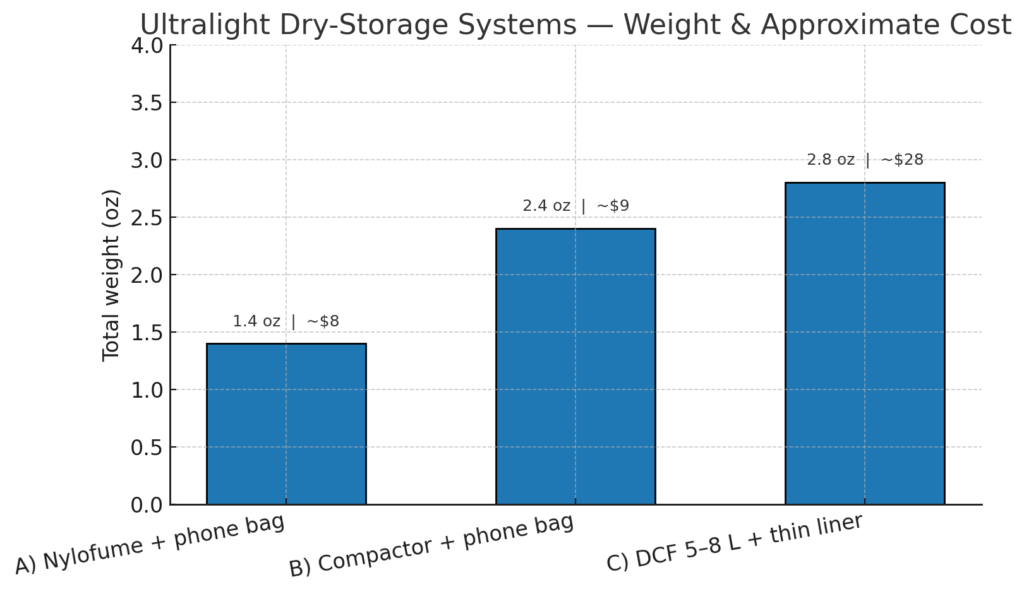
| System | Approx. weight | Approx. cost |
|---|---|---|
| A — Nylofume + phone bag | ~1.2–1.6 oz | ~$ |
| B — Compactor bag + phone bag | ~2.0–2.8 oz | ~$ |
| C — DCF 5–8 L + thin liner | ~2.4–3.0 oz | ~$$ |
FAQ
What if I have a top-opening roll-top pack?
Still use a liner. Roll the liner first, then close the pack as usual; the double roll helps in driving rain.
Will my liner last a whole season?
Nylofume liners often last weeks of careful hiking; compactor bags longer. Carry a spare if you expect rugged, wet terrain.
Can I skip the phone bag?
You can, but a tiny separate bag adds near-zero weight and protects against condensation and quick-access spills.