

Gear & Home is reader-supported. As an Amazon Associate I earn from qualifying purchases. When you buy through links on our site, we may earn an affiliate commission, at no extra cost to you. Learn more.
Beat sweat and bugs with a breathable hammock kit that stays under two pounds and under $250. This build prioritizes airflow, fast-drying fabrics, and low “stickiness” against skin—exactly what you need for steamy summer nights.
Who it’s for: warm, humid climates (Southeast, Gulf Coast, tropics), summer backpacking, tarp campers, gram-counters.
Who it’s not for: exposed ridgelines with strong wind or nights below ~60°F/16°C.
Quick Picks (2 proven builds under budget)
| Build | Components | Total weight | Typical cost | Why it works |
|---|---|---|---|---|
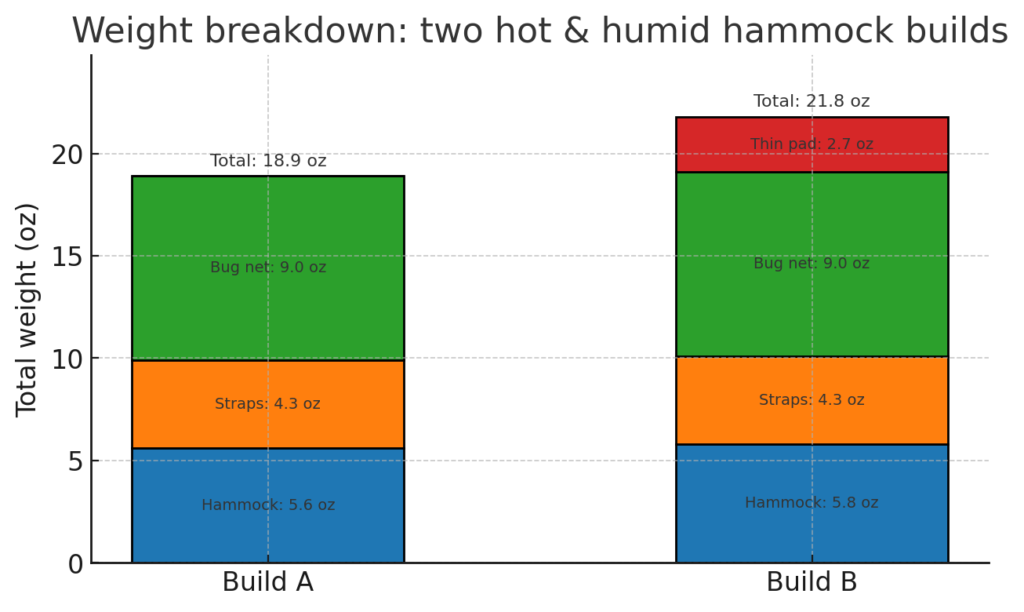
| Build A — featherweight & simple | Ultralight hammock + ultralight tree straps + minimalist 360° bug net | ≈ 18.9 oz (1 lb 3 oz) | ≈ $$ | Full bug protection with excellent airflow; no puncture risk from pads; ideal for hot, still nights. |
| Build B — still UL, extra comfort | Ultralight hammock + ultralight straps + bug net + thin 1/8″ foam pad | ≈ 21.8 oz (1 lb 6 oz) | ≈ $$ | Same breathability with a touch of grip/cushion; foam pad helps on hard platforms and reduces clammy feel. |
Weights and prices reflect current product specs and common US pricing as of August 2025. Sizes and sales can change totals slightly.
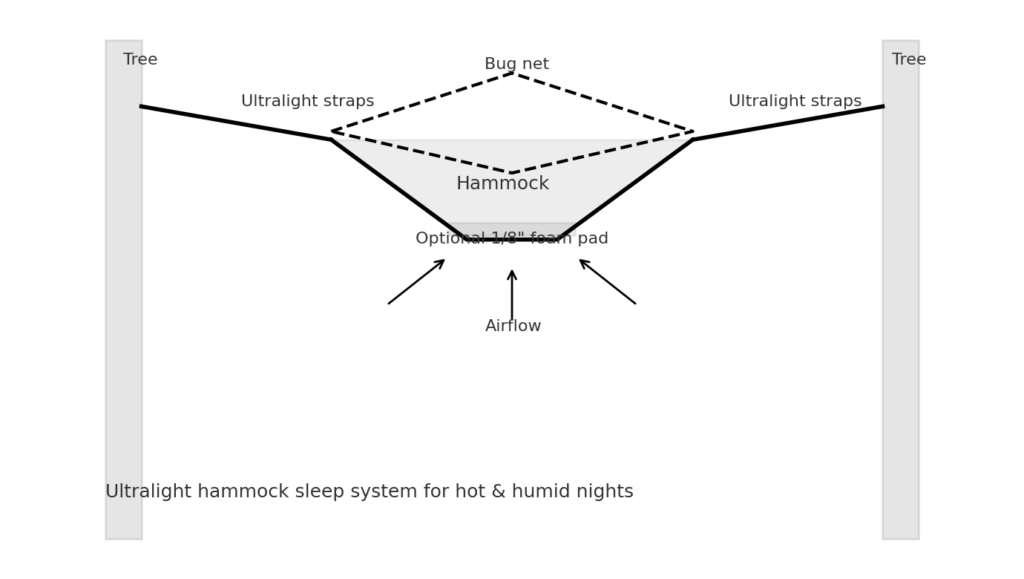
Why hammocks excel in heat & humidity
- Ventilation beats insulation. With your back off the ground, airflow reduces sweat and stickiness.
- Minimal fabric contact. Lightweight hammock fabrics and a thin liner or base layer wick moisture fast.
- Real bug control. A full 360° bug net makes sticky nights actually sleepable.
Build A — featherweight & simple (recommended for most)
Components & target specs
- Ultralight hammock: ~5.6–5.8 oz; compact single hammock rated around 300 lb.
- Ultralight tree straps: ~4.3 oz pair; tree-friendly, HMPE cord, 300 lb rating.
- Minimalist bug net (full enclosure): ~9.0 oz; sleeve or 360° style.
Total: ≈ 18.9 oz (1 lb 3 oz), ≈ $$.
Why it works: You get breezy sleep with real mosquito protection and almost no bulk. Keep the ridgeline slightly above face level for headroom and airflow.
Good for: muggy forests, low breezes, tarp users.
Watch-outs: mind tree spacing; set sag (~30°) for comfort.
Build B — still UL, extra comfort (thin pad added)
Components & target specs
- Ultralight hammock: ~5.8 oz; compact single hammock around 300 lb rating.
- Ultralight tree straps: ~4.3 oz pair.
- Minimalist bug net: ~9.0 oz.
- Thin foam pad 1/8″: ~2.7 oz; adds grip and a whisper of cushion in hot weather.
Total: ≈ 21.8 oz (1 lb 6 oz), ≈ $$.
Why it works: Keeps the same airflow while reducing slip and pressure on hard platforms—useful at shelters or campgrounds.
Setup tips for steamy nights
- Pitch for breeze: face the opening to prevailing wind; keep the tarp high or skip it if no rain is forecast.
- Dial the sag: aim for a ~30° hang angle and lie diagonally for a flatter lay.
- Bug net management: tension the ridgeline so the mesh stays off your face; keep the zipper orientation obvious for nighttime exits.
- Moisture hygiene: quick rinse or body-wipe before bed; air fabrics at sunrise.
What we actually used to model weights & pricing
- Hammocks: current sub-6 oz single hammocks with ~300 lb capacity.
- Straps: ultralight HMPE cord/webbing sets around 4.3 oz per pair.
- Bug net: minimalist 360° enclosure nets around 9 oz.
- Optional pad: 1/8″ closed-cell foam pad (~2.7 oz) for grip and a touch of cushion.
Note: In hot, windless conditions a thin foam pad can feel cooler than thick air pads because there’s less trapped warm air against skin.
FAQ
Do I need an underquilt in summer?
Usually not in truly humid, warm nights. If lows dip toward 60°F/16°C or wind picks up, pack a light base layer or a slightly warmer pad.
Is a bug head net enough?
Not for sleeping. A full-body hammock bug net gives reliable, hands-free protection all night.
What about pillows?
Use a 1–2 oz inflatable or stuff a soft layer into a sack; keep neck angle neutral to avoid heat buildup.